


Don Bradman’s Test Average of 99.94
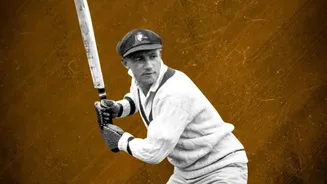
Sir Donald Bradman’s Test batting average is the most iconic statistic in cricket, and arguably in all of sport. To average nearly 100 runs every time you bat across a 52-Test career is a feat of consistency that defies belief. To put it in perspective,
most world-class batsmen who average over 50 are considered all-time greats. Bradman’s average is nearly double that. He needed just four runs in his final innings to retire with an average of 100, but was famously dismissed for a duck, leaving his record at 99.94. The sheer statistical gap between him and every other batsman in history—the next best is around the 60s for players with a significant number of Tests—makes this record feel less like a benchmark and more like a permanent fixture in the sky. In today's era of intense media scrutiny, data analysis, and varied global conditions, maintaining such flawless performance is considered a statistical impossibility.
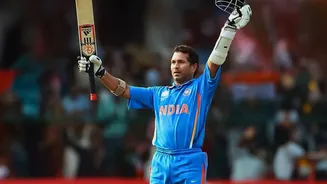
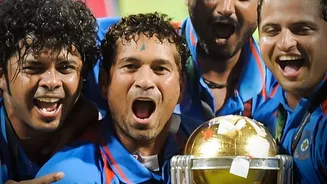
Sachin Tendulkar’s 100 International Centuries
For over two decades, Sachin Tendulkar was the benchmark of batting excellence. His record of 100 international centuries (51 in Tests and 49 in ODIs) is a testament to his incredible longevity, adaptability, and relentless hunger for runs. He achieved this milestone against Bangladesh in March 2012. The sheer volume of matches played—463 ODIs and 200 Tests—is a record in itself, but to maintain the peak performance required to score a century across different formats, against all opposition, and in changing eras is what makes this record so monumental. With the rise of Twenty20 cricket and the intense physical and mental demands placed on modern players, it's difficult to imagine anyone having a career long enough and consistent enough to even approach this 'century of centuries'.
Muttiah Muralitharan’s 800 Test Wickets
If Bradman is the king of batting stats, Muttiah Muralitharan is his bowling equivalent. The Sri Lankan spin wizard finished his Test career with an astonishing 800 wickets, a milestone he dramatically reached with the very last ball of his final Test match in July 2010. Muralitharan averaged over six wickets per Test match throughout his 133-Test career, a rate of success that is simply mind-boggling. The next closest bowler, Shane Warne, is a distant 92 wickets behind. With Test matches becoming less frequent and the physical toll of modern cricket, it is highly unlikely any bowler will have the longevity, fitness, and sheer genius to challenge Murali's peak. His 800 wickets, along with his record 534 in ODIs, cements his place as the most prolific wicket-taker the game has ever seen.
Jim Laker’s 19 Wickets in a Test Match
In a sport where a bowler taking 10 wickets in a match is considered a career-defining achievement, English spinner Jim Laker did something truly unthinkable in 1956. In a single Test match against Australia at Old Trafford, he took 19 out of a possible 20 wickets. He claimed figures of 9 for 37 in the first innings and followed it up with a perfect 10 for 53 in the second. This means he single-handedly dismissed almost the entire opposition side twice. For one bowler to so utterly dominate a Test match is a statistical anomaly that has never been repeated. While two other bowlers have managed a perfect ten in an innings since, Laker’s match figures of 19 for 90 remain a unique and seemingly untouchable record, a perfect storm of individual brilliance and favourable conditions that may never align again.
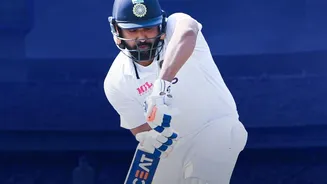
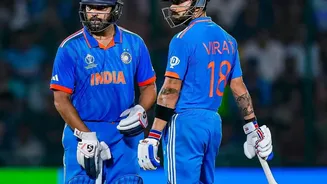
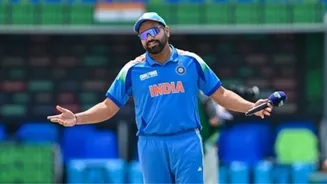
Rohit Sharma’s 264 in an ODI
In the modern era of explosive white-ball batting, Rohit Sharma’s individual score of 264 in a One-Day International stands as a towering monument. Achieved against Sri Lanka in 2014 at Eden Gardens, Sharma’s innings redefined what was thought possible in a 50-over game. He faced 173 balls, hitting a record 33 fours and nine sixes. What makes this score so difficult to break is the combination of endurance and acceleration required. After a relatively measured first hundred off 100 balls, he exploded to add his next 164 runs in just 73 deliveries. Even as scores in ODIs have risen, no other batsman has come close to this individual peak. Rohit remains the only player to have scored three double-hundreds in ODIs, but his 264 is a high-water mark that even he has not been able to replicate.