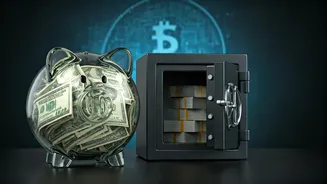









What Is a Six-Month Cushion?
Let’s be precise. A six-month cash cushion, often called an emergency fund, is a stash of money equivalent to six months of your essential living expenses. This isn't 'play money' or 'investment capital'. It's your personal financial safety net. To calculate
it, tally up your absolute must-pay monthly costs: rent or EMI, utilities, groceries, transportation, insurance premiums, and minimum debt payments. Multiply that total by six. This is your number. Crucially, this money should be kept in a highly liquid, easily accessible account, like a high-yield savings account or a liquid fund—not locked away in an investment that could lose value or be difficult to sell quickly.
Your Defence Against Panic
The primary purpose of this fund isn’t to make you rich; it's to prevent you from becoming poor. Speculative markets are, by definition, volatile. They can soar, but they can also crash without warning. Imagine you've invested heavily in a promising but unproven asset. Now, imagine you lose your job or face an unexpected medical bill. Without a cash cushion, your only option is to sell your investments to raise cash. This forces you to sell at the worst possible time—during a personal crisis—and potentially at a massive loss if the market is also down. The emergency fund separates your daily survival from your investment performance. It gives you the peace of mind to hold your investments through downturns and avoid catastrophic, fear-driven decisions.
What Counts as 'Speculative'?
It's important to know what we're talking about. This isn't about your standard, long-term investments in diversified mutual funds or a Public Provident Fund (PPF). 'Speculative markets' refer to high-risk assets where the potential for significant loss is substantial. This category includes: - **Cryptocurrencies:** Known for extreme price swings. - **Individual 'Meme' Stocks:** Stocks whose prices are driven by social media hype rather than company fundamentals. - **Penny Stocks:** Shares of small companies that trade for very low prices, often with high volatility and risk. - **Derivatives and Options Trading:** Complex financial instruments that can result in rapid gains or total loss of capital. Investing a small, disposable portion of your portfolio in these assets is one thing. Betting your financial security on them is another entirely. The cash cushion is the barrier that keeps speculation from spilling over and ruining your core financial health.
How to Build Your Cushion, Step-by-Step
Building a six-month fund can feel daunting, but it's achievable with a plan. 1. **Calculate Your Target:** Do the math honestly. What is your bare-bones monthly survival number? Multiply it by six. 2. **Open a Separate Account:** Do not keep this money in your primary transactional account. Open a new, dedicated high-yield savings account. This separation is psychological; it makes it harder to dip into for non-emergencies. 3. **Automate Your Savings:** Treat your emergency fund contribution as a non-negotiable bill. Set up an automatic transfer from your salary account to your emergency fund account every month. Even a small, consistent amount is better than nothing. 4. **Direct Windfalls:** Received a bonus, a tax refund, or a small inheritance? Funnel a significant portion directly into your emergency fund until it's fully funded. Before you invest a single rupee in a speculative asset, this fund should be your number one priority.