



The Problem with 'Desk Posture'
Our bodies are not designed to remain static for eight hours a day. When we stare at a screen, we tend to adopt a posture characterized by a forward-jutting head, often called 'tech neck', and rounded shoulders. This position puts significant strain on the
muscles and ligaments in our neck, upper back, and chest. Over time, the muscles at the front of our body become tight and short, while the muscles in our upper back become weak and overstretched. This imbalance pulls our skeleton out of its natural alignment, leading to chronic pain, stiffness, and even headaches.
The Antidote: Consistent, Small Movements
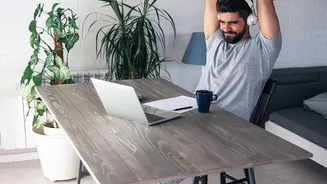
The solution isn't to find one 'perfect' posture and hold it all day. Instead, the key is to introduce regular movement. Taking short, frequent breaks to stretch can counteract the negative effects of prolonged sitting. These micro-breaks help to reset your posture, reactivate dormant muscles, improve circulation, and release accumulated tension. By consistently performing a few targeted stretches, you can rebalance your muscles and guide your body back toward healthier alignment. Think of it as actively reversing the damage of a sedentary workday in just a few minutes.
The Chin Tuck for Tech Neck
This subtle but powerful move directly counteracts forward head posture by strengthening the deep muscles in the front of your neck. To perform it, sit tall and look straight ahead. Without tilting your head up or down, gently draw your chin and head straight back, as if you're trying to make a double chin. You should feel a stretch at the base of your skull and an engagement of the muscles under your chin. Hold for 5 seconds, release, and repeat 10 times. This exercise helps to realign your head over your shoulders, reducing strain on your cervical spine.
The Seated Chest Opener
To combat hunched shoulders, you need to stretch the tight pectoral muscles in your chest. Sit at the edge of your chair, keeping your back straight. Interlace your hands behind your lower back. If this is too difficult, you can also grasp the sides or back of your chair. Now, roll your shoulders back and down, squeezing your shoulder blades together and lifting your chest toward the ceiling. You should feel a broad stretch across the front of your chest and shoulders. Hold this position for 20-30 seconds while breathing deeply. This stretch is a direct reset for the rounded posture we adopt while typing or scrolling.
The Upper Back and Shoulder Squeeze
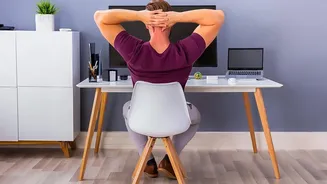
This stretch targets the overstretched muscles between your shoulder blades, reminding them to engage and support your posture. While sitting tall, simply draw your shoulder blades back and down, imagining you are trying to pinch a pencil between them. Focus on activating these mid-back muscles without shrugging your shoulders up toward your ears. Hold the squeeze for 5 seconds and then release. Repeat this movement 10-12 times. It's an excellent way to wake up postural muscles that often become dormant during the day.
The Seated Spinal Twist
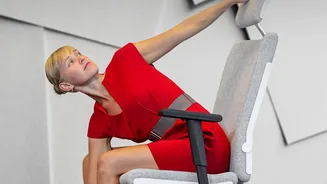
A static posture can lead to a stiff spine. A gentle twist can help restore mobility and relieve tension. Sit upright with your feet flat on the floor. Engage your core muscles and gently rotate your torso to the right, using your hands on the armrest or chair back to deepen the stretch. Keep your hips facing forward. Hold for 15-20 seconds, breathing into the stretch, then slowly return to the center and repeat on the left side. This movement helps to improve flexibility in the lumbar and thoracic spine.