







The Illusion of 'Clean' Water
In most Indian cities, municipal bodies treat water to make it safe for consumption. However, the story doesn't end there. The real challenge lies in the 'last mile'—the vast, complex network of pipelines that deliver this water to your home. Much of this infrastructure
is decades old, leading to frequent leaks and corrosion. These ageing pipes often run alongside sewage lines, creating a high risk of cross-contamination. Even a small crack or a drop in water pressure can allow harmful sewage and pollutants to seep into the drinking water supply, a problem that has led to waterborne disease outbreaks in numerous cities. Therefore, the water that was perfectly treated at the plant is often not the same water that comes out of your tap.
Invisible Threat 1: Dissolved Solids (TDS)
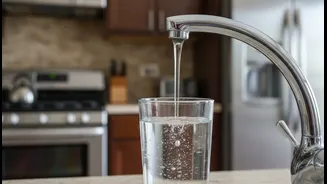
One of the most common, yet invisible, issues with tap water is a high level of Total Dissolved Solids (TDS). This term refers to all the inorganic salts and small amounts of organic matter dissolved in water, including minerals like calcium, magnesium, and potassium, as well as salts and some metals. While the Bureau of Indian Standards (BIS) has a permissible TDS limit of 500 parts per million (ppm), the World Health Organization recommends keeping it below 300 ppm for better taste and quality. In many Indian cities, especially those reliant on groundwater, TDS levels can range from 400 ppm to over 1500 ppm. High TDS not only gives water a salty or brackish taste but can also indicate the presence of harmful substances like nitrates and heavy metals. Simply boiling water does not reduce TDS.
Invisible Threat 2: Heavy Metals and Chemicals
Perhaps the most concerning invisible threats are heavy metals and chemical pollutants. Old plumbing, especially pipes installed before modern regulations, can leach hazardous metals like lead into the water supply. Industrial effluents and agricultural runoff are major sources of other dangerous contaminants, such as arsenic, mercury, and pesticides, which find their way into both surface and groundwater. Even the chlorine used to disinfect water at treatment plants can create potentially harmful by-products. Long-term exposure to these substances is linked to serious health problems, including kidney damage, developmental issues in children, and other chronic conditions. These contaminants are undetectable by sight or smell.
Invisible Threat 3: Microbes and Microplastics
Beyond chemical threats, microbial contamination is a persistent problem. Bacteria like E. coli and Salmonella, along with various viruses, can enter the water supply through sewage leaks, causing immediate illnesses such as diarrhoea, typhoid, and cholera. Boiling water can kill these microorganisms, but it's an impractical solution for all daily needs. Adding to this is the emerging concern of microplastics—tiny plastic particles less than 5mm in size. Studies have now found microplastics in tap water and even groundwater in cities like Delhi. These particles can come from the degradation of larger plastic waste and fibres from synthetic clothing. Standard water treatment plants are not equipped to filter them out, and their long-term health effects are still being studied, with concerns that they can act as carriers for other toxins.
Choosing the Right Filtration Shield
Given these varied threats, a multi-stage water purifier is the most reliable solution. The main technologies are Ultrafiltration (UF), Ultraviolet (UV), and Reverse Osmosis (RO). UF filters can remove bacteria and suspended particles but not dissolved solids or most viruses. UV systems use light to kill bacteria and viruses but cannot remove dissolved impurities, chemicals, or heavy metals. For the comprehensive challenges of Indian urban water, a Reverse Osmosis (RO) system is often necessary. RO forces water through a semi-permeable membrane that filters out high TDS, heavy metals, pesticides, microplastics, and microbes. Most modern purifiers combine RO with UV and UF (RO+UV+UF) to provide a complete safeguard, ensuring that all types of contaminants—visible and invisible—are effectively removed. Many also include a TDS controller to re-add essential minerals, ensuring the final output is not only pure but also healthy.