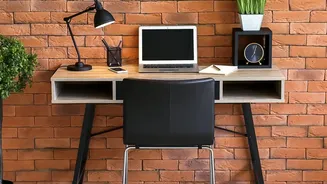





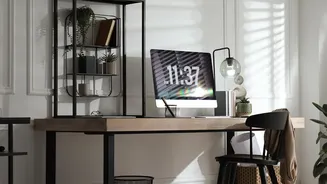


Step 1: Identify and Plan Your Space
The first step is to find the perfect, underutilised spot in your home. Look for a small section of a wall in a bedroom, a living room niche, or even a wide hallway. Before you buy anything, measure the wall area carefully, noting the width and height
you can use. Be mindful of the location of electrical outlets, switches, and windows. The goal is to create a zone that is quiet and free from major household traffic. Consider the flow of movement; when the desk is open, will it block a doorway or a path? Planning this layout in advance prevents headaches later and ensures your new study area fits seamlessly into your home.
Step 2: Choose the Right Foldable Desk
The hero of this compact setup is the foldable desk. You have two main options: a wall-mounted drop-leaf desk or a freestanding folding desk. A wall-mounted desk is the ultimate space-saver as it uses zero floor space when folded up. When choosing one, check its weight capacity to ensure it can hold your laptop, books, and other equipment. Also, consider the folded thickness—slimmer profiles of under an inch are available and look neater against the wall. Some models come with integrated storage cubbies or shelves, which are great for maximising utility. If you are renting or cannot drill into walls, a slim, freestanding foldable desk is a great alternative that can be stored away when not in use.
Step 3: Select Your Wall Shelves
Using the wall space above your desk is key to keeping your work surface clear and organized. Floating shelves are a popular choice as they offer a clean, minimalist look. Alternatively, shelves with visible brackets can add an industrial or rustic aesthetic. Consider the material and colour. Matching the shelves to your desk—for example, a light wood desk with light wood shelves—creates a cohesive, built-in feel. Measure the items you plan to store, such as books or storage boxes, to ensure you choose shelves with adequate depth and that you space them correctly on the wall.
Step 4: Focus on Ergonomics and Installation
Comfort is crucial for a productive workspace. The ideal desk height allows your elbows to bend at a 90 to 100-degree angle with your shoulders relaxed. A standard desk height is around 28-30 inches, but the beauty of a wall-mounted desk is that you can install it at the perfect height for you. When installing the desk and shelves, safety is paramount. If you have drywall, use a stud finder and anchor the hardware directly into the wall studs for maximum support. For concrete or brick walls, which are common in many Indian homes, you'll need a masonry drill bit and appropriate wall anchors to ensure everything is secure. Always follow the manufacturer’s instructions and don't overload the desk or shelves beyond their stated weight capacity.
Step 5: Organize and Personalize Your Nook
Once the main components are installed, it's time to make the space truly functional and inspiring. Good lighting is essential; if natural light is limited, add a slim desk lamp or a wall-mounted light. Use desk organizers, pen holders, and small containers to keep your supplies tidy. You can use accordion folders for documents or stylish boxes on the shelves for items you don't use daily. Finally, add a personal touch. A small plant, a framed photo, or an inspirational quote can make the space feel like your own and help you stay motivated. The key is to keep decor minimal to avoid a cluttered feel.