






The Closed-Loop Imperative
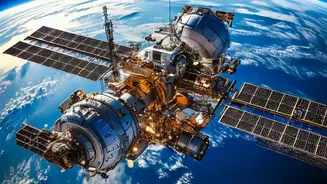
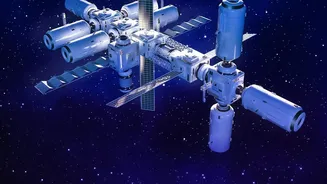
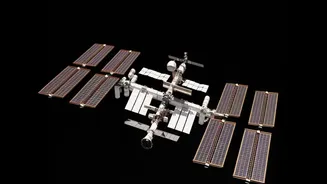
For long-duration missions, like those on the International Space Station (ISS) or future voyages to Mars, relying on supplies from Earth is not feasible. The solution lies in creating a self-sustaining environment, often called a closed-loop system,
which recycles nearly everything. At the heart of this is the Environmental Control and Life Support System (ECLSS). This sophisticated network of machinery manages atmospheric pressure, temperature, and critically, the air and water astronauts need to live. It’s the ultimate form of recycling, born from necessity, and it turns human waste products into the very elements required for survival.
From Wastewater to Potable Water
The first step in creating air is harvesting water. The Water Recovery System aboard the ISS is a marvel of engineering that reclaims about 90% of all water. This isn't just from shower runoff or oral hygiene; it includes humidity and sweat collected from the cabin air and, most notably, astronauts' urine. The system uses a process called vapour compression distillation. It essentially boils the wastewater at a lower temperature by creating a vacuum, separating pure water vapour from contaminants. After a multi-stage filtration and catalytic oxidation process, the resulting water is purer than what most people drink on Earth, ready for consumption, food preparation, or the next crucial step: creating oxygen.
Making Oxygen Through Electrolysis
Once purified water is available, the Oxygen Generation System (OGS) takes over. This system uses a process called electrolysis, which passes an electric current through the water. The electricity, provided by the station's large solar arrays, splits the water molecules (H2O) into their constituent parts: breathable oxygen (O2) and hydrogen gas (H2). The oxygen is released into the cabin atmosphere for the crew to breathe. The hydrogen, however, is not simply discarded. It becomes a key ingredient in the next phase of the recycling loop, demonstrating how every single atom is a valuable resource in space.
Tackling Exhaled Carbon Dioxide
Humans don't just consume oxygen; they exhale carbon dioxide (CO2), which is toxic in high concentrations. The Air Revitalization System continuously scrubs CO2 from the air using filters containing materials like zeolites, which trap the CO2 molecules. But simply trapping it isn't enough for a true closed-loop system. This is where the Sabatier system comes in. This technology takes the captured CO2 and reacts it with the hydrogen produced during water electrolysis. This chemical reaction, conducted over a catalyst, produces two things: water and methane. The water is then fed back into the Water Recovery System to be purified and used again, further closing the loop. The methane is currently vented into space, though engineers are working on ways to harvest its components as well.
The Future of Life Support
The systems on the ISS are a proof of concept, recovering roughly half of the oxygen from exhaled CO2. For missions to Mars and beyond, where resupply is impossible, the goal is near-total recovery. NASA is actively developing next-generation technologies to improve efficiency. This includes advancements on the Sabatier process, like the Bosch reaction which produces solid carbon instead of methane, and other methods to crack methane to recover its hydrogen. On Mars itself, experiments like the Mars Oxygen In-Situ Resource Utilization Experiment (MOXIE) have already proven it's possible to convert the thin, CO2-rich Martian atmosphere directly into oxygen, a crucial step for supporting future human habitats and producing rocket propellant for the return journey.