





More Than Just Dirt
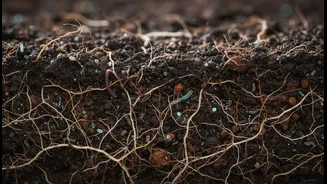
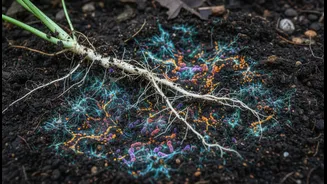
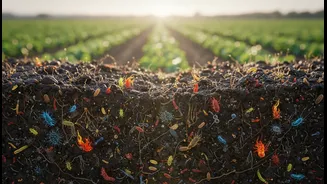
When we think of soil, we often picture an inert brown medium. But healthy soil is one of the most dynamic ecosystems on Earth. A single teaspoon can contain more microorganisms than there are people on the planet. This complex community, known as the soil microbiome,
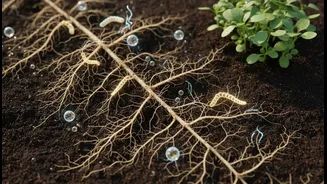
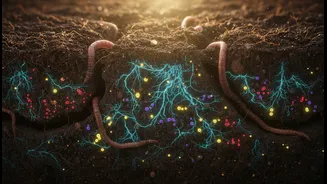
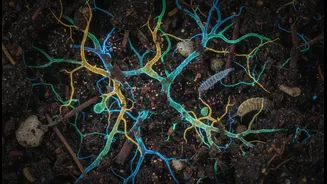
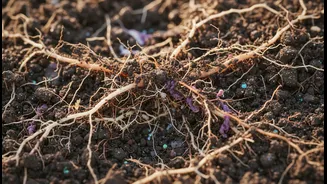
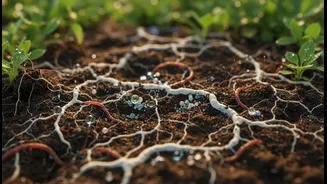
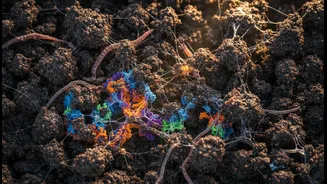
includes bacteria, fungi, protozoa, nematodes, and larger creatures like earthworms. These organisms form a sophisticated food web. Some are decomposers that break down dead plants and animals, while others are predators, and many form symbiotic partnerships with plant roots. This intricate web of life is the engine that drives many of the processes essential for growing food. Far from being passive dirt, soil is a living resource that sustains plants, animals, and ultimately, us.
The Unseen Workforce
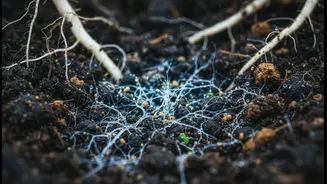
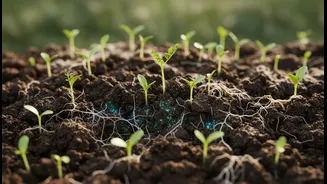
The benefits of a thriving soil microbiome are immense. These tiny organisms act as a natural, unpaid workforce for farmers. A primary role they play is in nutrient cycling. Microbes decompose organic matter, converting complex compounds into simpler forms like nitrogen and phosphorus that plants can easily absorb. This reduces the need for synthetic chemical fertilisers. Fungi, particularly mycorrhizal fungi, form vast networks of fine threads that extend from plant roots, acting as a superhighway to transport water and nutrients like phosphorus back to the plant in exchange for sugars. This relationship improves a plant's drought tolerance and nutritional health. Furthermore, a diverse microbial community helps maintain soil structure. Bacterial secretions and fungal networks bind soil particles together, creating stable aggregates. This improves water infiltration, reduces erosion, and increases the soil's capacity to hold water, making farms more resilient to both floods and droughts.
The Challenge of Modern Farming
For decades, many modern agricultural practices have unintentionally harmed this vital underground ecosystem. Heavy tillage breaks apart the delicate soil structure and destroys fungal networks. Over-reliance on chemical fertilisers can disrupt the natural nutrient cycle, leading to soil acidification and reducing the diversity of beneficial microbes. Studies have shown that high application of inorganic fertilisers can cause plants to 'short-circuit' their relationship with beneficial bacteria, as they no longer need them to access nutrients. This creates a dependency, where depleted soil requires ever-increasing inputs to maintain yields, damaging long-term agricultural sustainability. In India, where a significant portion of land faces degradation, restoring this soil life is not just a goal but a necessity for future food security.
Bringing Soil Back to Life
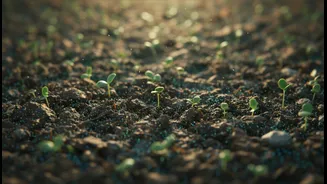
The good news is that farmers can actively nurture and restore the life in their soil. The approach, often called regenerative agriculture, focuses on working with nature. Key practices include minimizing soil disturbance through no-till or low-till farming, which preserves microbial habitats. Another crucial step is to keep the soil covered year-round using 'cover crops'—plants like legumes or grasses grown between cash crop seasons. These living roots protect against erosion and provide a continuous food source for the soil microbiome. Increasing plant diversity through crop rotation and intercropping also fosters a more diverse and resilient microbial community. Finally, adding organic matter like compost and manure is fundamental. It is the primary food source that fuels the entire soil food web, helping to rebuild healthy, productive soil from the ground up.