

In most textiles, the design is printed or embroidered onto woven fabric. But in the village of Pochampally, Telangana, artisans reverse this process entirely, creating patterns first and fabric second in a technique known as Ikat.
The Core Idea of Ikat
The word ‘Ikat’ comes
from the Malay-Indonesian word 'mengikat', which means ‘to bind’ or ‘to tie’. This name perfectly describes the unique resist-dyeing technique at its heart. Unlike methods where dye is applied to finished cloth, Ikat involves creating patterns directly on the bundles of yarn. Artisans tightly wrap sections of the yarn with waterproof material, such as rubber strips, before dipping them into dye. The tied portions resist the colour, while the exposed yarn absorbs it. This process can be repeated multiple times to introduce different colours, creating a complex, multi-hued design that exists only in the threads. This fundamental difference is what gives Pochampally Ikat its distinctive character and sets it apart from other decorated textiles.
A Blueprint of Threads
Every Pochampally Ikat begins not with a loom, but with a piece of graph paper. Weavers painstakingly chart out the entire design, calculating with mathematical precision where each colour will fall. This blueprint is then transferred to the threads. The yarns—whether silk, cotton, or a silk-cotton blend called 'sico'—are stretched out, and the design is marked onto them. This stage requires immense skill, as the weaver must visualise how the pattern on loose threads will translate into a cohesive design on a flat fabric. It's an act of foresight, where the final saree is imagined in its entirety before a single thread is woven.
Bringing the Pattern to Life
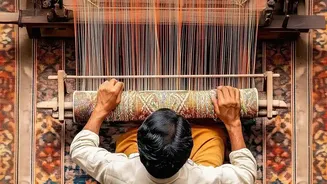
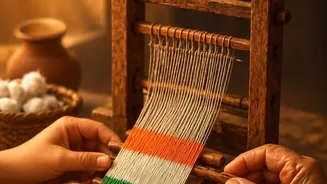
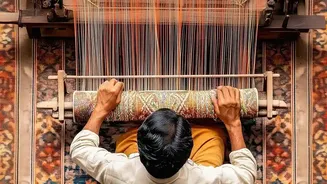
Once the yarns are dyed and dried, they are carefully arranged on the handloom. This is a critical and demanding step. The weaver must meticulously align the pre-dyed warp (vertical) and weft (horizontal) threads so that the patterns interlock correctly as the fabric takes shape. It is this manual alignment that produces the signature feature of Ikat: a soft, feathered, or 'blurry' edge to the motifs. This subtle haziness is not a flaw; rather, it is the hallmark of authentic, handcrafted Ikat, a visual testament to the weaver's skill in piecing together a complex puzzle of coloured threads. The result is a fabric where the design is identical on both sides, deeply embedded within the cloth itself.
A Heritage Recognised
The craft is synonymous with the Bhoodan Pochampally village in the Yadadri Bhuvanagiri district of Telangana, which is often called the 'Silk City of India'. This region, with its thousands of weaving families, has nurtured the art for generations. In recognition of its unique heritage and to protect it from machine-made imitations, Pochampally Ikat was granted a Geographical Indication (GI) tag in 2004, becoming the first handloom product in India to receive this status. This designation ensures that only textiles woven in this specific region, using the traditional tie-and-dye method, can be called authentic Pochampally Ikat. The GI tag was successfully renewed in December 2023, safeguarding the legacy of this intricate art form for another decade.