





Understanding the Late-Monsoon River
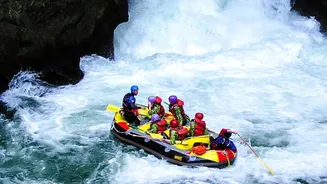
The rafting season in Rishikesh typically reopens in mid-September after being closed for the peak monsoon months of July and August. This late-monsoon or post-monsoon period means the Ganga is powerful, with higher water levels and faster currents than
in other seasons. While this makes for an exciting ride, it also reduces the margin for error. The water is often sediment-heavy, and the rapids can feel more intense. For beginners, this means choosing the right route and operator is not just important—it is critical. While the official season runs from September to June, the conditions in late September are unique and require specific awareness.
Choosing Your Guide and Operator
Your safety on the river is directly linked to the professionalism of your rafting operator. Always choose a company that is licensed by the Uttarakhand Tourism Department. These operators are required to meet specific standards for guide certification, equipment quality, and safety protocols. Ask about their guides' experience; certified guides are trained in first aid, CPR, and swift-water rescue. Avoid suspiciously cheap offers, as these often come from unlicensed operators who may cut corners on essential safety measures like providing a safety kayaker, who paddles alongside the raft to assist in case of a fall. Check recent online reviews to gauge a company's safety record and reliability.
Selecting the Right Rafting Stretch
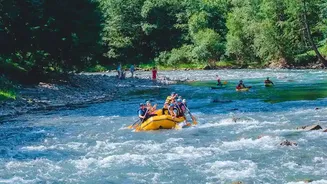
Rishikesh offers several rafting stretches with rapids graded from I (easy) to V (extremely difficult). For a beginner, especially in high-water conditions, the Brahmpuri to Rishikesh stretch (around 9 km) is the ideal choice. It features mostly Grade I and II rapids, which are exciting but manageable for first-timers and families. The popular Shivpuri to Rishikesh stretch (around 16 km) includes more challenging Grade III and III+ rapids like 'Roller Coaster' and 'Golf Course'. While thrilling, this route might be too intense for some beginners during the post-monsoon surge. Discuss your experience level honestly with your guide. Stretches like Marine Drive are best left for experienced rafters.
Essential Gear and What to Wear
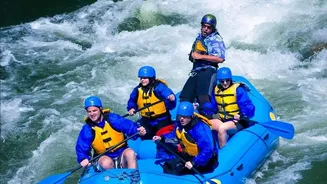
Your operator must provide a high-quality, properly fitting Personal Flotation Device (PFD) or life jacket, and a helmet. Ensure your PFD is snug and all buckles are fastened; it should not ride up over your chin when you pull on the shoulder straps. Wear quick-drying synthetic clothing like a polyester t-shirt and shorts. Avoid cotton, which becomes heavy and cold when wet. For footwear, secure sandals with a heel strap or water shoes are best. Flip-flops are easily lost. Leave valuables like phones and wallets behind; most operators provide a dry bag for essential items like medication.
The All-Important Safety Briefing
Pay close attention during the pre-trip safety briefing. Your guide will explain essential paddling commands (like 'forward,' 'stop,' and 'get down'), how to hold your paddle correctly, and how to position yourself in the raft for stability. This briefing is also where you will learn the most critical safety skill: what to do if you fall into the water. Never skip this briefing or treat it casually; the information provided is for your protection.
What to Do If You Fall In
Falling into the river can be disorienting, but your PFD will keep you afloat. The cardinal rule is: do not panic. Try to grab the safety rope running along the outside of the raft. If you are separated from the raft in a rapid, assume the 'whitewater float position': lie on your back with your feet pointing downstream, keeping them up near the surface to fend off rocks. Listen for instructions from your guide, who is trained to perform a rescue. Do not try to stand up in fast-moving water, as your foot could get trapped. Once in calmer water, your guide will direct you on how to swim back to the raft or to the shore.