
As Diwali approaches, homes across India transform into beacons of light and joy. But beyond the universal glow of diyas, a rich tapestry of unique decorative traditions comes to life, each telling a story of culture, faith, and regional artistry.
Tamil Nadu's Kolam: A Daily Ritual
In Tamil
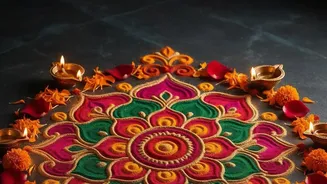
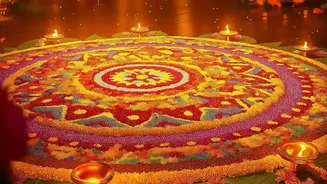
Nadu and much of South India, the threshold of a home is a sacred space, decorated daily with Kolam. This intricate art form involves drawing geometric patterns on the ground using rice flour. Traditionally, this was done at dawn by the women of the household. The use of edible rice flour serves a charitable purpose, providing sustenance for ants, birds, and other small creatures. The designs, often a matrix of dots connected by lines and loops, are believed to welcome the goddess Lakshmi into the home, ushering in prosperity and warding off evil spirits. While beautiful, Kolam is intentionally temporary, washed away by rain or footsteps, only to be created anew the next day.
West Bengal's Alpana: A Fluid Welcome
In West Bengal, Diwali and Lakshmi Puja are marked by the graceful floor paintings known as Alpana. Derived from the Sanskrit word 'alimpan', meaning 'to coat', this art is created with a paste of rice and water. Women use their fingers to draw flowing, freehand designs that are distinctly different from the geometric precision of Kolam. Common motifs include the sun, lotus flowers, fish, and the footprints of Goddess Lakshmi, always pointing inwards to symbolize her entry into the home. The white, pure colour of the rice paste is considered auspicious and is traditionally used on its own to create these elegant patterns on floors and courtyards.
Rajasthan's Mandana: Earthen and Auspicious
Mandana paintings are a hallmark of festive decoration in the rural homes of Rajasthan and Madhya Pradesh. This art form is traditionally done by women of the Meena community on the walls and floors of their mud houses, which are first prepared with a plaster of clay, cow dung, and red ochre. Using chalk or lime powder for the white colour, they draw intricate designs that serve to protect the home, welcome gods, and celebrate festivals like Diwali. Popular motifs include peacocks, tigers, floral patterns, and 'paglya'—the footprints of Goddess Lakshmi, inviting her presence and blessings. The tools are as natural as the materials, with brushes often made from twigs or tufts of hair.
Uttarakhand's Aipan: Sacred Red and White
Aipan is the ritualistic folk art of the Kumaon region in Uttarakhand, distinguished by its striking red and white patterns. The word 'Aipan' is derived from 'lepna', meaning to plaster. The process begins by coating a surface with 'geru', a red ochre soil, which creates a rich, earthy background. On this, intricate designs are drawn using a white paste made from soaked rice, known as 'biswar'. This art is deeply tied to auspicious occasions, and for Diwali, specific designs like the Lakshmi Chowki and the goddess's footprints are drawn to invite wealth and good fortune. Passed down from mother to daughter, Aipan is a sacred practice that turns thresholds and worship areas into spaces of divine welcome.
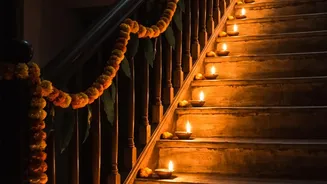
Torans: A Pan_Indian Symbol of Welcome
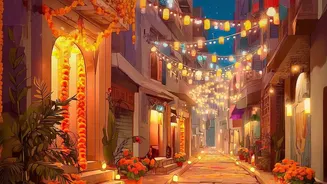
While floor art is deeply regional, the 'toran' or decorative door hanging is a unifying sight across India during Diwali. These festive garlands are traditionally made from fresh marigold flowers and mango leaves, strung together and hung over the main entrance. The vibrant orange and yellow of the marigolds are considered auspicious and festive, while mango leaves symbolize prosperity and are used in many Hindu rituals. A toran is the first symbol of celebration that greets a guest, representing a warm and open_hearted welcome into the home. While traditional versions are compostable, modern variations include beads, mirrors, and fabric that can be reused each year.