



The Anatomy of a Beloved Cliché
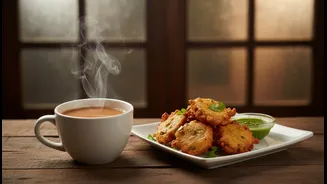
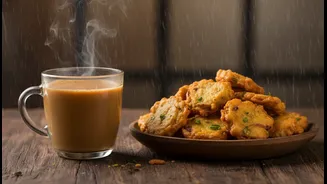
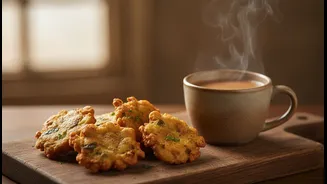
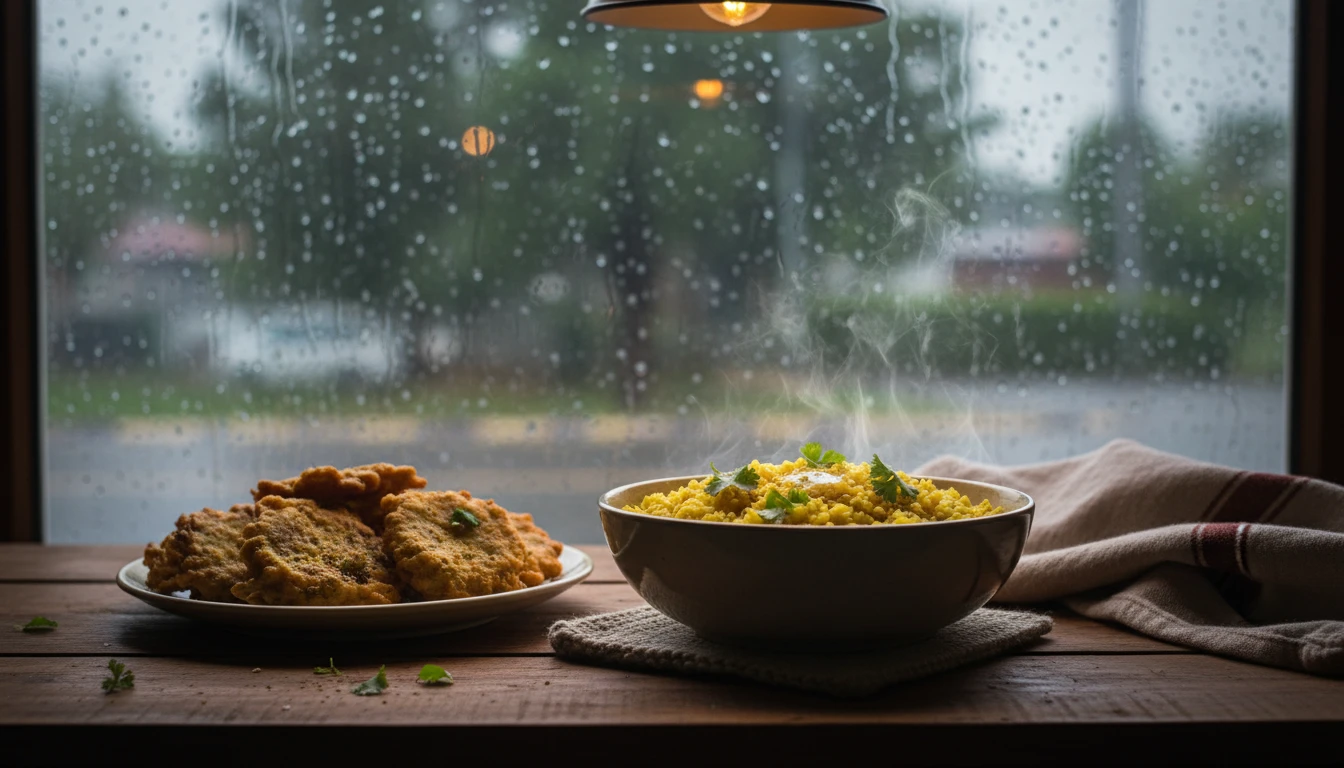
You know the story well. It’s a rainy day. A character stares out of a window, watching the downpour. Soon, a tray appears, bearing a steaming cup of masala chai and a plate of crispy, golden-brown pakoras. The air fills with the aroma of ginger and fried
gram flour. It’s a scene built on pure comfort, a shorthand for nostalgia, warmth, and home. And therein lies the problem. In our collective love for this pairing, we have turned a genuine pleasure into a predictable narrative. Food writers and social media influencers often reach for the same vocabulary: the 'sacred ritual,' the 'crispy texture,' the 'explosion of flavours,' and the 'journey down memory lane.' While heartfelt, this repetition can flatten a rich, complex tradition into a one-dimensional, monsoon-only trope. The story becomes more about the writer's sensory experience than the food's actual role in everyday life.
More Than a Rainy Day Romance
The truth is, the bond between chai and pakoras is far more robust and versatile than its rainy-day reputation suggests. This duo is not just for monsoons; it's an all-weather, all-purpose feature of Indian life. It’s the default snack at an impromptu gathering of friends. It’s the fuel for late-night study sessions. It’s the quick, satisfying bite from a street-side vendor on the way home from work. The pairing's history is a story of evolution. Tea, popularised by the British, was adapted to Indian tastes with milk, sugar, and spices, becoming the ubiquitous chai. Pakoras, or fried fritters, have ancient roots in the subcontinent, mentioned in texts long before their modern association with tea. Their partnership is a relatively modern phenomenon, gaining cult status in the 20th century as street food culture blossomed and railways connected the country. To confine this dynamic duo to the monsoon is to ignore its role as a social equaliser and a constant presence in canteens, homes, and train platforms across the nation.
The Real Ritual is Connection
When we talk about the 'ritual' of chai and pakoras, we often imagine a formal, almost sacred act. But the real ritual is something far more beautifully chaotic and human. It’s not about the perfect placement of a cup on a saucer; it's about the conversation that happens over it. The ritual is the spontaneous decision: “It’s raining, should I make some pakoras?”. It's the sound of batter sizzling in hot oil, a signal that brings family members drifting into the kitchen. The real ritual is the easy camaraderie at a roadside stall, where people from all walks of life stand shoulder-to-shoulder, seeking warmth from a cup of tea. It’s a gesture of hospitality, one of the first things offered to a guest. This ritual isn't about silent, solitary reverence. It’s about noise, laughter, debate, and connection. It’s fundamentally a social act, a way of creating and sharing a small moment of joy.
Finding a Fresher Language
So, how do we tell this story better? The answer isn't to invent new, more elaborate adjectives. It's to embrace specificity and honesty. Instead of just 'crispy,' describe the specific crunch of an onion pakora versus the softer yield of one made with potato or spinach. Instead of a generic 'aromatic chai,' mention the sharp note of ginger or the sweet perfume of cardamom that dominates the blend today. Move beyond your own sensory memory and observe the context. Who made the pakoras? Where are you eating them? Is the chai from a fancy cafe or a roadside 'cutting chai' stall? Is it served in a delicate cup or a small, resilient glass? The story isn't just in the taste; it’s in the details of its existence in the world. It’s in the regional variations—the bhajiya of Gujarat, the telebhaja of Bengal. By focusing on these specific, tangible details, we move from a generic ode to a genuine portrait, one that honours the subject without drowning it in hyperbole.