



Rethink Your Washing Habits
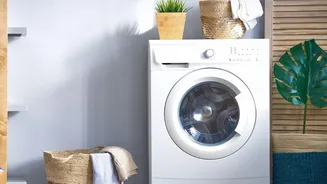
The fight for fresh clothes begins in the wash. During the monsoon, it's crucial not to let damp or sweaty clothes pile up in the laundry basket, as this is a prime breeding ground for odour-causing bacteria. Wash smaller loads more frequently. Overloading
your machine prevents clothes from rinsing properly, trapping detergent residue and moisture that leads to bad smells. For an extra antibacterial boost, add half a cup of white vinegar to your rinse cycle. It's a natural deodoriser that helps dissolve residue and kills spores, rinsing away without leaving a scent. Using liquid detergent can also help, as it tends to rinse cleaner than powder in humid conditions.
Maximise the Spin Cycle
One of the most effective and simplest steps is to remove as much water as possible before hanging clothes to dry. Use the highest spin setting on your washing machine. Consider running an extra spin cycle, especially for heavier items like jeans and towels. This can significantly reduce the amount of residual water in the fabric, cutting down the overall drying time by hours and lowering the risk of mildew growth. The less water your clothes hold when they go on the line, the faster they will dry, even in damp air.
Create Strategic Airflow
Since drying outside is often not an option, creating the right indoor environment is key. Invest in a good quality drying rack and, most importantly, give each garment space. Cramming clothes together prevents air from circulating, which is the main reason they take so long to dry and start to smell musty. Hang items on individual hangers if possible, and ensure there's a gap between each piece of clothing. Place the rack in a well-ventilated room, ideally near a window or directly under a ceiling fan running at a medium to high speed to speed up evaporation.
Use an Appliance to Your Advantage
If you consistently struggle with damp laundry, an electric appliance can be a game-changer. A dehumidifier is highly effective, as it works by pulling excess moisture directly from the air, creating a less humid environment that allows clothes to dry much faster. Placing a dehumidifier in the room where you dry your laundry can cut drying time significantly, often from days to just a few hours. It also helps prevent the general dampness and musty odours in your home that are common during the monsoon. Running an air conditioner in the room can have a similar, albeit less direct, effect.
The Final Ironing Trick
Even after hours of indoor drying, some fabrics, especially around thick seams and collars, may retain a hint of dampness. Never fold and store clothes that feel even slightly moist. A quick pass with a hot iron is the perfect final step to drive out any lingering moisture. This not only ensures your clothes are completely dry but also helps kill any remaining bacteria or mildew spores that could cause odours in storage. For delicate fabrics, a garment steamer can achieve a similar result, using hot steam to freshen the item and eliminate damp smells without direct contact.
Smart Wardrobe Storage
Once your clothes are clean and completely dry, proper storage is the final piece of the puzzle. An overstuffed, airless wardrobe is a haven for moisture. Ensure there is some space between clothes to allow for air circulation. To actively combat humidity, place moisture absorbers inside your closet. Simple and cost-effective options include silica gel packets, small bags of activated charcoal, or even pieces of chalk. Camphor balls are also a traditional and effective choice for absorbing moisture and keeping clothes smelling fresh. On dry, less humid days, leave your wardrobe doors open for an hour or so to air everything out.