




An Ambitious Journey to the Asteroids
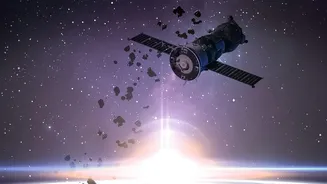
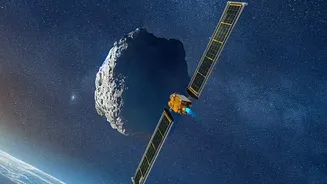
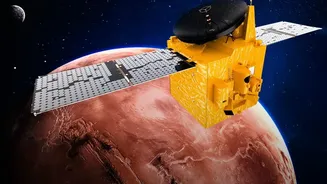
The United Arab Emirates is embarking on one of its most complex scientific endeavours yet: the Emirates Mission to the Asteroid Belt (EMA). This mission will see a spacecraft, named the MBR Explorer, travel approximately five billion kilometres to study
seven different asteroids in the main belt between Mars and Jupiter. The journey, scheduled to launch from Japan in March 2028, will take years and involve multiple gravity-assist flybys of Venus, Earth, and Mars to build up the necessary speed. The ultimate goal is to enter into orbit around the seventh and final target, an intriguing asteroid named 269 Justitia, in 2034. The mission aims to provide crucial data on the origins of our solar system.
Meet HEX20: The Indian Innovator
At the heart of this international mission is HEX20, a space-tech startup with its engineering facility at Technopark in Thiruvananthapuram, Kerala, and operations in the UAE's Masdar City. Founded by a team of entrepreneurs including CEO Amal Chandran, HEX20 has rapidly made a name for itself by developing satellite systems. It previously made history by building India's first private-sector rideshare satellite and has delivered satellites for international clients, showcasing its growing expertise. The company's selection in November 2024 by the UAE Space Agency and the Technology Innovation Institute (TII) marks the first time an Indian private company has been chosen for a deep-space mission by the Gulf nation, a significant vote of confidence in its capabilities.
India's Crucial Contribution
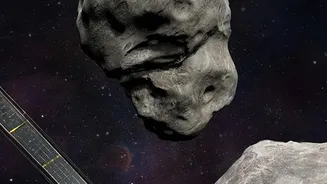
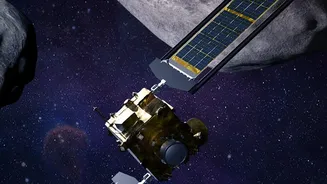
HEX20's role in the EMA mission is far from minor. The startup is responsible for developing several critical components for a lander probe that will separate from the main MBR Explorer spacecraft. Their contribution includes the spacecraft 'bus'—the fundamental structure that houses the payload—as well as the onboard computer, power systems, and highly specialised software. These systems are designed to withstand the extreme conditions of deep space. One of the most significant challenges is the development of autonomous software. Once the probe separates to approach Justitia, it must operate entirely on its own, without any real-time commands from Earth, a major engineering feat.
A Milestone for India's Private Space Sector
This collaboration is more than just a business deal; it represents a major inflection point for India's private space ecosystem. For years, the Indian space programme was dominated by the state-run ISRO. However, policy reforms in recent years, such as the establishment of IN-SPACe, have opened the doors for private companies to participate in everything from satellite manufacturing to launch services. HEX20's involvement in a high-profile, international deep-space mission validates this policy shift, proving that Indian startups can compete and contribute on a global stage. It demonstrates a move from being component suppliers for domestic missions to becoming partners in complex interplanetary exploration.
The Scientific Goal: Unlocking Solar System Secrets
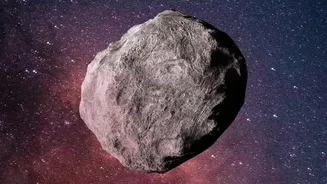
The scientific community is particularly interested in the mission's final destination, asteroid 269 Justitia. This space rock has an unusual reddish colour, which suggests it may have originated in the far reaches of the solar system, possibly the Kuiper Belt, before migrating to its current position. Researchers believe studying its surface could reveal clues about the presence of water and organic materials during the early formation of the solar system. After the MBR Explorer orbits Justitia for about seven months, the HEX20-supported probe will descend to its surface, capturing close-range data that cannot be obtained from orbit.