




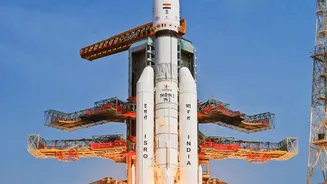
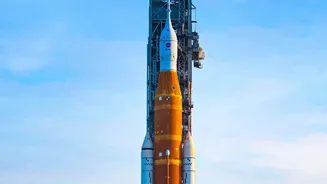
From Handshakes to High-Tech Hardware
The partnership between the Indian Space Research Organisation (ISRO) and the National Aeronautics and Space Administration (NASA) is not new, but its recent acceleration is unprecedented. The cornerstone of this enhanced collaboration includes landmark
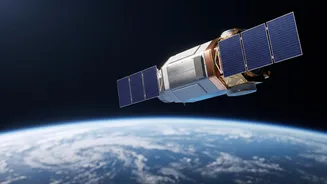
projects like the NASA-ISRO Synthetic Aperture Radar (NISAR) mission. Launched last year, this joint satellite is designed to monitor Earth's surface in immense detail, providing crucial data for managing climate change, agricultural resources, and natural disasters. But the collaboration has expanded far beyond single missions. India's signing of the Artemis Accords, a US-led framework for principles in civil space exploration, marked a pivotal moment. This move aligns India with a growing coalition of nations committed to sustainable and cooperative lunar exploration, moving it from a self-reliant space power to a key player in global space governance.
The Geopolitical Constellation
In the great power calculus of the 21st century, space is a critical domain for national security, communications, and economic leverage. The India-US space partnership is increasingly seen through a strategic lens, particularly as a counterbalance to China's expanding space capabilities and ambitions. For Washington, a technologically advanced and aligned India is a vital partner in ensuring a "free and open Indo-Pacific" extends into orbit. For New Delhi, this partnership offers access to cutting-edge technology, enhances its space situational awareness, and solidifies its position as a leading power. By joining the Artemis Accords, India has firmly planted its flag in the US-led camp of space exploration, distinguishing itself from the parallel Sino-Russian alliance. This alignment has significant implications, suggesting that the next frontier of global competition and cooperation is not on Earth, but far above it.
Fueling the Commercial Space Engine
The benefits of this partnership are not confined to government agencies. They are designed to trickle down and energize a burgeoning private space industry in India. The U.S.-India initiative on Critical and Emerging Technology (iCET) explicitly aims to foster collaboration between commercial space sectors. This includes creating pathways for Indian startups to integrate into global supply chains, attracting foreign direct investment, and aligning policies to ease business. With India's domestic space economy projected to grow to over $40 billion by 2033, American companies see a massive market and a pool of skilled talent. For India, this means more than just launching satellites; it's about creating a vibrant ecosystem of innovation, high-skilled jobs, and new commercial services that can drive economic growth for decades.
Training Astronauts, Building a Future
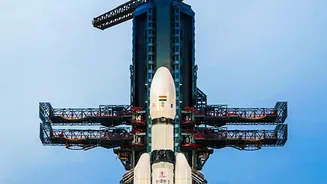
Perhaps the most visible sign of this deepening bond is the cooperation in human spaceflight. As part of the partnership, ISRO astronauts are set to train at NASA's Johnson Space Center for a joint mission to the International Space Station (ISS). This isn't just a symbolic gesture. It represents a significant step in developing India's own human spaceflight capabilities, particularly for its ambitious Gaganyaan programme. The collaboration provides invaluable access to decades of NASA expertise in life-support systems, mission planning, and astronaut safety protocols. This sharing of knowledge is crucial for building a sustainable human spaceflight program and inspiring a new generation of Indian scientists, engineers, and explorers. The partnership is about building a human capital pipeline to power India's future ambitions.
A Shared Future in the Final Frontier
While the trajectory is promising, the path forward requires continuous effort. Aligning complex regulatory frameworks, managing sensitive technology transfers, and navigating the different paces of their respective private sectors are ongoing challenges. However, the intent is clear. At recent meetings of the India-U.S. Civil Space Joint Working Group, discussions have centered on expanding cooperation beyond NISAR, including a potential role for ISRO in NASA's Moon Base program. This signifies a shift from mission-specific projects to building an enduring technological and strategic network. The partnership is evolving into a long-term investment, with both nations recognizing that their shared future in space is intertwined with their security and prosperity on Earth.