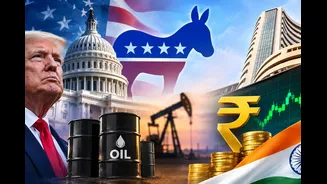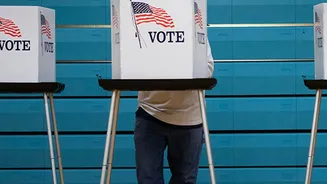






Global markets delivered a surprising verdict following a decisive Democratic sweep in the US midterms. But beyond the initial stock rally lies a web of uncertainty. The real story isn't the immediate reaction, but what remains unsettled.
An Unexpected Rally
In the immediate
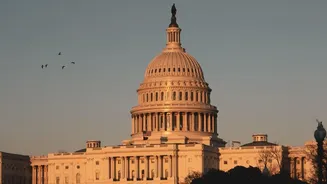
aftermath of the November 3rd elections, which saw the Democratic party take control of both the House and Senate, global markets defied initial fears. After a brief wobble in overnight futures, Wall Street surged, with the Dow Jones enjoying its best day in over a year. European and many Asian markets followed suit. The conventional wisdom is that markets favour political gridlock, and with a Republican President and a Democratic Congress, that's exactly what they got. This scenario is often seen as positive because it reduces the likelihood of sweeping policy changes, like major tax hikes or massive spending bills, creating a more predictable environment for businesses. The US dollar slid, and government bond yields fell as investors moved into the perceived safety of US Treasuries.
A Tale of Two Sectors
The broad market rally masked a more complex story at the sector level. Clean energy stocks in Europe and the US received a boost on hopes of a more favourable regulatory environment under a Democratic Congress. Conversely, the election results sent a chill through the artificial intelligence (AI) and technology sectors. Stocks for companies involved in AI infrastructure and data centres, like Nvidia and Intel, fell on fears of increased scrutiny and regulation. Democratic wins in key states have raised questions about potential restrictions on data centre construction, a cornerstone of the AI boom. Defense stocks in Europe also declined as investors priced in the possibility of greater oversight of military spending and foreign policy.
The Questions That Remain
This is where the headline's premise comes into focus. While the initial reaction was relief, the election result does not yet establish a clear path forward. The biggest question is how a lame-duck President Trump will interact with a newly empowered Democratic Congress. Analysts point to the upcoming debt ceiling debate in 2027 as a major potential flashpoint. The US government is approaching its borrowing limit of $41.1 trillion, and a political standoff could unnerve markets, impact the US dollar, and even risk a government shutdown. Another area of uncertainty is foreign policy. While oil prices fell sharply on hopes that a new Congress might push for de-escalation in the conflict with Iran, some analysts warn that the opposite could happen, with the president acting more aggressively on the world stage.
Beyond Washington's Bubble
It is crucial to remember that the US election is not the only factor driving global markets. Persistent inflation remains a primary concern for central banks worldwide, with both the US Federal Reserve and the Bank of England expected to continue raising interest rates to cool rising prices. The broader economic outlook, including GDP growth and corporate profits, will ultimately have a more durable impact on asset prices than the day-to-day political drama. Historical data shows that markets often perform well in the year following midterm elections as political uncertainty fades and focus returns to these fundamentals. However, analysts also caution that a potential slowdown in AI investment could dampen US GDP growth projections for the coming years.