






Beyond the Single Ceiling Light
For decades, bedroom lighting has been a simple affair: a central ceiling fixture for general light and perhaps a bedside lamp. This one-size-fits-all approach is functional but limiting. It treats the bedroom as a monolithic space, ignoring the different
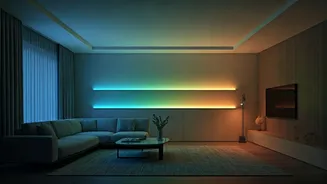
activities and moods it needs to support. A bright overhead light that’s useful for cleaning is jarring when you’re trying to wind down, and a dim lamp perfect for reading might not be enough to help you find a matching pair of socks in the morning. The goal of smart lighting isn't just about adding colour; it's about layering light to create a flexible, responsive environment that adapts to your needs throughout the day and night.
The Science of Waking and Sleeping
Our bodies are naturally programmed to respond to light. Bright, blue-toned light (similar to midday sun) signals our brains to be awake and alert by suppressing melatonin, the sleep hormone. Conversely, warm, dim, amber-toned light (like a sunset) allows melatonin production to increase, preparing us for sleep. A traditional light bulb offers one static colour temperature. Smart lighting, however, lets you manipulate both brightness and colour temperature. You can program your lights to mimic the sun's natural cycle, creating a personal sunrise and sunset within your four walls. This is the foundation of creating dedicated zones for different states of being, from high energy to deep relaxation.
Zone 1: The Gentle Wake-Up
Instead of being jolted awake by a blaring alarm in a dark room, imagine your lights gradually brightening over 15 to 30 minutes. This is a core feature of many smart lighting systems. You can create a “Wake-Up” scene that starts with a warm, dim glow and slowly transitions to a brighter, cooler white light. This simulates a natural sunrise, gently easing you out of sleep. It’s a less stressful, more natural way to start your day. This can be achieved with smart bulbs in your main bedside lamps, programmed to run automatically at your desired wake-up time.
Zone 2: The Focused Reading Nook
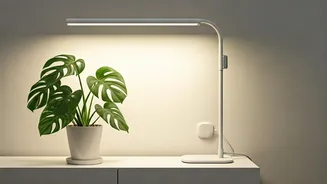
Whether it’s a dedicated armchair or simply your bed, a reading zone requires specific lighting. You need light that is bright enough to prevent eye strain but not so harsh that it feels clinical. A smart bulb in a directional reading lamp is perfect for this. You can set a “Reading” scene that provides clean, white light (around 4000K, or Kelvin) focused directly on your book, leaving the rest of the room in softer, ambient light. When you’re done reading, a simple voice command or tap in an app can switch the entire room to a more relaxed setting.
Zone 3: The Wind-Down Sanctuary
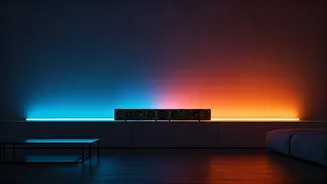
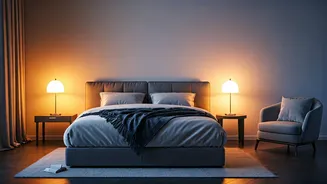
The hour before bed is crucial for sleep quality. This is where your “Wind-Down” or “Relax” zone comes into play. This scene should eliminate all blue light. Set your lights to a very warm, dim, amber or reddish glow, mimicking candlelight or a campfire. This signals to your brain that it’s time to produce melatonin and prepare for rest. LED light strips placed behind a headboard or under the bed frame are fantastic for this, as they provide an indirect, diffuse glow that feels incredibly calming. The goal is to create an atmosphere so tranquil that picking up your phone feels like a disruption.
The Simple Toolkit
Getting started is easier than you think. You don't need to be a tech expert or rewire your home. The basic toolkit consists of a few key components: smart bulbs that can replace your existing bulbs, flexible LED light strips for ambient and accent lighting, and a central app on your smartphone to control them. Most systems from major brands are designed to be plug-and-play. You can start with just one or two bulbs in your bedside lamps and build from there. The magic happens when you use the app to group lights and save your preferred settings as “scenes”—like the “Wake-Up” or “Reading” zones—which can then be activated with a single tap or a voice command via assistants like Google Assistant or Alexa.