



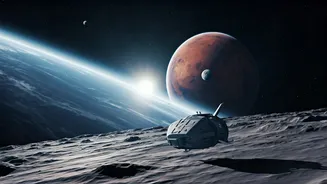


A New Kind of Space Race
For most of history, space exploration was the exclusive domain of national governments, a stage for geopolitical rivalries like the Cold War. Today, the landscape has fundamentally changed. The 21st-century space race is driven by commercial interests,
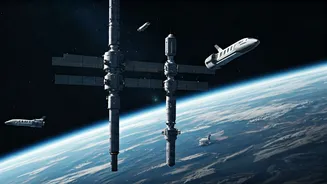
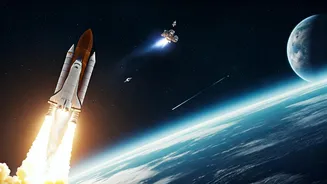
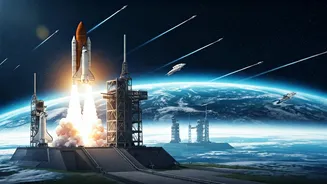
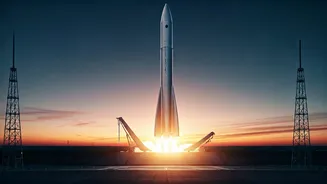
with private companies now leading the charge in innovation, launch services, and in-space activities. [7] This transition was accelerated by government policies designed to foster private competition, dramatically lowering costs and opening the door for new business models. [7] The most visible symbol of this change is the reusable rocket, pioneered by companies like SpaceX, which has slashed the cost of reaching low Earth orbit. [17] This shift means space is no longer just a destination for scientific missions but a vibrant economic sector projected to grow into a $1.8 trillion market by 2035. [3]
The Titans of the New Frontier
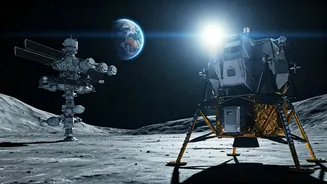
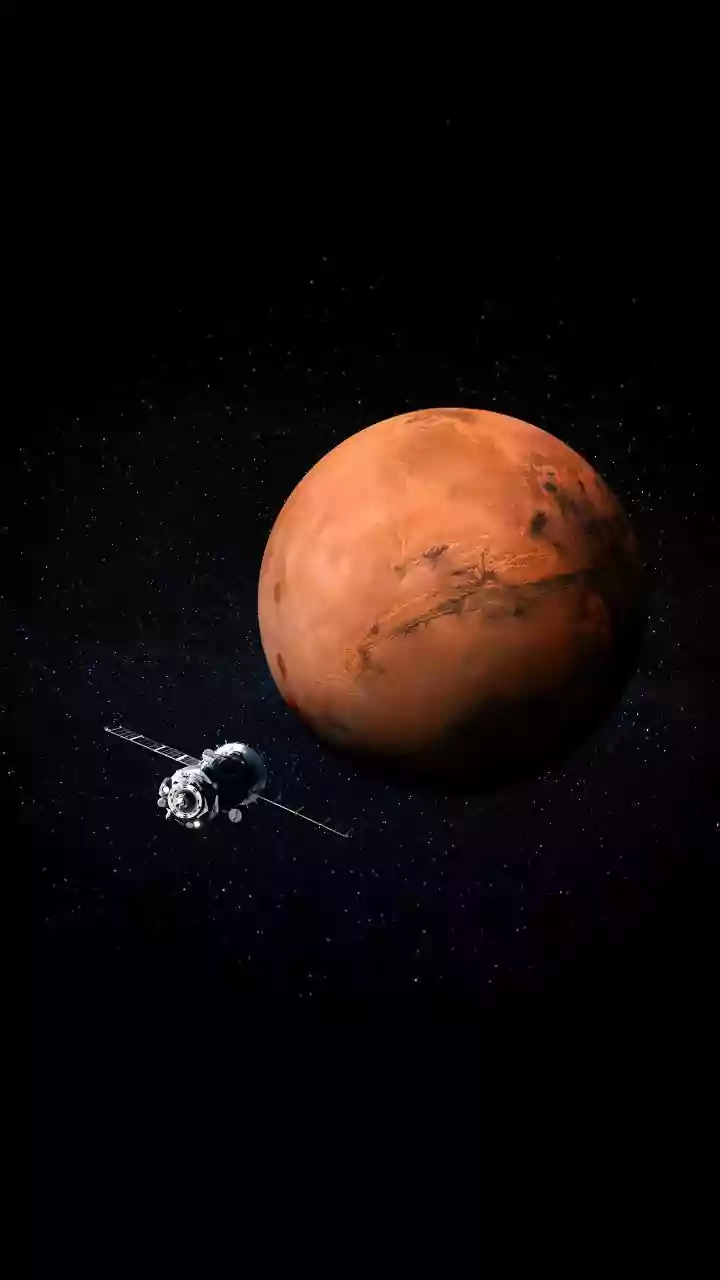
A handful of ambitious companies, often led by high-profile billionaires, have become the faces of this new era. SpaceX, founded by Elon Musk, aims to colonize Mars and has already dominated the commercial launch market with its Falcon rockets and Starlink satellite internet constellation. [13, 19] Jeff Bezos's Blue Origin is developing heavy-lift rockets like the New Glenn and its Blue Moon lander for lunar missions, alongside its suborbital tourism flights. [13, 25] Richard Branson's Virgin Galactic focuses specifically on the space tourism market, offering sub-orbital flights to paying customers. [13] These are not just passion projects; they represent distinct business strategies. SpaceX has cornered over 80% of the private launch market, while Blue Origin and Virgin Galactic have created the nascent market for citizen space travel. [3, 13]
It's Not Just About Rockets
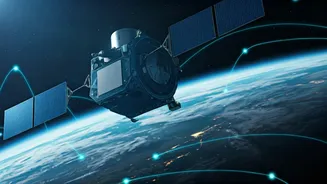
While billionaire joyrides capture headlines, the real economic engine of the commercial space age is far broader. The industry is shifting from one-off hardware sales to providing outcome-based services like connectivity, Earth observation, and data analytics. [3] The largest segment is satellite communications, driven by mega-constellations like SpaceX's Starlink and Amazon's Project Kuiper, which are deploying thousands of satellites to provide global internet access. [2] Other booming sectors include Earth observation, where companies use AI to analyze satellite imagery for everything from crop monitoring to tracking construction activity, and in-space servicing, an emerging market for repairing or refueling satellites in orbit. [2] This has created a massive downstream demand for manufacturing, software, and ground infrastructure. [18]
The India Connection
India is rapidly becoming a significant player in the commercial space arena. Since the government opened the sector to private participation in 2020, the country has seen a boom, with the number of space-tech startups soaring from just a handful to over 400. [8, 15] The Indian Space Policy 2023 and bodies like IN-SPACe are designed to facilitate this growth, providing private firms with access to ISRO's expertise and infrastructure. [12, 22] Indian startups like Skyroot Aerospace, which launched the country's first private rocket, and AgniKul Cosmos are developing their own launch vehicles. [12] The government is also encouraging private development by transferring technology for proven rockets like the PSLV to domestic companies. [24] With its space economy projected to grow fivefold to over $40 billion by the next decade, India is positioning itself as a key hub for manufacturing, launch services, and satellite development. [22]
The Challenges on the Horizon
This rapid commercial expansion is not without risks. The surge in satellite launches is making low Earth orbit increasingly congested, raising the danger of collisions and creating vast amounts of space debris. [16] A single collision could trigger a cascading chain reaction, known as the Kessler Effect, that could render certain orbits unusable. [20] This has made space sustainability and debris mitigation a critical business imperative. [2] Furthermore, regulation has struggled to keep pace with the speed of commercial innovation, creating uncertainty and a complex legal landscape. [10, 21] Finding a balance between promoting growth and ensuring the long-term safety and sustainability of space activities remains a key challenge for governments worldwide. [11]