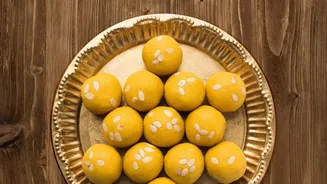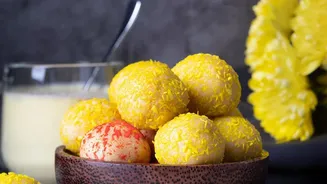


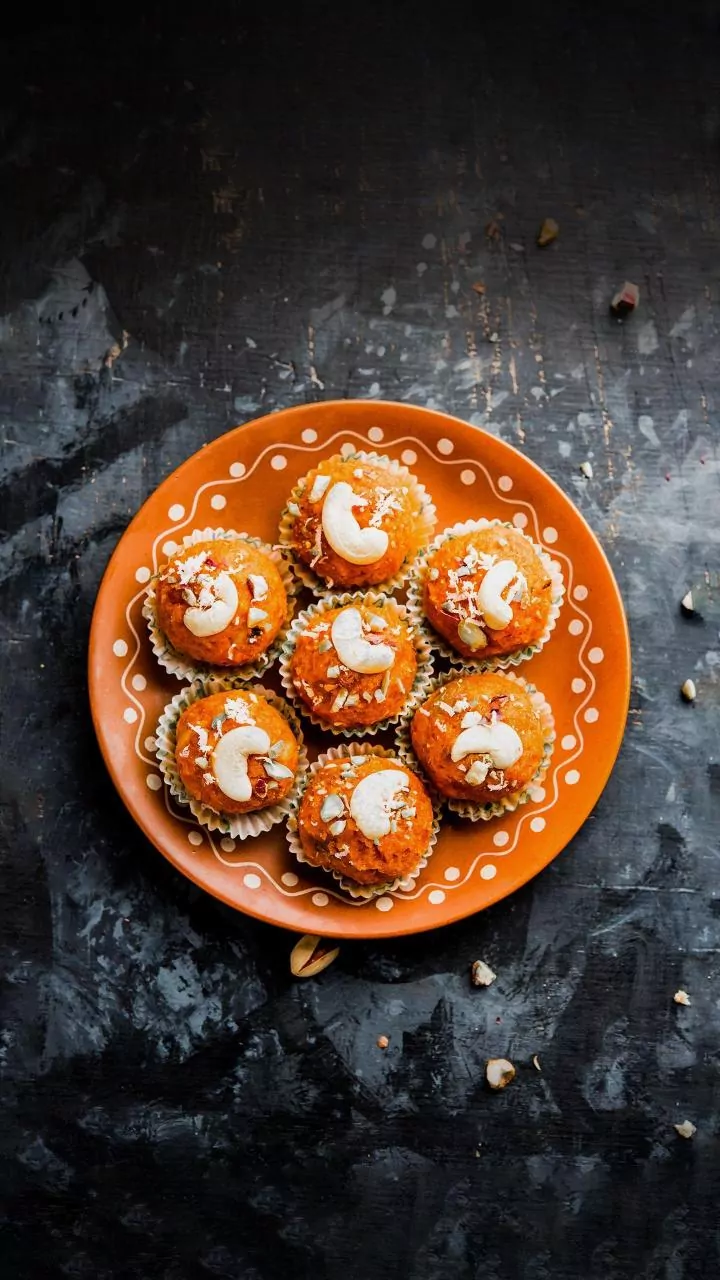
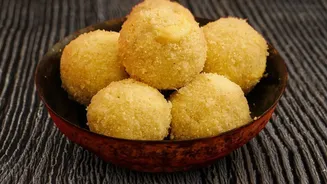

Besan ladoo is a timeless Indian sweet, loved for its nutty aroma and melt-in-the-mouth texture. But the joy of making it at home can quickly turn to frustration when the ladoos refuse to hold their shape. Here’s how to master the art.
The Foundation: Ratios and Ingredients
The journey to a
perfect ladoo begins with your ingredients. For a classic, soft texture, the ratio of besan (gram flour) to ghee is crucial. A common starting point is a 2:1 ratio by weight, for instance, 200 grams of besan to 100 grams of ghee. However, the exact amount can vary. Coarser besan, often sold as 'ladoo besan', provides a desirable grainy texture but might require slightly more ghee. Fine besan creates a smoother ladoo. Don't add all the ghee at once; adding it gradually allows the flour to roast evenly without becoming heavy. When it comes to sugar, professionals often use 'tagar' or 'boora', a type of cooked sugar with a sandy texture that prevents stickiness. If you can't find it, finely powdered and sifted granulated sugar is a great alternative.
The Art of Roasting (Bhunai)
Patience during the roasting process is the single most important secret to great besan ladoos. This step, known as 'bhunai', must be done on a low to medium-low flame. Rushing with high heat will result in a raw, chalky taste or, worse, burnt specks that make the entire batch bitter. Melt your ghee in a heavy-bottomed pan, add the besan, and stir continuously. At first, the mixture will be lumpy, but as it roasts, it will loosen and become more liquid. The process can take anywhere from 15 to 30 minutes. You'll know it's ready when the colour deepens to a beautiful golden brown and a rich, nutty aroma fills your kitchen. Some cooks sprinkle a tablespoon of water or milk into the roasted besan; this creates a reaction that results in a more granular, 'danedar' texture.
The Sweet Spot: Adding Sugar
Temperature control is non-negotiable when adding sugar. If you add sugar to the besan mixture while it's still piping hot, the sugar will melt and turn into a syrup. This leads to a sticky, dense ladoo that can harden and become difficult to shape. Conversely, if the mixture is completely cold, the sugar won't integrate properly, and the ladoos will be crumbly. The sweet spot is to let the roasted besan cool until it's just warm to the touch. Then, add your powdered sugar and cardamom, and mix vigorously. Using your hands to knead the mixture helps the residual warmth from the besan and your palms melt the ghee just enough to bind everything together.
Troubleshooting and Shaping
Even with careful steps, sometimes the mixture doesn't cooperate. If your ladoo mix is too dry and crumbly, it almost always means you need more ghee. Add one tablespoon of warm, melted ghee at a time until the mixture holds its shape when pressed. If the mixture is too soft or greasy and won't form a ball, it likely has too much ghee or was too hot when the sugar was added. The easiest fix is to refrigerate the mixture for 15 to 20 minutes. This will help the ghee solidify, making the mixture firm enough to shape. To form the ladoos, take a small portion and press it firmly between your palms, rolling it into a smooth, round ball. The gentle pressure and warmth from your hands are key to creating that perfect sphere without any cracks.