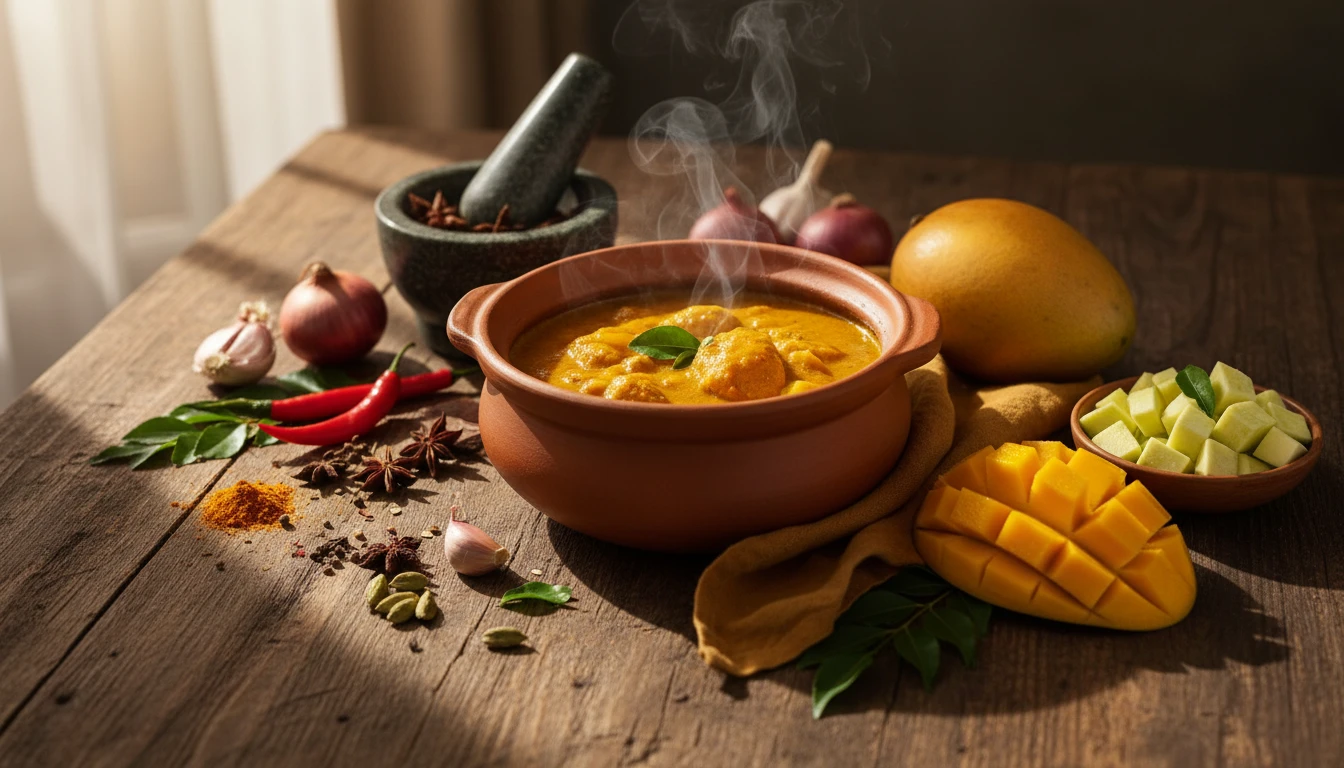







Kerala's Vegetable Ishtu
A gentle hug in a bowl, Kerala's Vegetable Stew, or 'Ishtu' as it's locally known, is the epitome of subtle and soothing flavours. This creamy, white curry is made with a base of coconut milk, which gives it a luxurious texture without being heavy. It's
typically loaded with a medley of monsoon vegetables like potatoes, carrots, green beans, and peas. The magic lies in its mild seasoning; whole spices like cinnamon, cloves, and cardamom are gently bloomed in coconut oil, infusing the stew with their aroma. Slit green chillies and julienned ginger add a hint of warmth that doesn't overpower the natural sweetness of the vegetables and coconut. Traditionally served with delicate appams (rice flour pancakes), this stew is a testament to the fact that comforting food doesn't always need to be fiery.
Maharashtrian Pithla
When the rain is lashing down and you need something hearty in a hurry, Maharashtrian Pithla is the answer. This rustic and flavourful curry comes together in minutes and is a staple in many households, especially during the monsoon. The hero ingredient is besan (gram flour), which is whisked with water to form a liquid batter and then cooked until it thickens into a delicious, porridge-like consistency. The flavour base is a punchy mix of crushed garlic, green chillies, and onions, sizzled in a tempering of mustard seeds and curry leaves. It's a dish that proves simple ingredients can create extraordinary flavour. Often enjoyed with hot bhakri (millet flatbread) or steamed rice, Pithla is the ultimate comfort food for a gloomy day.
Gujarati Kadhi
Sweet, sour, and spiced, Gujarati Kadhi is a light and soupy stew that beautifully balances a range of flavours. Unlike its thicker Punjabi cousin, this version is thin and relies on a base of yogurt (curd) and a small amount of gram flour. It's simmered gently until the rawness of the flour disappears, a process that requires constant stirring to prevent the yogurt from curdling. A touch of jaggery or sugar provides its characteristic sweetness, which plays off the tang of the yogurt. The final flourish is a tempering of ghee, mustard seeds, cumin, cloves, and curry leaves, which gives the kadhi its aromatic finish. It's a cooling yet warming dish, perfect for those humid, rainy afternoons when you crave something nourishing but not too heavy.
Bengali Ghonto
A 'ghonto' in Bengali cuisine refers to a delightful mishmash of vegetables, and it's a dish that truly shines during the monsoon when a variety of produce is available. This semi-dry stew is a celebration of seasonal bounty, often featuring ingredients like pumpkin, potatoes, eggplant, and carrots. What makes a ghonto special is its unique combination of textures and flavours, brought together with the quintessential Bengali five-spice mix known as 'panch phoran'. Some variations, like 'Chapor Ghonto', are elevated with the addition of fried lentil cakes that soak up the gravy and add a wonderful textural contrast. Another popular version is 'Muri Ghonto', which includes a fish head for a richer, more complex flavour. Regardless of the variation, a ghonto is a wholesome and deeply satisfying dish that embodies the spirit of traditional, no-waste cooking.