







A Digital Push for Discovery
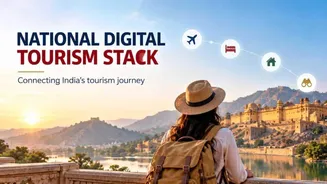
The government, through its Ministry of Tourism, has unveiled a significant new plan to reshape domestic travel. The core of this strategy is the National Digital Tourism Stack (NDTS), an open digital infrastructure project developed in partnership with
the Open Network for Digital Commerce (ONDC). Rather than creating another standalone booking website, the NDTS is designed as a shared network. This allows tourism providers—from homestays and tour guides to transport services—to list their offerings once and have them appear across multiple participating apps and platforms. Launched on World Tourism Day 2026, this initiative is coupled with the 'Dekho Apna Desh 2.0' campaign, which aims to encourage travellers to explore destinations beyond the usual tourist circuits. The goal is to make the vast, undiscovered parts of India more discoverable, accessible, and trustworthy for the modern traveller.
How It Works for Travellers and Hosts
For travellers, the new system promises a more seamless and integrated planning experience. Instead of juggling multiple apps for flights, hotels, and local activities, the NDTS aims to connect these services. The platform will support verified identities, secure digital payments, user ratings, and a grievance redressal system, adding a layer of trust, especially when booking with smaller, independent operators. For small-scale tourism providers in remote areas, this is a game-changer. A homestay owner or a local artisan in a village, who may lack the resources for extensive digital marketing, can gain visibility on a national scale. The government has set an ambitious target to bring 23,000 tourism offerings, including 9,000 homestays and 14,000 local experiences, onto the network by the end of 2028. This 'list once, reach multiple platforms' model reduces dependence on any single booking giant.
Boosting Economies Beyond the Metros
A primary objective of this initiative is to spread the economic benefits of tourism more evenly across the country. Currently, tourism revenue is heavily concentrated in a few popular destinations, often leading to overcrowding and stress on local infrastructure. By promoting alternative destinations, the government hopes to create new employment opportunities in rural and semi-urban areas, particularly for youth and women. This can help diversify rural economies, reducing over-reliance on agriculture and potentially curbing migration to cities. The Ministry of Tourism has also signed agreements with major players like Airbnb, MakeMyTrip, and FlixBus to promote these lesser-known destinations, develop homestay capacity through host training, and encourage responsible tourism practices.
The Road Ahead: Promise and Potential Hurdles
The vision for a fully integrated, AI-driven tourism ecosystem is ambitious, with a phased rollout planned over the next few years. A pilot program is scheduled to begin in early 2027, with a nationwide scaling-out to follow through 2028. The long-term vision even includes a 'One Ticket, One Pass' system that could unify access to monuments, transport, and various experiences in a single digital credential. However, significant challenges remain. Success will depend on bridging the digital divide, ensuring reliable internet connectivity in remote locations, and providing digital literacy training for local entrepreneurs. Furthermore, as these new destinations gain popularity, careful planning will be needed to manage tourist footfall sustainably, preserving the very culture and environment that make them attractive. The government's focus on monitoring carrying capacity and promoting responsible visitor messaging will be crucial to avoiding the pitfalls of over-tourism that have plagued more established spots.