




The Great Urban Squeeze
Across India's bustling metropolises, a quiet revolution is reshaping the urban landscape. The dream of a sprawling family home is increasingly being replaced by the practical reality of a compact apartment. As real estate prices climb, families in cities
like Mumbai, Bengaluru, and Delhi are embracing smaller living spaces, from 2BHK flats to studio apartments. This shift towards minimalist living is driven by necessity, but it brings with it a unique set of challenges, particularly when it comes to celebrating festivals that have traditionally been rooted in space-intensive rituals. With less square footage to spare, dedicating an entire room for worship is a luxury few can afford. This urban squeeze forces a rethink of how sacred traditions, passed down through generations, can be honoured within the modern constraints of city life.
Tradition Meets Constraint
Navratri, a nine-night festival pulsating with energy, has always been a visually grand affair. Many communities, especially in South India, celebrate with elaborate 'Golu' or 'Kolu' displays—tiered arrangements of dolls and idols depicting divine stories. Traditionally, these displays can occupy a significant portion of a room. Similarly, homes in the north and west dedicate a sacred corner for the Kalash Sthapana, continuous 'Akhand Jyot' lamp, and daily pujas that require space for family to gather. In a compact home, these cherished traditions face a logistical hurdle. A nine-step Golu is often impractical, and a permanent, ornate mandir can feel bulky. The challenge is clear: how do you preserve the scale of devotion when the scale of your home has changed?
Ingenuity in Worship: The Vertical Solution
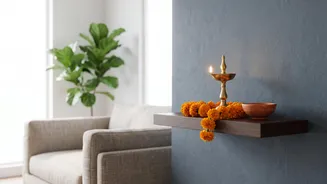
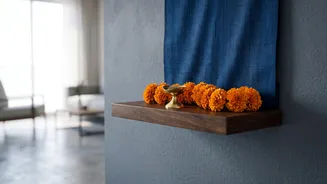
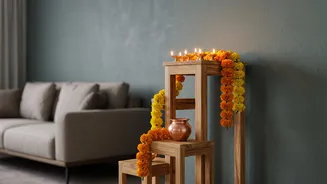
The most innovative solutions are literally looking up. Instead of spreading out, families are now going vertical. Wall-mounted pooja units have become incredibly popular, transforming a small section of a living room or hallway wall into a dedicated spiritual zone without consuming any floor space. These floating mandirs range from simple shelves to intricately carved wooden cabinets with foldable doors and integrated drawers for storing prayer essentials. For Golu displays, collapsible or foldable ladder-like shelves are being used, which can be easily assembled for the festival and stored away afterward. Corner shelves, which turn previously unused nooks into vibrant displays, are another popular choice. This clever use of vertical space ensures that the grandeur of the tradition finds a new, elevated expression.
Modular, Mobile, and Multi-Functional
Beyond verticality, the principles of modern furniture design—modularity and multi-functionality—are being embraced. Interior designers are seeing a surge in demand for pooja units integrated within other furniture, like TV cabinets, bookshelves, or even storage cupboards. A section of a wall unit can be designed with decorative jaali panels or doors that, when opened, reveal a serene prayer space complete with soft backlighting. Some mandirs are designed as cabinets on wheels, allowing them to be moved when not in use. Multi-functional furniture like ottomans with built-in storage provide extra seating for guests during aarti while also holding festive supplies. These smart designs prove that a prayer space doesn't have to be static; it can be as flexible and adaptable as modern life demands.
Spirit Over Square Feet
Ultimately, this shift is about more than just clever design; it's a testament to the resilience of faith. While the physical form of the prayer space may be evolving, the spiritual essence of Navratri remains unchanged. Families are discovering that the sanctity of a ritual is not measured in square feet. A smaller, minimalist altar adorned with a few carefully chosen decorations, like fresh flowers, elegant diyas, and colourful fabric backdrops, can create a powerful and divine atmosphere. The focus is shifting from extravagant displays to the core emotions of devotion, togetherness, and celebration. This adaptation shows that tradition is not a rigid relic of the past, but a living, breathing entity that evolves in step with the lives of its followers.