






A great day starts the night before, and the right mattress is key to restorative sleep. But with so many options, how do you choose? For spring mattresses, it comes down to two critical factors: getting the bed size right and understanding build quality.
Getting the Right Fit: Bed Size
Before looking at any other feature, the first step is ensuring the mattress fits your bed frame and your room. In India, mattress sizes are not always uniform across brands, so measuring is essential. The most common sizes are Single, Double, Queen, and King. A Single (typically 36 inches wide) is great for children or individual adults in compact rooms. A Double (48 inches wide) offers more space for a single sleeper. For couples, a Queen size (60 inches wide) is the most popular choice, fitting comfortably in most modern apartment bedrooms. A King size (72 inches wide) provides maximum personal space, ideal for couples who want extra room or families that co-sleep. Always measure the inner dimensions of your bed frame, as lengths can vary from 72 to 78 inches.
Beyond the Numbers: Room and Sleeper Size
Choosing a size isn't just about the frame. Consider your room's layout; a King bed might technically fit, but it could leave you with little space to walk. A good rule of thumb is that a room should be at least 12x12 feet to comfortably accommodate a King size bed. Your height also matters. A standard 72-inch (6-foot) mattress might feel short if you are tall. Many brands offer lengths of 75 or 78 inches, so look for a mattress that is at least six inches longer than the tallest person using it. This prevents your feet from hanging off the edge and ensures a more comfortable sleep.
Decoding Build Quality: The Spring System
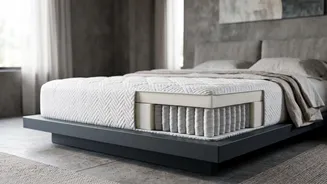
The 'engine' of a spring mattress is its coil system. There are two main types: Bonnell spring and pocket spring. Bonnell coils are hourglass-shaped and wired together, creating a firm, interconnected unit. This traditional design is durable and affordable but has a key drawback: motion transfer. When one person moves, the entire mattress surface can jiggle, potentially disturbing a partner. Pocket springs, on the other hand, are individual coils wrapped in their own fabric pockets. They move independently, contouring to your body's shape and dramatically reducing motion transfer. This makes pocket spring mattresses an excellent choice for couples.
Understanding Coil Count and Gauge
When comparing spring mattresses, you will often see 'coil count' and 'coil gauge' mentioned. Coil count is simply the number of coils in the mattress. Generally, a higher count in a pocket spring mattress means more precise support, as the weight is distributed over more individual points. However, count alone isn't a sign of quality. You must also consider coil gauge, which refers to the thickness of the wire. The scale is inverse: a lower gauge number (e.g., 12 or 13) means a thicker, firmer wire, while a higher gauge (e.g., 15) means a thinner, more flexible wire. Heavier individuals may benefit from a lower gauge for better support, while those who prefer a softer feel might opt for a higher gauge. A good balance of count and gauge is what creates a supportive, durable mattress.
The Layers of Comfort
The springs provide support, but the comfort layers on top determine how the mattress feels. These layers provide pressure relief for your shoulders and hips and are often made from materials like polyurethane foam (polyfoam), memory foam, or latex. Polyfoam is a standard, versatile material, while memory foam is known for its body - hugging feel and excellent motion isolation. Natural latex offers a bouncier, more responsive feel and is often cooler than memory foam. Some mattresses also use natural fibres like cotton or wool, which add breathability and softness. The thickness and quality of these layers are crucial for long - term comfort and preventing you from feeling the springs underneath.
Final Quality Checks : Stitching and Edge Support
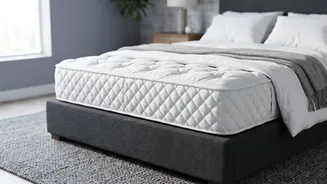
Before making a final decision , inspect the mattress ' s finishing touches . The quality of the stitching and the outer fabric can be an indicator of overall craftsmanship . Look for even seams and a neatly finished tape edge , with no loose threads . Another critical feature is edge support . A mattress with reinforced edges will feel more stable and prevent the sensation of rolling off when you sit or sleep near the side . This also increases the usable surface area of the mattress . If you can , test this in a store by sitting on the edge to see how much it sags . A well - built mattress will offer consistent support from the centre to the perimeter .