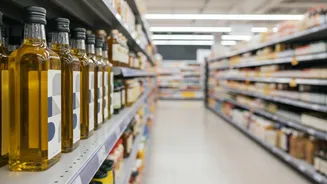










The Old Era of Confusion
For years, the Indian edible oil market was a wild west of packaging. After regulations on standard sizes were relaxed in early 2023, the shelves of supermarkets and kirana stores filled with a dizzying array of non-standard packs. Shoppers were confronted
with bottles and pouches of 850 ml, 870 ml, or even 910 ml, often looking nearly identical to a full 1-litre pack. This practice, sometimes called 'shrinkflation', made it incredibly difficult for consumers to make a true price comparison. A pack might seem cheaper at first glance, but a quick calculation would reveal a higher per-litre cost, a detail most busy shoppers would miss. This created an uneven playing field where competition was less about the quality of the oil and more about clever packaging strategies that could potentially mislead consumers.
The Government Steps In
In response to growing concerns from both consumer groups and industry bodies, the Department of Consumer Affairs decided to restore order. After extensive consultations with major industry associations—representing nearly 90 percent of India's edible oil sector—the government mandated a return to standard pack sizes in June 2026. The new rules, issued under the Legal Metrology framework, apply to all major edible oils, including palm, soybean, sunflower, and mustard oil, whether produced domestically or imported. Manufacturers, packers, and importers were given a three-month grace period to transition their inventory and comply with the new norms. The move was widely welcomed by industry leaders, who noted it would restore “structural sanity” to retail shelves.
What Are the New Rules?
The new regulations are straightforward and designed for maximum clarity. Edible oils can now only be sold in a specific set of sizes: 200 ml/g, 500 ml/g, 1 litre/kg, 2 litre/kg, 3 litre/kg, 4 litre/kg, 5 litre/kg, and larger commercial packs of 15 and 20 litre/kg. This immediately eliminates the odd-sized packs that caused so much confusion. Crucially, the government exempted packs smaller than 200 grams to ensure that low-cost sachets, vital for many households, remain available. Furthermore, the rules introduce another layer of transparency: dual declaration. If a package declares its quantity in a unit of volume (millilitres), it must also display the equivalent weight (grams), helping account for the different densities of various oils.
Assessing Promotions Becomes Simpler
This standardisation directly addresses the challenge of assessing promotions. In the past, comparing a '10% off' deal on a 900 ml bottle from one brand against a 'Buy 2 Get 1 Free' offer on 1-litre pouches from another required complex mental gymnastics. With uniform sizing, the value of a promotion becomes instantly clear. A discount on a 1-litre bottle is now directly comparable to any other promotion on a 1-litre bottle, regardless of the brand. For companies, this means the effectiveness of their promotional spending is easier to track. They can no longer rely on unconventional pack sizes to create an illusion of value. Instead, competition shifts back to where it belongs: on price, quality, and brand loyalty. This levels the playing field, ensuring that brands that offer genuine value can stand out more easily.
A Win for the Indian Consumer
Ultimately, this is a significant victory for the Indian consumer. The ability to make clear, informed decisions empowers shoppers and ensures they get what they pay for. With standard packs, comparing unit prices—the cost per litre or per kilogram—becomes a simple, direct exercise. There is less risk of being unknowingly overcharged or purchasing a smaller quantity than intended. This reform enhances transparency and builds consumer confidence in the packaged foods sector. It simplifies household budgeting and removes a layer of friction from the daily grocery shopping experience, allowing people to focus on the product itself rather than deciphering its packaging.