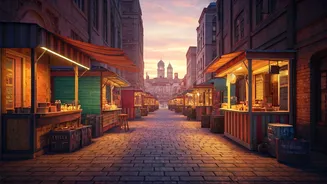









The Old Town's Labyrinth of History
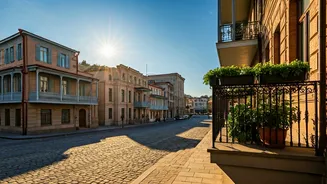
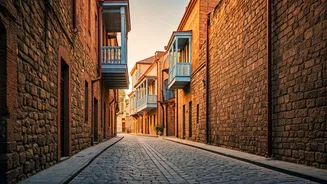
Your architectural journey begins in Old Tbilisi (Dzveli Tbilisi). Here, centuries of history are etched into the cobblestone streets and eclectic buildings. Forget a rigid itinerary; the best experience is to get lost in its winding alleys. You’ll find
colourful, rickety wooden houses with intricately carved balconies leaning over the Mtkvari River, a signature of the city. These structures showcase a blend of Persian, Ottoman, and classic Russian influences. Don’t miss the Abanotubani district, home to the iconic domed sulphur baths that have been a part of Tbilisi life for centuries. This area feels less like a polished European city and more like a living, breathing museum where every corner reveals another layer of a complex past.
Art Nouveau on Aghmashenebeli Avenue
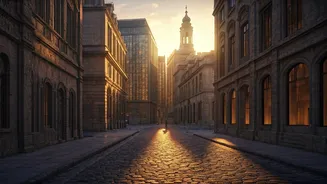
For a dose of classic European grandeur, head to the left bank of the river and stroll down the recently restored Aghmashenebeli Avenue. This pedestrianised street is a showcase of Tbilisi’s turn-of-the-20th-century boom, lined with magnificent Art Nouveau and Neoclassical buildings. Often compared to the boulevards of Paris or Vienna, the facades here feature ornate stucco work, elegant sculptures, and grand entryways. It was here that the city's wealthy merchants and artists built their homes, competing to create the most beautiful exteriors. The area provides a stark, elegant contrast to the rustic charm of the Old Town and proves just how architecturally diverse Tbilisi is.
Soviet Modernism and Brutalist Giants
Tbilisi's architecture isn't just about ancient charm and Belle Époque elegance. The city’s 20th-century history under Soviet rule left behind a powerful and controversial architectural legacy. Fans of Brutalism and Soviet Modernism will find a strange paradise here. The most famous example is the former Bank of Georgia headquarters, a startlingly futuristic building composed of interlocking concrete blocks that looks like something from a sci-fi film. Other notable sites include the Chronicle of Georgia, a massive, Stonehenge-like monument overlooking the Tbilisi Sea, and various housing blocks that tell the story of a different ideological era. This layer of concrete history adds a unique, gritty texture to the city's landscape that you won't find in most Western European destinations.
The Ultra-Modern Wave
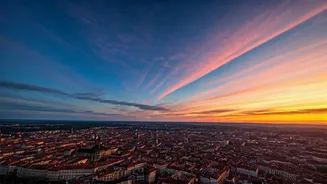
Tbilisi is not a city stuck in the past. Since gaining independence, it has embraced bold, contemporary architecture to signal its forward-looking ambitions. The most visible example is the Bridge of Peace, a sleek, bow-shaped pedestrian bridge made of steel and glass that lights up spectacularly at night. Nearby, Rike Park is home to the Rike Park Concert Hall and Exhibition Centre, a pair of futuristic metallic tubes that have been a topic of much local debate. These modern interventions sit right alongside the city’s historical districts, creating a dramatic and dynamic skyline that encapsulates Tbilisi’s identity: a city proud of its history but racing confidently into the future.
Getting There Affordably From India
The promise of “cheaply flying” to Tbilisi is a reality for savvy Indian travellers. While direct flights are rare, several budget and full-service airlines offer convenient one-stop options from major Indian cities like Delhi, Mumbai, and Bengaluru. The most common and often cheapest routes are via Middle Eastern hubs such as Sharjah (Air Arabia), Dubai (flydubai), or Doha (Qatar Airways). Booking in advance and travelling during the shoulder seasons—spring (April-May) and autumn (September-October)—will yield the best prices and pleasant weather for exploring. Once you arrive, you’ll find that accommodation, food, and transport are significantly more affordable than in Western Europe, making your entire trip a fantastic value proposition.