

The Magic of Winter Skies
The Himalayan winter, typically from December to March, offers a unique cosmic spectacle. The high altitude lifts you above the thickest layers of the atmosphere and away from city light pollution. The cold, dry air is less prone to haze, resulting in exceptionally
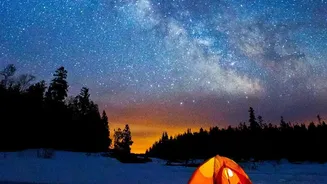
clear and stable viewing conditions. Nights are longer, providing an extended canvas for constellations like Orion, the Pleiades star cluster, and Sirius, the brightest star in our night sky, to make their grand appearance. While the vibrant core of the Milky Way is a summer sight, the winter sky has its own subtle, ethereal beauty, with a fainter band of our galaxy often visible on moonless nights. Camping directly in the snow, far from any village glow, creates a front-row seat to this celestial theatre.
Kedarkantha, Uttarakhand: The Classic Choice
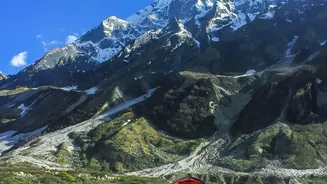
Often called the 'Queen of Winter Treks', Kedarkantha is one of India's most popular destinations for a reason. The trek, starting from the village of Sankri, is considered beginner-friendly and winds through enchanting pine and oak forests. Campsites like Juda-ka-Talab, which often freezes over in winter, and the Kedarkantha Base Camp are perfectly situated for stargazing. At an altitude of 12,500 feet, the summit offers panoramic views of Himalayan peaks, but the nights are just as spectacular. The wide-open spaces at the base camp, free from artificial light, make it an ideal spot to set up a tripod or simply lie back and watch for shooting stars.
Dayara Bugyal, Uttarakhand: An Ocean of Snow
‘Bugyal’ means high-altitude meadow, and Dayara Bugyal is one of the most magnificent. In winter, this vast expanse transforms into a rolling ocean of snow. The trek is relatively easy, making it accessible for families and first-timers looking for a snow experience without extreme difficulty. The sheer scale of the meadow, covering about 28 square kilometres, provides an unobstructed 360-degree view of both the surrounding peaks and the night sky. Camping here feels like being on top of the world, with nothing between you and the cosmos. The campsites are located away from any light pollution, ensuring a truly dark sky for an immersive stargazing experience.
Spiti Valley, Himachal Pradesh: The High-Altitude Desert
For the more adventurous, a winter trip to Spiti Valley is the ultimate stargazing pilgrimage. Known as a cold desert, its high altitude and extremely dry climate create some of the darkest and clearest skies in the country. While winter access can be challenging due to heavy snowfall and extreme cold, the reward is an unparalleled view of the universe. Villages like Kaza can serve as a base, while smaller, higher-altitude villages like Kibber and Langza offer even darker skies. Camping here is an intense experience, but seeing the winter constellations blaze with an intensity rarely witnessed elsewhere is an unforgettable payoff for the prepared traveller.
Tips for Your Celestial Adventure
A successful Himalayan stargazing trip requires preparation. Acclimatise properly to the altitude to avoid sickness. Dress in warm layers, as temperatures drop significantly at night; insulated, waterproof clothing is a must. Cold drains camera and phone batteries quickly, so keep them warm in an inside pocket and bring extras. For the best views of faint stars and nebulae, plan your trip around the new moon. If you're interested in photography, a sturdy tripod and a lens with a wide aperture are essential to capture the beauty above. Finally, always travel with experienced local guides who understand the terrain and weather conditions.