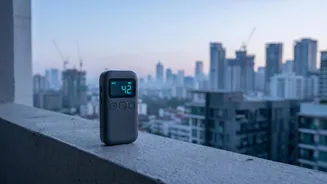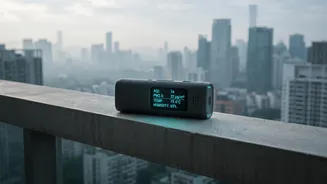





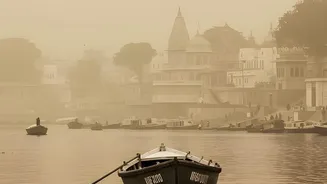
As winter approaches, a familiar haze settles over many Indian cities. This isn't just fog; it's a mix of pollutants that can harm your health. Thankfully, you have powerful tools on your phone to navigate this season safely.
Why Winter Worsens Air Quality
During winter, a phenomenon
called 'temperature inversion' occurs. Cold air near the ground gets trapped by a layer of warmer air above it. This acts like a lid, preventing pollutants from vehicles, industry, and biomass burning from dispersing. The result is a concentrated blanket of smog, rich in harmful fine particulate matter known as PM2.5 and PM10, which can penetrate deep into the lungs and even enter the bloodstream. This makes monitoring the air quality not just a matter of curiosity, but a crucial daily health check.
Your Go-To Government Apps
To get reliable, validated data, start with the official government applications. The two primary apps are SAMEER and SAFAR. The SAMEER app, developed by the Central Pollution Control Board (CPCB), provides hourly AQI updates from over 790 monitoring stations nationwide. It allows you to check city-wide data and even file complaints about pollution violations. The SAFAR (System of Air Quality and Weather Forecasting and Research) app, a project from the Ministry of Earth Sciences, offers forecasts for major metro areas like Delhi, Mumbai, Pune, and Ahmedabad. It provides air quality predictions one to three days in advance, helping you plan ahead.
Understanding the Air Quality Index (AQI)
Both apps use the official Air Quality Index (AQI), a colour-coded scale from 0 to 500 that simplifies complex pollution data into a single number. Understanding these categories is key to making informed decisions. Here's a simple breakdown of the official CPCB categories:
Good (0-50, Green): Minimal impact. It's a great day for all outdoor activities.
Satisfactory (51-100, Light Green): May cause minor breathing discomfort to sensitive individuals.
Moderate (101-200, Yellow): Can cause breathing discomfort to people with existing lung or heart conditions, as well as children and older adults.
Poor (201-300, Orange): May cause breathing discomfort to most people on prolonged exposure.
Very Poor (301-400, Red): Increases the risk of respiratory illness after prolonged exposure. Sensitive groups are at high risk.
Severe (401-500+, Maroon): Affects even healthy people and seriously impacts those with existing diseases. All outdoor physical activity should be avoided.
Planning Your Day Around the AQI
Checking the AQI should become a daily habit, just like checking the weather. Open the SAMEER or SAFAR app in the morning. Find your city or the nearest monitoring station to get a real-time reading. Use this data to schedule your day. If the AQI is 'Poor' or 'Very Poor', consider shifting your morning run or outdoor yoga session to the late afternoon, when pollution levels might have dipped slightly. For children's playtime, try to choose days when the AQI is in the 'Moderate' or 'Satisfactory' range. On days with 'Severe' air quality, it is safest for everyone, especially children, the elderly, and those with respiratory issues, to avoid outdoor exertion altogether. Moving your workout indoors is the best option on these high-pollution days.
Making Smart Adjustments
Your activity level matters. A brisk walk in 'Moderate' air is different from an intense run. On 'Moderate' to 'Poor' days, opt for less strenuous activities if you must be outside. Instead of a long cycle, perhaps a short walk. Reduce the duration of your outdoor exposure. If you have to be outdoors for an extended period when the AQI is high, wearing a well-fitted N95 mask can provide a significant layer of protection against PM2.5 particles. Also, avoid exercising near high_traffic roads, as pollutant levels are always higher in those areas. These small adjustments can significantly reduce the amount of pollution you inhale.