






The Unlikely Source of Silence
The hero of this story is the humble coconut husk, the fibrous outer shell that is typically discarded during coconut processing. This agricultural waste, known as coir, is now being transformed into rigid, high-performance acoustic panels. By compressing
these tough, durable fibers, manufacturers have created a building material that is not only effective but also fully biodegradable and renewable. This process takes a plentiful byproduct and upcycles it into a value-added product, representing a smart step forward in the circular economy and sustainable construction.
How Husks Handle Sound
The secret to the acoustic performance of coconut coir lies in its natural structure. The material is inherently porous, composed of countless tiny hollow fibers. When sound waves travel into a coir panel, they are forced through this complex, fibrous maze. The friction created as the sound energy navigates the tortuous paths within the fibers converts the acoustic energy into a minute amount of heat, effectively dissipating the sound. Studies show that coir panels exhibit excellent sound absorption, particularly in the mid to high-frequency ranges, which is where most common noises like human speech and office sounds reside. Some research indicates that their performance can be comparable to, or even exceed, that of traditional synthetic materials, with certain coir panels achieving a high Noise Reduction Coefficient (NRC).
A Greener Alternative to Foam
Traditional acoustic panels are often made from polyurethane foam or mineral wool. These are petroleum-based products whose manufacturing processes carry a significant environmental footprint. They are not biodegradable and can release Volatile Organic Compounds (VOCs), contributing to indoor air pollution. Coconut husk panels, by contrast, are a breath of fresh air. They are a 100% natural, renewable resource. Their production requires significantly less energy than synthetic foams, and because they are a plant-based material, they do not off-gas harmful chemicals. This makes them a healthier choice for indoor environments like schools, offices, and homes, aligning with modern green building standards that prioritize occupant well-being.
Performance and Practicality
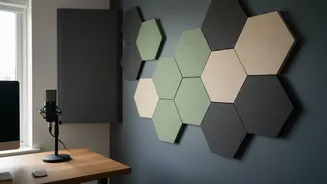
Beyond their green credentials, coconut husk panels are proving their worth in real-world applications. Their high tensile strength and durability mean they resist decay and pests, giving them a long lifespan. The panels can be used in a variety of settings, from recording studios and home theatres seeking pristine sound quality to open-plan offices needing to reduce ambient chatter. Studies have demonstrated their effectiveness, with some composite coir panels achieving near-perfect sound absorption at specific frequencies. When backed with other materials like woven cloth, their ability to absorb sound, especially at lower frequencies, can be enhanced even further, making them a versatile tool for architects and designers.
Considering the Limitations
No material is perfect, and coir panels have considerations. Untreated coir can have a high salt content, which needs to be managed during production to prevent issues. While naturally durable, its performance against fire and moisture may require additional treatments depending on the application, which could affect its purely 'natural' status. The cost can also be a factor; as an emerging technology, the price point may be higher than mass-produced synthetic foams, although this is expected to decrease as production scales up. However, for many projects, the long-term benefits of sustainability, air quality, and performance offer a value proposition that outweighs the initial investment.