


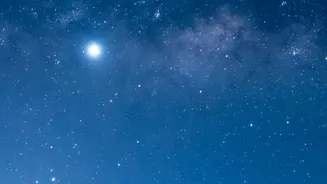
Your Personal Planetarium
The single greatest challenge for any urban astronomer is light pollution. The perpetual twilight of city skies can make finding anything fainter than the moon a frustrating exercise. This is where stargazing apps like Stellarium, Star Walk 2, and SkyView
Lite become indispensable. These apps use your phone’s GPS and compass to create a real-time map of the sky directly above you. The magic happens with their Augmented Reality (AR) function. Simply point your phone at the sky, and the app overlays labels on stars, constellations, and, most importantly, planets. Suddenly, that bright dot you weren’t sure about is identified as Jupiter or Venus, instantly transforming a confusing sky into a navigable map.
Cutting Through the Urban Glow
Advanced apps understand the urban stargazer's plight. Stellarium, for instance, includes a feature that allows you to simulate the level of light pollution in your specific area. By adjusting this setting, the app provides a more realistic preview of what should actually be visible, preventing a wild goose chase for objects completely obscured by city lights. Furthermore, most dedicated astronomy apps feature a 'night mode'. This changes the screen to a red tint, which helps preserve your night vision. Looking at a bright, white phone screen ruins your eyes' adaptation to the dark, making it harder to see faint objects. The red-light mode is a simple but crucial feature that shows these apps are designed by people who actually spend time under the stars.
Autumn 2026: A Season of Planets
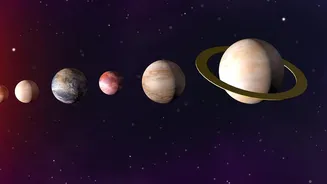
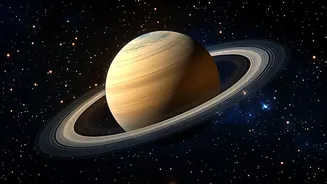
This autumn is a particularly rewarding time for planet watchers. The season is highlighted by Saturn, which reaches opposition on October 4, 2026. Opposition is when the planet is opposite the Sun in our sky, meaning it rises at sunset, is visible all night, and is at its brightest. Venus is another brilliant target, blazing in the evening sky through September. On top of these, Jupiter will be visible, and there are several notable events like the Orionid meteor shower peaking around October 21. Keeping track of all this can be tricky, but apps excel here. They provide 'Visible Tonight' guides and calendars of celestial events, sending you notifications for planetary conjunctions, meteor shower peaks, or when the International Space Station is due to fly over.
Beyond Just Finding, To Understanding
While identifying planets is the main draw, these apps offer a depth of information that turns a simple viewing into a rich learning experience. Tapping on Saturn might not only confirm its identity but also show you the current orientation of its rings, the names and positions of its largest moons, and its distance from Earth. Apps like Star Walk 2 provide detailed 3D models of celestial bodies and are packed with mythology and scientific facts about the constellations they reside in. This educational layer adds immense value, allowing you to appreciate not just what you're seeing, but the science and stories behind it. Many apps also have a 'Time Travel' feature, letting you scroll forwards or backwards to see how the sky will look hours, days, or even years from now, making it a powerful tool for planning your next stargazing session.