



A Landmark Funding Round
On October 20, 2026, Eka Robotics announced it had secured $150 million in a Series A funding round co-led by prominent venture capital firms Andreessen Horowitz (a16z) and F-Prime. This substantial investment, which brings the company's valuation to a staggering
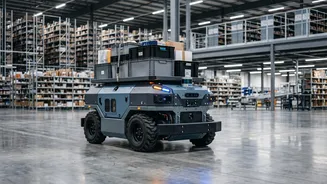
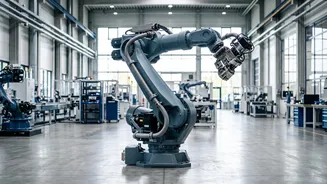
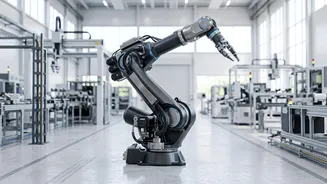
$1.45 billion, signals immense investor confidence in Eka's potential to solve one of robotics' most persistent challenges. The funding will be used to scale the company's technology, expand its team, and accelerate customer deployments, moving its advanced robots from the lab into real-world industrial settings like warehouses and factories. This round also saw participation from previous investors and several major strategic partners, underscoring the broad industry interest in Eka's breakthrough approach.
The Technology of Touch
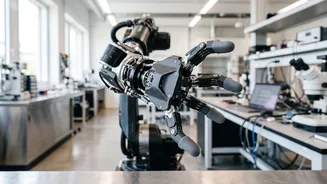
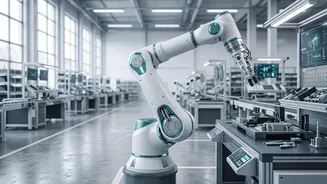
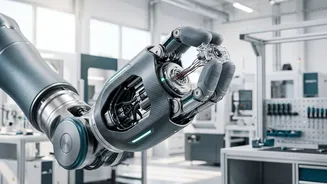
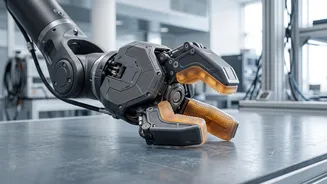
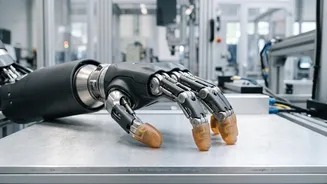
For years, industrial robots have excelled at repetitive, high-force tasks. But ask one to pick up a strawberry, plug in a thin wire, or handle a slippery component, and its limitations become clear. Eka is tackling this with what it calls a Vision-Force-Action (VFA) model. Instead of relying on vision alone, Eka's robots integrate force-feedback sensors in their grippers. This allows them to 'feel' an object, detecting if a grip is slipping or if it's meeting resistance, and then adjust their actions in real-time. This sense of touch is the key to handling a wide array of objects with different shapes, textures, and fragilities without needing to be specifically pre-programmed for each one.
Learning in a Virtual World
A key differentiator for Eka is how its robots learn. Rather than being painstakingly taught by human demonstrators, the AI models are trained through reinforcement learning in a physics-based simulation. In this virtual environment, the robots can practice tasks millions of times, encountering countless variations and failure scenarios—like dropping an egg or fumbling a screw—that would be impractical to replicate in the real world. This allows Eka to generate thousands of hours of experience in just minutes, rapidly developing a deep, intuitive understanding of physics that can then be transferred to physical hardware. This method is designed to create more robust and adaptable robots that can generalize their skills across different tasks and environments.
Transforming India's Industrial Landscape
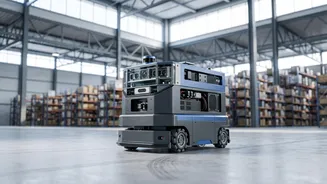
The implications for India's burgeoning e-commerce and manufacturing sectors are enormous. The Indian warehouse robotics market is already expected to grow significantly, driven by the need for greater efficiency to handle massive order volumes and consumer demand for rapid delivery. Robots that can reliably pick, pack, and sort a diverse range of products—from electronics to groceries—can solve major bottlenecks in fulfillment centres. Eka's technology promises superhuman speed, with reports of up to 1,500 picks per hour compared to a human's average of about 600, along with a success rate of over 95%. This level of performance could drastically improve supply chain efficiency, reduce errors, and help Indian companies compete on a global scale.
The Future of Physical Work
The rise of such advanced robotics naturally raises questions about the future of human labour. Eka and its proponents frame this as a shift toward collaboration rather not than replacement. The goal is to deploy robots that can handle the physically demanding, repetitive, and delicate tasks, freeing up human workers for roles that require more complex problem-solving, oversight, and strategy. As these 'physical AI' systems become more integrated into logistics and manufacturing, they have the potential to not only boost productivity but also create safer work environments. The success of companies like Eka represents a pivotal step in the evolution of automation, where robots move from being simple tools to intelligent partners in the physical world.