



The Quest for Unhackable Communication
Imagine sending a message that is physically impossible to intercept without the recipient knowing. That’s the core promise of quantum communication. Unlike today’s encryption, which relies on complex math problems that could one day be solved by powerful
computers, quantum security is based on the laws of physics. It often uses a technique called Quantum Key Distribution (QKD), where information is encoded onto single particles of light, or photons. According to the principles of quantum mechanics, the very act of a third party trying to observe these photons disturbs them in a detectable way, immediately revealing the presence of an eavesdropper. This creates a fundamentally secure channel for exchanging encryption keys, making the data that follows virtually impenetrable. It's the ultimate upgrade for protecting everything from national security secrets to financial transactions.
India's Ambitious Leap
India's National Quantum Mission (NQM), approved in 2023 with a budget of over $700 million, is the country's formal entry into this high-stakes arena. The mission lays out a comprehensive eight-year plan to develop capabilities in quantum computing, sensing, and materials. A centerpiece of this initiative is the development of secure communication networks. The explicit goal is to establish satellite-based quantum communication between ground stations up to 2,000 kilometers apart within India. This is in addition to creating a 2,000-kilometer terrestrial fiber-optic QKD network linking major cities. By investing heavily in this technology, India is signaling its intent to achieve self-reliance in a field critical for future economic and military security.
Why Satellites are the Final Frontier
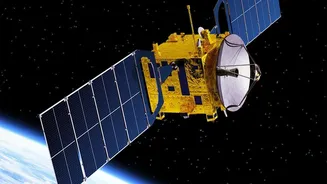
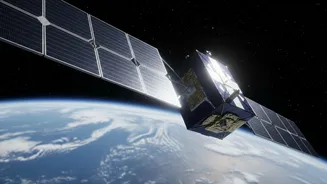
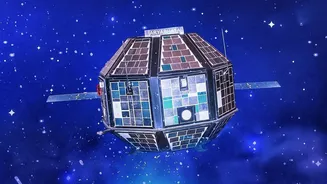
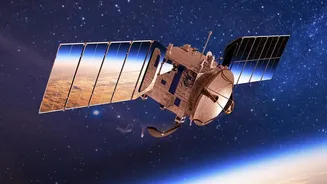
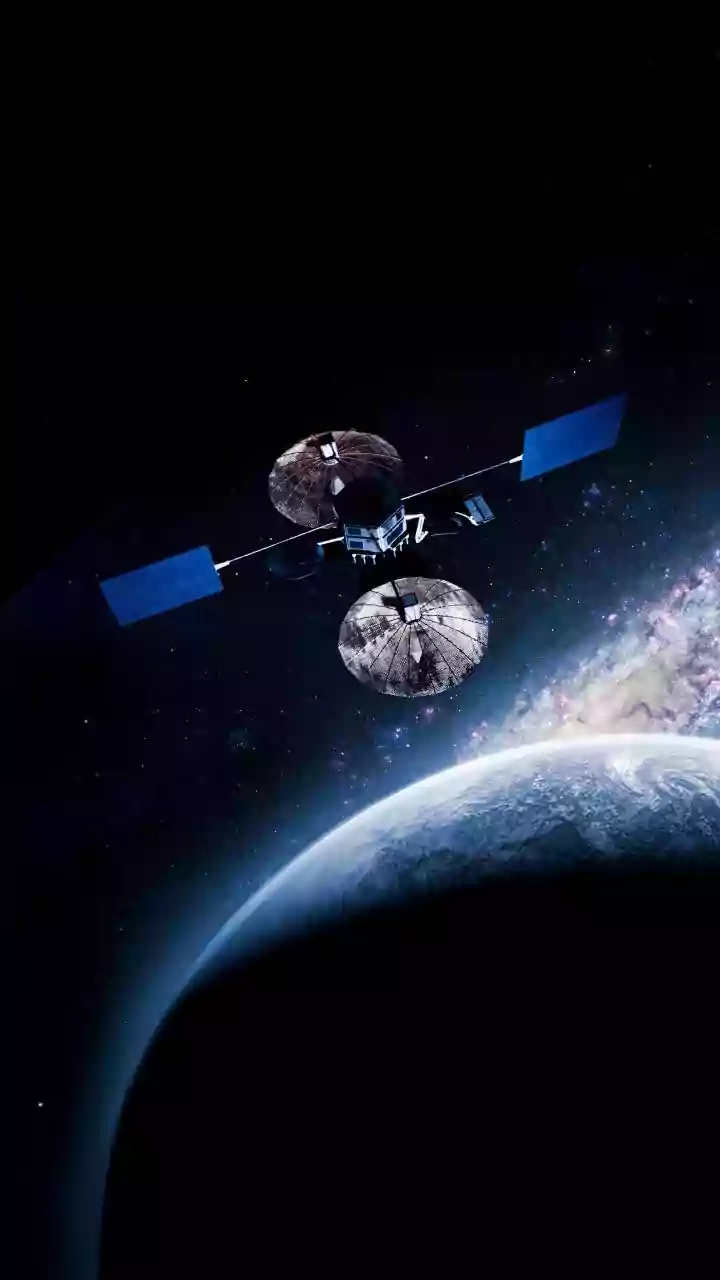
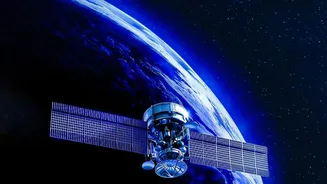
While sending quantum signals through fiber-optic cables works well for securing networks within a city or region, it has a major limitation: distance. The delicate quantum signals degrade over long stretches of fiber, typically limiting reliable connections to a few hundred kilometers. Satellites solve this problem by beaming the photons through the vacuum of space, where there is far less interference. A satellite can act as a trusted node, receiving a quantum key from one ground station and securely relaying it to another station thousands of kilometers away. This is the only currently feasible way to build a truly global, ultra-secure quantum internet. By targeting satellite-based QKD, India is aiming to leapfrog the distance limitations of ground-based networks and build a system capable of continent-spanning secure communication.
Joining the Global Quantum Race
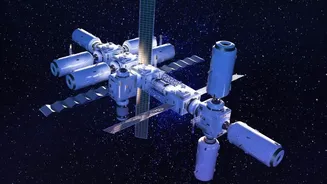
India's mission doesn't exist in a vacuum; it's a strategic response to a global competition dominated by the United States and China. China is widely seen as the leader in quantum satellite communication, having launched its 'Micius' satellite back in 2016 and successfully demonstrated intercontinental quantum-secured video calls. The U.S., while investing heavily in quantum computing and post-quantum cryptography, has also pursued quantum experiments aboard the International Space Station. India's NQM is a decisive step to ensure it is not left behind or dependent on foreign technology for its most sensitive communications. The mission aims to place India among the top handful of nations with dedicated quantum programs, turning the duo-poly of the U.S. and China into a multi-polar race for technological supremacy.