








The Old Way: Queues and Uncertainty
For decades, travelling with more luggage than the free allowance meant a mandatory trip to the station's parcel office. This process often involved long queues, manual paperwork, and last-minute stress to get the luggage booked and loaded before the train's
departure. Passengers had to arrive well in advance, navigate crowded terminals, and deal with a system that offered little to no transparency once the bags were handed over. This decades-old manual process was not only time-consuming but also contributed to overcrowding at stations, a pain point for both passengers and railway staff.
A Digital Shift: Booking Luggage From Home
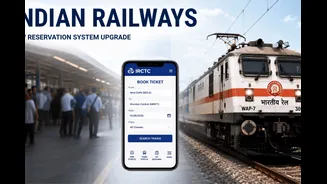
In a significant move to digitise its services, Indian Railways has now launched an online facility for booking excess luggage. This service, which went live on July 31, 2026, allows passengers with confirmed or RAC tickets to pre-book their extra bags through the official Indian Railways parcel portal (www.parcel.indianrail.gov.in). The primary goal is to enhance passenger convenience, reduce waiting times, and streamline the entire process from start to finish. This initiative follows a directive from the Railway Board to implement the system across all zonal railways, marking a major step in modernising passenger-facing services.
How the New System Works
The new process is designed to be straightforward. A passenger with a confirmed ticket can log into the parcel portal and enter their journey details, such as PNR number, train number, and the weight and dimensions of the luggage. The portal automatically calculates an estimated freight charge. After filling out the details, the passenger receives an e-Forwarding Note. While the booking is initiated online, the final step still requires a brief visit to the station. Passengers must present the e-Forwarding Note at the parcel office, where the luggage is weighed for a final charge confirmation. After payment, a formal receipt is issued. This new hybrid approach removes the bulk of the paperwork and waiting from the station itself.
The Next Stop: Real-Time Tracking
Perhaps the most significant part of this upgrade is that it paves the way for a much-anticipated feature: real-time luggage tracking. The new system already includes a 'Track & Trace' service, which allows passengers to monitor their luggage status and receive SMS updates upon its arrival at the destination. This is a massive leap from the old system where passengers had virtually no information about their baggage's whereabouts once it was booked. While the current tracking provides key status updates, the digitisation of the booking process puts a more robust, live GPS-style tracking system firmly on the checklist for future enhancements. This aligns with the railways' broader goal of providing end-to-end digital solutions, similar to how passengers can already track the real-time location of trains.
Understanding the Rules and Limits
The free luggage allowance remains dependent on the travel class. For instance, AC First Class passengers can carry 70 kg for free, while the limit is 40 kg for Sleeper Class and 35 kg for Second Class. Any luggage exceeding these limits is charged at 1.5 times the standard luggage rate, with a minimum fee of ₹30. It's important to note that for some classes like AC 3-Tier and AC Chair Car, the free allowance and the maximum limit are the same (40 kg), meaning no excess luggage can be booked for these coaches. The online portal is designed to display these rules and restrictions clearly during the booking process to avoid any confusion.