







A Slingshot Around Mars
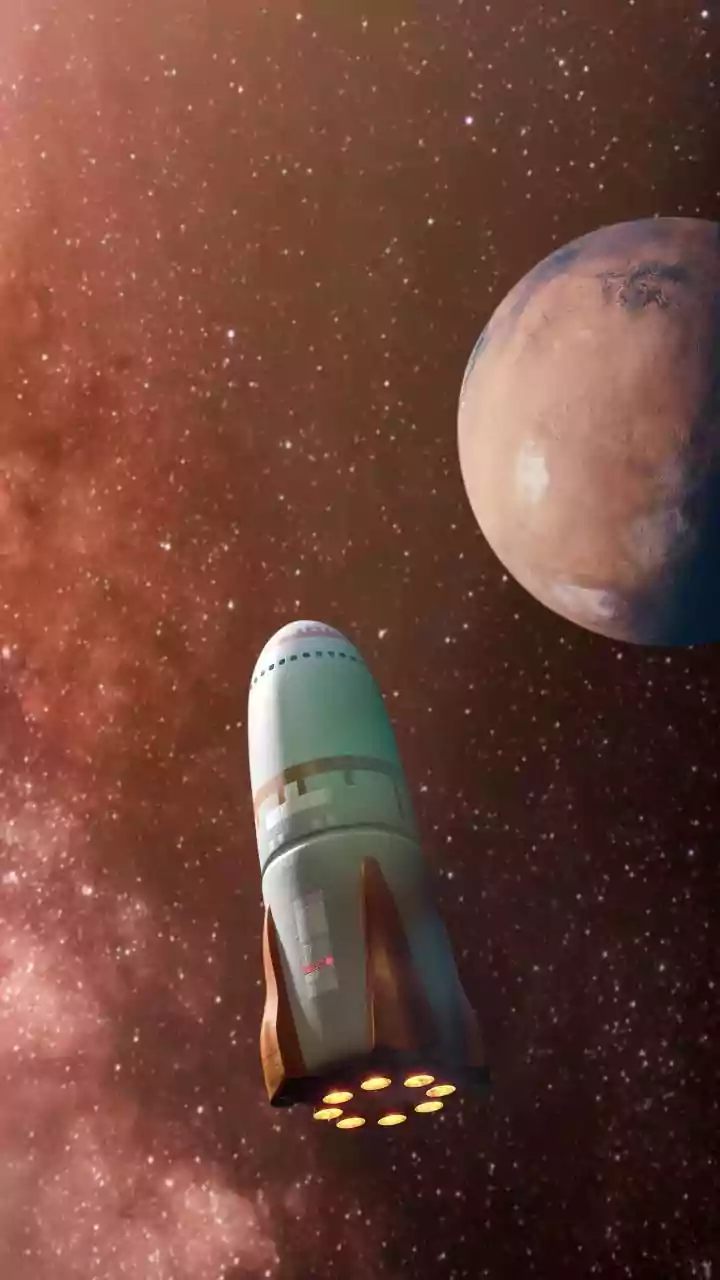
The latest stream of telemetry, or data sent back from the spacecraft, arrived following a crucial maneuver in May 2026. Psyche performed a close flyby of Mars, using the Red Planet’s gravity as a slingshot to gain speed and adjust its course toward the main
asteroid belt. While the gravity assist was a primary goal, the flyby also presented a golden opportunity for the mission team: a full dress rehearsal for its scientific instruments. By pointing its sensors at a well-studied planet like Mars, scientists could calibrate them and confirm they are working perfectly after several years in deep space. The successful tests mean the probe is ready for its unprecedented mission.
A Toolkit for a Cosmic Detective
When scientists talk about exciting telemetry from Psyche, they're referring to the successful test results from its sophisticated toolkit. The probe isn't just a passive traveler; it's a robotic field geologist. Its multispectral imager, which captured stunning high-resolution shots of Mars, will map the asteroid's surface features. A gamma-ray and neutron spectrometer, also successfully tested at Mars, is designed to determine the precise chemical elements that make up Psyche, such as iron, nickel, and silicon. Furthermore, a magnetometer will hunt for signs of a lingering magnetic field, and the radio science experiment will use tiny fluctuations in the probe’s orbit to precisely measure Psyche’s gravity and reveal its internal structure. The recent Mars data confirms this entire suite of tools is in prime condition.
The Prize: An Exposed Planetary Core
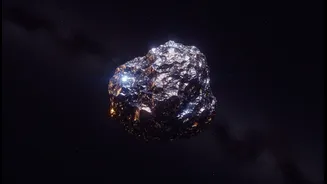
The reason this mission is so critical lies in its destination: the asteroid 16 Psyche. Scientists believe it isn’t just another space rock, but the exposed nickel-iron core of a planetesimal—a baby planet that was smashed apart during the chaotic formation of our solar system. During the birth of planets like Earth, heavy elements like iron and nickel sank to the center to form a core, surrounded by a rocky mantle and crust. We can never directly see Earth’s core, but Psyche offers a unique chance to study one that has been stripped bare by ancient collisions. Visiting it is the closest we may ever come to a real-life journey to the center of a world, offering a direct look at the building blocks of planets.
Answering the Biggest Questions
Each piece of data Psyche eventually sends from the asteroid will help answer fundamental questions about our own origins. If the magnetometer detects a remnant magnetic field, it would be strong evidence that Psyche once had a molten, churning core just like Earth’s. Data from the spectrometer confirming a high concentration of iron and nickel would validate the theory that it’s a stripped core. The gravity measurements will tell scientists if Psyche is a solid metal object or a porous pile of metallic rubble that reassembled after a collision. Together, this information won't just tell the story of one asteroid; it will help refine our models of how all rocky planets, including our own, were assembled from these ancient building blocks.