







The Morning After the Mela
The scale of post-festival waste is staggering. After major events like Diwali, Durga Puja, or Ganesh Chaturthi, municipal services are overwhelmed. Cities can see waste generation spike dramatically, with tonnes of additional garbage collected in just
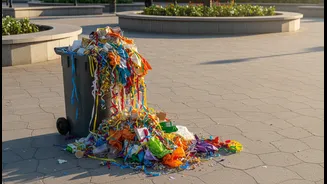
a few days. For example, after one 'Kaanum Pongal' celebration, Chennai collected nearly 150 tonnes of garbage from Marina beach alone. This waste isn't just an eyesore; it's an environmental hazard. Firecracker residue pollutes the air with harmful chemicals, while idols made of plaster of Paris and coated in toxic paints poison our rivers and lakes. This annual deluge of waste strains public resources and poses significant health and environmental risks. The logistical strain on local infrastructure, from traffic congestion to waste management, is immense.
Why Individual Efforts Aren't Enough
The call to be a responsible citizen and clean up after oneself is important, but it's not a systemic solution. An individual picking up a few plastic bottles cannot counter the tonnes of waste generated by lakhs of people. These efforts, while noble, are often sporadic and uncoordinated. The problem is one of scale and structure. Municipal systems are typically designed for regular, household waste, not for the sudden, massive influx from festivals or large gatherings. Without a plan to manage this peak load, waste inevitably ends up littering public spaces, choking drains, and polluting water bodies, no matter how many well-intentioned individuals do their part. The responsibility cannot just be on the individual consumer or the overworked municipal worker; the gap lies in the middle.
A Blueprint for Community Action
This is where community-level planning becomes essential. Resident Welfare Associations (RWAs), local youth groups, and neighbourhood committees are perfectly positioned to bridge the gap between individual action and municipal capacity. The blueprint for success involves planning before, during, and after the festival. This includes pre-festival awareness campaigns promoting eco-friendly alternatives and waste segregation at source. During the event, communities can set up designated, well-managed collection points for different types of waste—wet, dry, and hazardous. Post-festival, organised volunteer teams can work in coordination with municipal workers to ensure a swift and efficient cleanup. Models like the one in Navjeevan Vihar, Delhi, show that when a community takes ownership, achieving a zero-waste status is possible. They established 100% source segregation and local composting, diverting tonnes of waste from landfills.
Success Stories That Inspire
Across India, communities are already proving this model works. In Ambikapur, Chhattisgarh, a decentralised system run by women's self-help groups has achieved 100% waste segregation and processing, turning a former landfill into a park. In Chennai, the Residents of Kasturba Nagar Association (ROKA) has created an effective waste management system by coordinating with households and municipal channels, significantly reducing landfill waste. During Ganesh Chaturthi, the Bhopal Municipal Corporation, with the help of volunteers, implemented a plan that transformed festival waste into valuable resources. Even during the massive Attukal Pongala festival in Thiruvananthapuram, a coordinated effort between the city corporation and sanitation teams clears over 800 tonnes of waste efficiently. These examples show that a collaborative approach is not just a dream but a practical reality.
Partnering with Local Government
Community efforts are powerful, but they shouldn't operate in a vacuum. True success comes from a partnership with local urban bodies. Municipalities can empower communities by providing necessary resources like extra bins, collection vehicles, safety gear for volunteers, and designated spaces for composting. The national Swachh Bharat Mission itself encourages such collaborations, aiming to turn cleanliness into a 'Jan Andolan' or people's movement. Policies that support community-led initiatives, and administrative frameworks that make it easy for RWAs to work with sanitation departments, are crucial. When local governments recognise and support these grassroots efforts, they amplify their impact exponentially, moving from a system of municipal cleanup to one of genuine community co-creation of a clean environment.