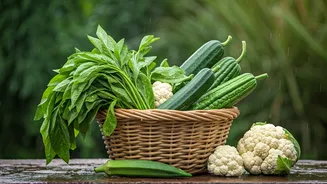






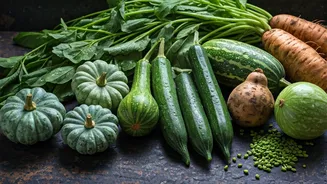


1. Bottle Gourd (Lauki)
A staple in Indian households, bottle gourd is a superstar during the monsoon. It's incredibly easy to digest, which is a significant advantage when the digestive system tends to be sluggish. Packed with water (around 92%), it helps keep you hydrated.
Lauki is also rich in fibre, which aids in preventing constipation and maintaining a healthy gut. Furthermore, it's low in calories and contains essential minerals like potassium, which helps regulate blood pressure. Nutritionists favour it because it’s cooling for the body and doesn't aggravate the digestive system, making it a safe and nutritious choice for all ages during the rainy season.
2. Bitter Gourd (Karela)
Don't let the bitter taste deter you. Karela is a powerhouse of nutrients that are especially beneficial during the monsoon. It is loaded with antiviral and antibacterial properties, which can help fortify your body against common infections like the cold and flu. Bitter gourd is also celebrated for its ability to regulate blood sugar levels. Rich in Vitamin C and antioxidants, it plays a crucial role in boosting the immune system. A simple stir-fry or stuffed karela can be a great way to incorporate this vegetable into your diet and reap its protective benefits when you need them most.
3. Pointed Gourd (Parwal)
Pointed gourd, or parwal, is another vegetable that frequently gets the green light from nutritionists for monsoon consumption. It is known in Ayurveda for its ability to balance the doshas, which are believed to be imbalanced during this season. Parwal is rich in fibre, which helps keep the gut healthy and clear. It’s also a good source of Vitamins A and C, which are vital for a strong immune system. Because it is light on the stomach and easy to digest, it helps control issues like bloating and indigestion that can become more common with the monsoon humidity.
4. Indian Squash (Tinda)
Often called apple gourd, tinda is a humble vegetable with impressive health credentials. It is another easily digestible choice with high water content, making it soothing for the digestive tract. Tinda is low in calories but rich in antioxidants, which help fight off free radicals and reduce inflammation in the body. Its mild flavour makes it versatile in the kitchen, perfect for simple curries and sabzis. Nutritionists recommend it because it doesn't cause gas or acidity, problems that many people face during the damp and humid monsoon months. It's a gentle yet effective way to get your dose of daily nutrients.
5. Turmeric and Ginger
While not vegetables in the traditional sense, these rhizomes are essential additions to your monsoon diet. Raw turmeric (kacchi haldi) and ginger are celebrated for their potent anti-inflammatory and antiseptic properties. Ginger is a well-known remedy for nausea and indigestion, and it helps keep the body warm. Turmeric, with its active compound curcumin, is a powerful immune booster. Adding freshly grated ginger to your tea or incorporating both into your daily cooking can provide an extra layer of defence against seasonal illnesses, helping to soothe sore throats and fight infections from within.
A Note on Leafy Greens
Many nutritionists advise caution with leafy greens like spinach and fenugreek during the monsoon. The high humidity and moisture make them susceptible to germs, mud, and pests. If you choose to eat them, it is absolutely critical to wash them thoroughly, perhaps by blanching them in hot water or soaking them in a vinegar-water solution before cooking. It’s generally safer to stick to the gourds and other vegetables that grow on vines, away from the damp soil, reducing the risk of contamination.