






The Billion-Dollar Problem in Orbit
Space is an unforgiving environment. Satellites worth hundreds of millions of dollars have traditionally been single-use assets; once launched, they were on their own. The most common reason for a satellite's retirement isn't that its primary instruments
fail, but that it simply runs out of the propellant needed for station-keeping and attitude control. When the fuel tank hits empty, the satellite can no longer hold its position and becomes a piece of high-speed space junk. This disposable model has not only been incredibly expensive—necessitating the construction and launch of replacements—but has also contributed to the growing problem of orbital debris. The industry has long dreamed of a roadside assistance service for space, and that future is finally arriving.
The Robotic Mechanics Arrive
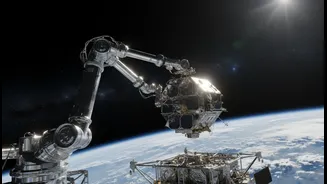
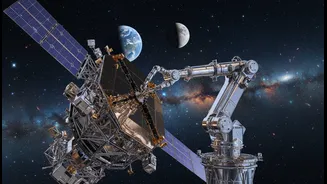
Leading the charge is Northrop Grumman with its groundbreaking Mission Extension Vehicle (MEV). In a historic first for the commercial space industry, MEV-1 successfully docked with the Intelsat 901 satellite in 2020. The satellite was perfectly healthy but had run out of fuel. MEV-1 latched onto it, took over propulsion, and gave it another five years of operational life. After completing its mission in 2025, it undocked and moved on to its next client. A second vehicle, MEV-2, is currently providing similar life-extension services to another Intelsat satellite. These missions have proven that docking with and controlling a satellite not originally designed for servicing is possible, paving the way for a whole new market. More recently, in July 2026, a startup called Katalyst Space Technologies launched a robotic servicing spacecraft to rescue NASA's aging Swift Observatory, demonstrating a rapid, low-cost approach to extending the life of valuable scientific assets.
A Setback and A Pivot
While commercial ventures are succeeding, the path isn't without its challenges. NASA's ambitious On-orbit Servicing, Assembly, and Manufacturing 1 (OSAM-1) mission was designed to demonstrate even more advanced capabilities, including refueling a satellite that was never designed for it. However, after significant investment, the program was cancelled in 2024 due to technical hurdles, cost overruns, and a lack of committed partners for its specific approach. Despite the cancellation of this particular mission, the underlying technologies and the broader push for in-space servicing continue. DARPA's Robotic Servicing of Geosynchronous Satellites (RSGS) program, for instance, is slated to launch its own demonstration mission to test similar robotic capabilities for military and commercial satellites.
The New Business of Space
The successful demonstrations have ignited a new commercial market. The satellite life-extension market was valued at $1.8 billion in 2025 and is projected to grow significantly. This isn't just about giving old satellites a push; it's a paradigm shift. Companies are developing a range of services, from simple life extension to component repair, payload upgrades, and eventually, on-orbit recycling of defunct spacecraft. This creates a more sustainable and economically efficient model for space operations. Instead of designing satellites to last for 15 years and then become debris, future spacecraft can be designed with modularity and serviceability in mind, featuring standardized docking ports and refueling valves.
Building the Future, In Orbit
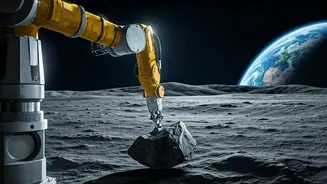
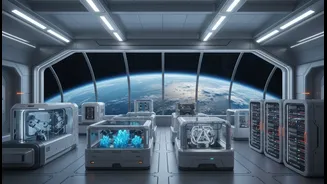
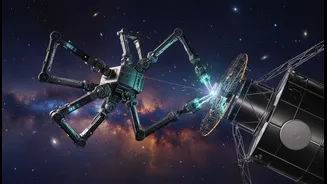
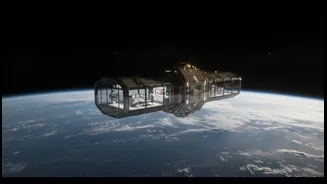
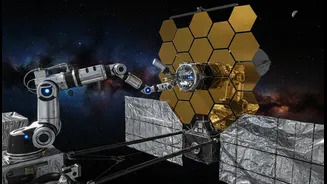
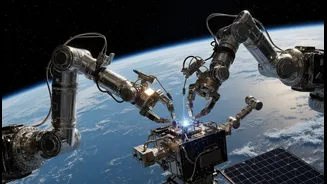
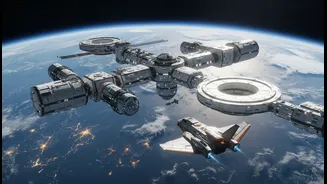
Beyond simple repairs, the next frontier is on-orbit manufacturing and assembly. Imagine launching raw materials or modular components on smaller, cheaper rockets and then using robotic systems to construct massive antennas, telescopes, or even space stations directly in orbit. This approach circumvents the primary limitation of space infrastructure: the size of a rocket's fairing. By building in space, we can create structures far larger and more capable than anything we could launch fully assembled from Earth. This capability will be essential for building the large-scale infrastructure needed for sustained human presence on the Moon and Mars and for developing new space-based industries, from solar power generation to advanced materials manufacturing.