




Remember when 'baking' your face with powder was the ultimate makeup goal? It seems that era is fading. A fresher, more radiant look is taking over, leaving heavy matte foundations behind. So, why is everyone suddenly chasing a dewy glow?
The Rise of 'Skinimalism'
The biggest driver
behind the dewy trend is a cultural shift towards 'skinimalism'. Coined from 'skin' and 'minimalism', this philosophy champions a less-is-more approach. Instead of masking imperfections with thick, opaque foundations, the focus is now on celebrating your natural skin texture. This trend gained massive momentum during the pandemic, as work-from-home schedules and mask-wearing made heavy makeup feel unnecessary and uncomfortable. People began investing more time in their skincare routines, leading to healthier skin they were less inclined to cover up. The new goal isn't to achieve a flawless, poreless canvas, but to enhance the skin's inherent beauty, letting its natural luminosity shine through.
Skincare Is the New Makeup
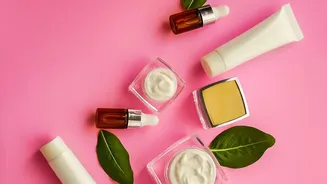
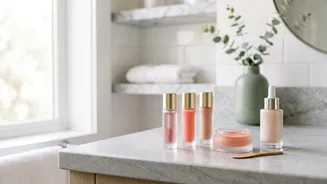
The line between skincare and makeup has officially blurred. Walk down any beauty aisle, and you'll find an explosion of hybrid products: tinted serums with hyaluronic acid, foundations infused with niacinamide, and CC creams packed with SPF. This isn't a coincidence. In India, skincare-infused makeup now accounts for a significant portion of total makeup sales, a figure that has risen sharply in recent years. Consumers now demand products that do more than just provide colour; they want long-term benefits. A dewy finish is often the visual payoff of these hydrating and nourishing ingredients, mimicking the look of healthy, well-moisturised skin. It’s a move away from temporarily concealing issues and towards actively improving skin health with every application.
The Global Influence of K-Beauty
You can't talk about dewy skin without mentioning the massive influence of Korean beauty, or K-Beauty. The K_Beauty philosophy has always prioritised skin health above all, popularising multi_step skincare routines and the coveted 'glass skin' ideal—a complexion so clear and luminous it appears almost transparent. As K_dramas and K_pop captured a global audience, so did their beauty standards. In India, the K_beauty market is projected to grow substantially, as consumers embrace the focus on a hydrated, radiant finish over the traditionally popular matte look. Brands are responding, launching everything from hydrating sheet masks to lightweight cushion foundations to help consumers achieve that signature K_Beauty glow.
Redefining Radiance in a Hot Climate
For a long time, matte was the default choice in warm, humid climates like India's, as it was seen as the best way to control shine and sweat. However, the perception is changing. While a heavy matte foundation can feel cakey and suffocating in the heat, modern dewy formulas are often lightweight and breathable. The key is strategic application. It’s not about an all_over greasy shine, but a controlled radiance. Many now opt for a hybrid approach: using a matte primer in the T_zone to control oil while applying luminous products on the high points of the face, like the cheekbones, to create a fresh, dimensional look that feels comfortable all day. It’s a balance that acknowledges the climate while still embracing the global trend towards a healthy glow.
Authenticity Over Perfection
Ultimately, the shift to dewy skin reflects a broader desire for authenticity. A full_coverage matte finish, while beautiful for certain occasions, can create a uniform, mask_like effect that hides the person underneath. A dewy finish, by contrast, allows for more transparency. It shows real skin, with its unique textures and variations. It looks youthful, fresh, and approachable. This move isn't about abandoning makeup altogether, but using it to enhance rather than hide. It aligns with a growing cultural value placed on self_acceptance and natural beauty. The heavy, contoured look of the past decade is making way for a softer, more realistic ideal where looking healthy is more desirable than looking 'perfect'.