







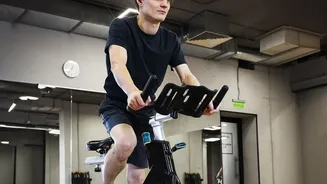
What Exactly Is Zone-2 Cardio?
Forget the 'no pain, no gain' mentality. Zone-2 cardio is all about low-intensity, steady-state exercise. It's often called 'base training' because it builds a strong foundation for your overall fitness. The goal is to work at a pace that feels comfortable
and sustainable for a longer duration, typically 30 minutes or more. A simple way to know you're in Zone 2 is the 'talk test': you should be able to hold a full conversation without gasping for air. If you can easily sing, you're likely in Zone 1, and if you can only get out a few words at a time, you've pushed into a higher zone. It’s the sweet spot where your effort is noticeable but not strenuous.
The Science Behind the Stamina
The magic of Zone-2 cardio lies in what it does for your body at a cellular level. This type of training improves the function and number of your mitochondria, the tiny power plants within your cells that generate energy. By working at this low-to-moderate intensity, you train your body to become more efficient at using fat for fuel instead of relying solely on carbohydrates. This metabolic flexibility is crucial for maintaining stable energy levels throughout the day, helping you avoid that classic afternoon slump. In essence, you are building a more robust and efficient energy system that reduces fatigue and boosts your daily endurance.
Finding Your Zone-2 Sweet Spot
While the talk test is an excellent real-world guide, you can also use your heart rate to find your Zone 2. A popular and simple method is to first estimate your maximum heart rate (MHR) by subtracting your age from 220. From there, Zone 2 is generally calculated as being between 60% and 70% of your MHR. For example, a 40-year-old has an estimated MHR of 180 beats per minute (bpm). Their Zone-2 range would be between 108 and 126 bpm. Fitness trackers and smartwatches can make monitoring this easy, but don't get too bogged down by the numbers initially. The key is to listen to your body and maintain a conversational pace.
Practical Ways for Desk Workers to Start
Integrating Zone-2 cardio into a busy work life is easier than you think because it doesn't require a special gym session. Any activity that keeps your heart rate in the target zone works. Consider a brisk 30-minute walk during your lunch break, making sure the pace is faster than a casual stroll. Other great options include a steady bike ride, using an elliptical or rowing machine while watching TV, or even light jogging. Some people find that everyday activities like briskly vacuuming or mowing the lawn can also qualify. The key is consistency and choosing an activity that you find enjoyable and can stick with, as it's a low-impact form of exercise that's gentle on the joints.
How Often and For How Long?
For beginners, a great starting point is to aim for two to three Zone-2 sessions per week, with each session lasting between 30 and 60 minutes. The American College of Sports Medicine suggests that low-intensity workouts should last for a sustained period, typically 30 minutes or more. The goal is to gradually build up your weekly volume. Many experts recommend accumulating at least 150 minutes of moderate-intensity cardio each week for overall health benefits. Because Zone 2 is less taxing on the body, it's easier to recover from and can be incorporated more frequently than high-intensity workouts without leading to burnout or injury.