

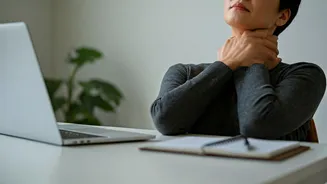



The Modern Malady of Tight Hips
Our bodies were designed for movement, but modern work life often demands the opposite. Spending eight or more hours a day seated forces our hips into a constant state of flexion, causing the muscles at the front of the hip—the hip flexors—to become short
and tight. This isn't just a matter of feeling stiff when you stand up. Chronically tight hip flexors can tilt the pelvis, leading to a cascade of postural problems, including lower back pain, knee strain, and even neck and shoulder discomfort. This phenomenon, sometimes called 'desk body,' is a direct consequence of a sedentary lifestyle, where the muscles responsible for our mobility become locked and underused, contributing to pain and reduced range of motion.
Why Hip-Opening Yoga Is Key
While the headline's claim to 'cure' stiffness might be bold, the principles behind it are sound. Hip-opening yoga poses are designed to specifically counteract the effects of prolonged sitting. By gently stretching the hip flexors, adductors (inner thighs), and external rotators (like the glutes), these poses help to restore flexibility and balance to the pelvic region. The benefits extend beyond simple stretching. Increased blood flow to the area can help nourish tissues and reduce inflammation. Furthermore, many yogic traditions associate the hips with stored emotional tension. For many practitioners, working on hip-opening poses can lead to a sense of emotional release and stress reduction, making it a practice for both body and mind.
The Rise of the Online Challenge
Recognising this widespread need, yoga instructors have created a wave of online 'hip-opening challenges.' These are typically free programmes, shared on platforms like Instagram and YouTube, that offer a structured approach to improving hip mobility. A challenge might involve practicing one new pose each day for a week, or following a 30-day calendar of short yoga flows. The appeal is multi-faceted. The structure removes the guesswork, providing a clear path for beginners. The community aspect, with participants sharing their progress using a common hashtag, fosters a sense of accountability and encouragement. It makes a solitary practice feel like a shared journey, motivating people to stay consistent long enough to feel real results.
Three Poses to Begin Your Journey
You don't need to join a formal challenge to start feeling the benefits. Incorporating a few key poses into your routine can make a significant difference. Try these three accessible hip openers: 1. **Pigeon Pose (Eka Pada Rajakapotasana):** Start on your hands and knees. Bring your right knee forward and place it behind your right wrist, angling your right shin across the front of your mat. Extend your left leg straight back. Keep your hips square to the front and gently fold forward over your front leg. Hold for 30 seconds to a minute, breathing deeply, and then switch sides. This provides a deep stretch for the hip rotators. 2. **Lizard Pose (Utthan Pristhasana):** From a low lunge with your right foot forward, place both hands on the inside of your right foot. You can stay on your hands or, for a deeper stretch, lower onto your forearms. Keep your back leg active and your chest lifted. This pose targets the hip flexors and inner thighs. Hold for 30 seconds, then repeat on the other side. 3. **Bound Angle Pose (Baddha Konasana):** Sit on the floor with your legs extended. Bend your knees and bring the soles of your feet together, letting your knees fall out to the sides. Hold onto your feet or ankles and sit up tall. To deepen the stretch, gently fold forward. This is an excellent stretch for the inner thighs and groin.
How to Practice Safely
The key to a sustainable practice is safety. The goal is a gentle opening, not aggressive force. Never push into sharp pain; a mild stretching sensation is what you're looking for. Use props like cushions or yoga blocks to support your body, especially if you're very stiff. A cushion under the hip in Pigeon Pose, for instance, can make the posture much more accessible. Most importantly, listen to your body. It's your best teacher. If a pose doesn't feel right, ease out of it. Consistency over intensity is the path to long-term mobility and relief.