
The Moon's Most Valuable Resource
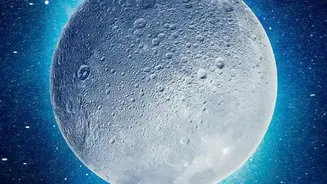
For decades, the Moon was believed to be bone-dry. Samples returned by the Apollo missions showed a barren, waterless world. But recent discoveries have completely changed that picture. We now know that significant quantities of water ice are trapped
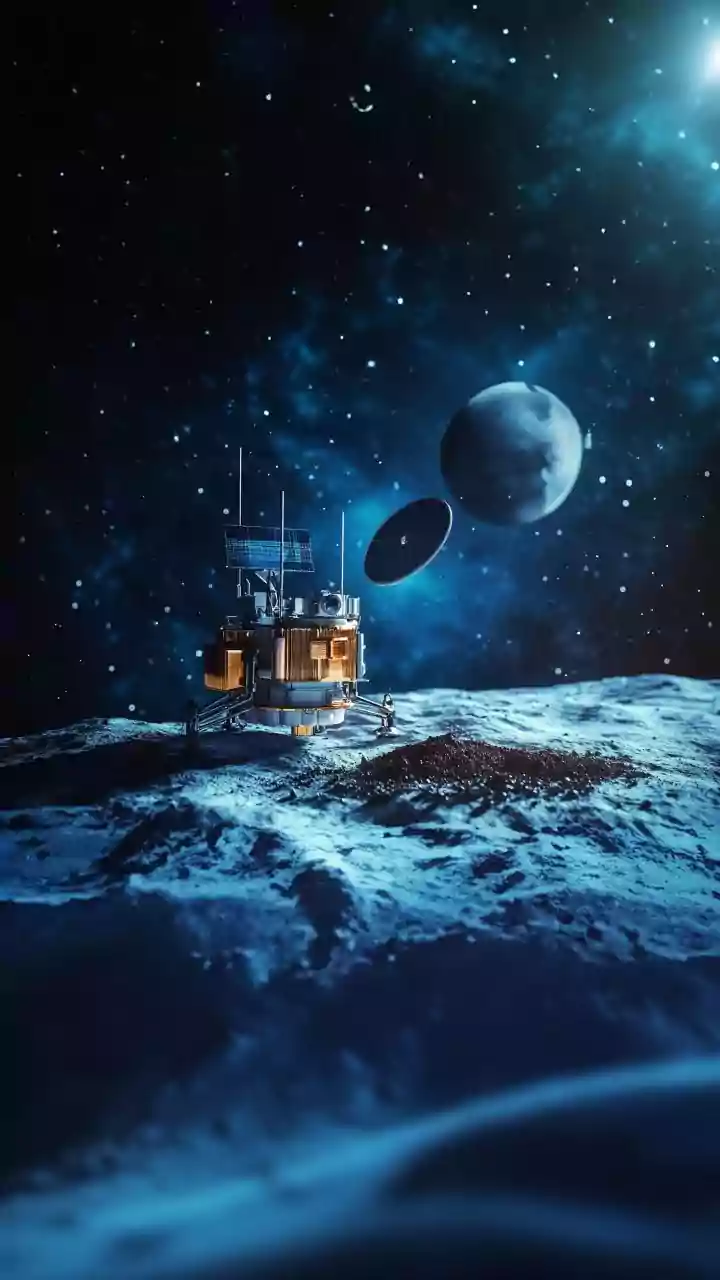
at the lunar south pole, hidden within craters that have been permanently shadowed from sunlight for billions of years. These perpetually dark and frigid regions act as celestial cold traps, preserving the ice. This water isn't just for drinking; it's the cornerstone of a future lunar economy. When separated into its component elements, hydrogen and oxygen, it becomes breathable air for astronauts and, crucially, powerful rocket propellant. The ability to refuel on the Moon, a practice known as in-situ resource utilization (ISRU), would fundamentally change the economics of space exploration, making long-duration missions and even voyages to Mars far more feasible.
Seeing Water Without Seeing It
So, how do scientists find ice buried under rock and dust from hundreds of thousands of kilometres away? They don't look for the water itself, but for its primary ingredient: hydrogen. This is where the neutron spectrometer comes in. The lunar surface is constantly bombarded by high-energy particles from space called cosmic rays. These cosmic rays smash into the atoms in the lunar soil, or regolith, kicking out a spray of particles, including neutrons. These neutrons bounce around in the soil before escaping back into space. A neutron spectrometer, often mounted on an orbiting spacecraft or a rover, is designed to detect and count these escaping neutrons and measure their energy. The instrument acts like a cosmic detective, looking for a very specific clue. When a neutron collides with a hydrogen atom, it loses a significant amount of energy because both particles have nearly identical masses. Therefore, if a region is rich in hydrogen—and by extension, water ice—the spectrometer will detect fewer medium-energy neutrons escaping from the surface. This deficit is the tell-tale signature of buried water.
From Data Maps to Treasure Maps
Instruments like the Lunar Exploration Neutron Detector (LEND) aboard NASA's Lunar Reconnaissance Orbiter (LRO) have been circling the Moon for years, using this technique to create large-scale maps of hydrogen concentration. These aren't photographs of icy landscapes but rather data-driven 'treasure maps' that highlight promising areas with high concentrations of hydrogen. These maps are essential for planning the next phase of lunar exploration. They show mission planners where to send robotic landers and rovers for a closer look, guiding them to the most resource-rich locations at the south pole. This mapping is the first, crucial step in moving from theoretical possibility to practical resource extraction. It allows space agencies to narrow down landing sites for future crewed missions, like those under the Artemis program, ensuring that astronauts land in places where they have the best chance of accessing this vital resource.
The Next Step: Ground Truth
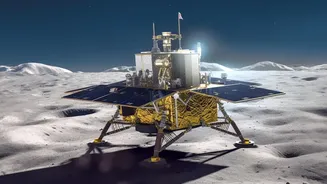
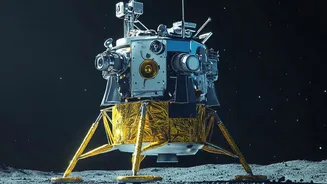
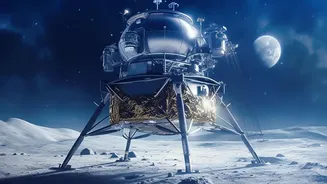
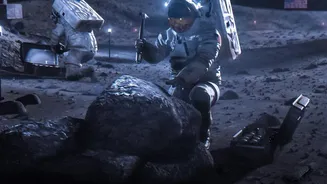
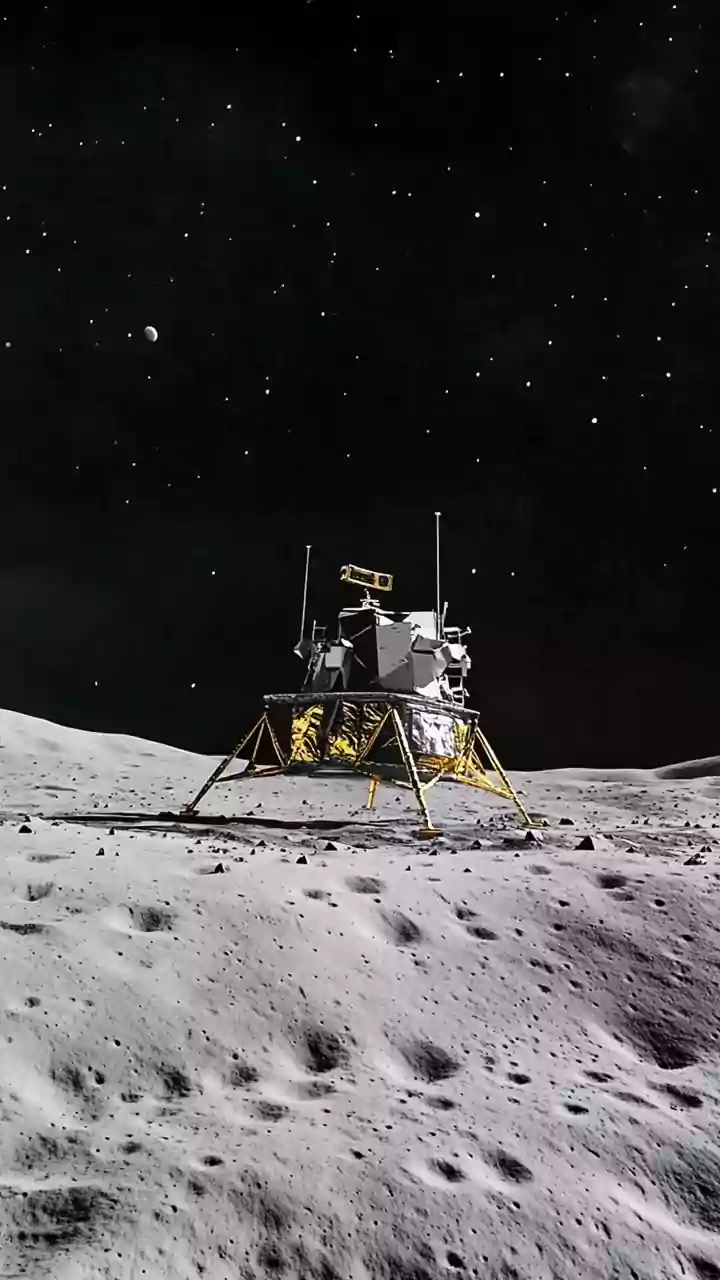
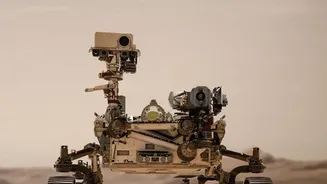
While orbital maps are invaluable, they can't tell the whole story. They indicate the presence of hydrogen over a wide area but don't reveal its depth, purity, or whether the ice is in a solid block or mixed in with the soil. To get this 'ground truth,' rovers equipped with drills and more sophisticated instruments are needed. NASA's VIPER rover was designed specifically for this task, intended to prospect the very regions mapped by neutron spectrometers. Although that specific mission was discontinued, the objective remains critical. In a prime example of international collaboration, NASA is now providing a state-of-the-art Neutron Spectrometer System (NSS) for the LUPEX mission, a joint rover project between the space agencies of Japan (JAXA) and India (ISRO). This mission will carry the torch, landing at the south pole to directly investigate the form and accessibility of the water ice, turning the data maps into a tangible inventory of lunar resources.