




A New Space Race Fueled by Policy
India's space sector is on a trajectory to become a major economic force. Projections estimate the national space economy could soar from around $8-9 billion today to $40-45 billion within the next decade. This rapid growth is no accident. It's the result
of the Indian Space Policy 2023, a landmark reform designed to open the final frontier to private companies, or Non-Governmental Entities (NGEs). The policy has spurred a startup boom, with the number of private space companies growing from just one in 2014 to over 450 in 2026. This new ecosystem is built around a clear division of labour, designed to boost India’s share of the global space market.
ISRO's New Role: Mentor, Not Manufacturer
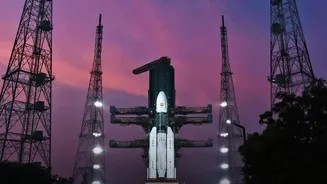
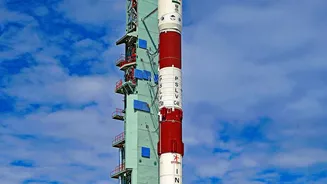
Recent headlines and internal concerns have raised questions about ISRO's future, but the space agency has been clear: it is not being privatised. Instead, its role is evolving. Under the new policy, ISRO is transitioning away from the routine manufacturing of operational systems like the PSLV rocket. Its new mandate is to focus on what it does best: advanced research and development, pioneering new technologies, deep-space exploration, and national security missions like the Gaganyaan human spaceflight program. In essence, ISRO will act as the research-driven core of the national space program, transferring mature technologies to the private sector and mentoring a new generation of space entrepreneurs.
The Rise of Private Players and New Institutions
To manage this new landscape, the government has created two key bodies. The first is IN-SPACe (Indian National Space Promotion and Authorisation Centre), which acts as a single-window agency to authorise and supervise all private space activities, from building rockets and satellites to using ISRO's facilities. The second is NewSpace India Limited (NSIL), ISRO's commercial arm. NSIL is responsible for commercialising ISRO's proven technologies, managing satellite-based services, and procuring launch vehicles from industry. This structure allows companies like Skyroot Aerospace, Agnikul Cosmos, and Pixxel to innovate independently, building everything from 3D-printed engines to constellations of Earth-observation satellites.
What This Means for Young Engineers
This new, diversified ecosystem is creating a galaxy of opportunities for young engineers. A career in space is no longer limited to a job at a government agency. The 450-plus startups are hungry for talent, and not just in traditional aerospace engineering. There is a growing demand for software engineers, data scientists, electronics and communication specialists, mechanical engineers, and experts in materials science. Companies are hiring for roles in avionics, flight control systems, satellite data analysis, unmanned aerial vehicles (UAVs), and propulsion technologies. Startups like Skyroot, Dhruva Space, and Agnikul are actively recruiting for positions ranging from FPGA engineers to industrial and quality control engineers.
Skills for the Final Frontier
For an aspiring space professional, this shift means broadening one's skill set. While a foundation in aerospace or mechanical engineering remains valuable, expertise in software is becoming critical. Experience with MBD (Model-Based Design), control systems, programming, and data analytics is highly sought after. Many private companies are working on cutting-edge technologies like reusable launch vehicles, satellite servicing, and AI-driven data applications, creating a need for a multidisciplinary workforce. The dream of working in India's space sector is now more accessible than ever, but it requires a forward-looking approach to skills and a readiness to join a fast-paced, innovation-driven private industry.