



A Distant Explorer’s Second Act
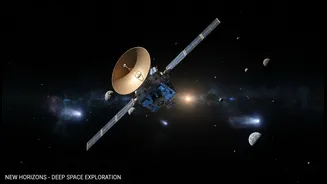
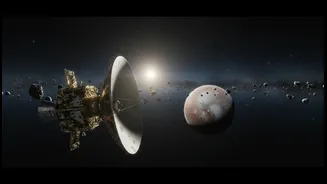
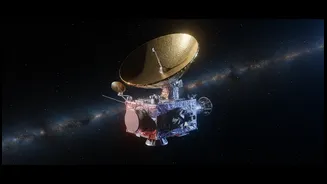
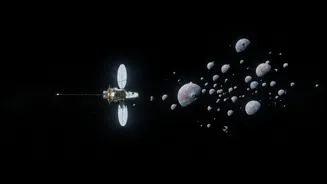
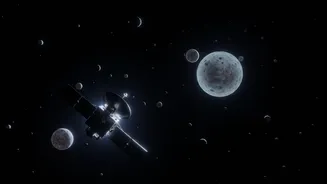
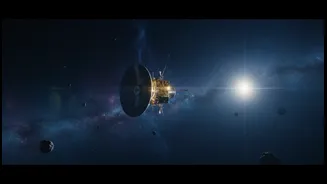
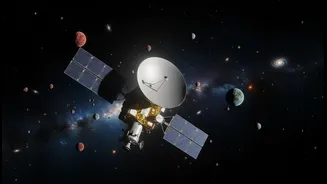
After its historic 2015 flyby that gave humanity its first close-up look at Pluto, New Horizons didn't stop. It continued its journey into the Kuiper Belt, the vast, icy frontier of our solar system. In 2019, it successfully visited Arrokoth, the most
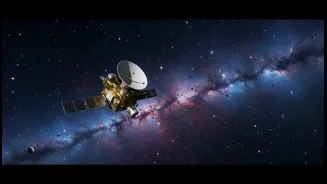
distant object ever explored by a spacecraft. As of July 2026, the probe is over 9.5 billion kilometres from Earth, pushing deeper into this mysterious region. After waking from its longest-ever hibernation period in June 2026, the spacecraft remains healthy and is transmitting data from its long cruise. Its mission has now shifted from specific flyby targets to broader scientific goals: studying the plasma environment of the outer heliosphere and observing other Kuiper Belt Objects (KBOs) from a unique vantage point.
The Tyranny of Time and Power
The fundamental challenge for New Horizons is its finite power source. The spacecraft runs on a single Radioisotope Thermoelectric Generator (RTG), which converts heat from the natural decay of plutonium-238 into electricity. At launch in 2006, it produced about 245 watts, but this output decreases by roughly 3.5 watts each year. By its Pluto encounter in 2015, power had dropped to around 200 watts. This steady decline forces mission operators into a ruthless game of energy management. There is no battery to store power, so every operation must be carefully planned to not exceed the RTG's dwindling output. This power constraint dictates everything from which instruments can run to how the spacecraft communicates with Earth.
Science on a Power Budget
Despite the power limitations, New Horizons is still a valuable scientific platform. Its current extended mission focuses on heliophysics—studying the interaction between the solar wind and interstellar space—and collecting astronomical observations of distant KBOs. Even while in hibernation, some instruments like the Solar Wind Around Pluto (SWAP) and the Student Dust Counter continue to gather data. Scientists are getting creative, using the probe's long-range imager to study the distribution and properties of KBOs in ways that even the most powerful telescopes on Earth cannot. These observations are crucial for understanding the building blocks of our solar system, essentially turning the journey itself into a major part of the experiment.
Teaching an Old Probe New Tricks
The 'ageing-spacecraft' problem is not just about nostalgia; it’s about pioneering new ways to conduct deep-space operations. With a round-trip communication time of over 17 hours, direct real-time control is impossible. This makes New Horizons a perfect testbed for improving spacecraft autonomy. In 2025, NASA even uploaded new software to the probe, enhancing its capabilities for its extended mission. By learning to manage this aging asset—nursing its power supply, working around hardware limitations, and maximizing scientific return with minimal resources—NASA is writing the playbook for future, even longer-duration interstellar missions. The challenges are similar to those faced by the Voyager missions, where engineers must decipher old documentation and find creative software workarounds for failing hardware.
The Value of Pushing the Limits
Continuing the New Horizons mission is more than a sentimental nod to a past success. It is a strategic investment in knowledge. Every year the spacecraft survives provides invaluable data on how systems degrade over decades in the harsh environment of deep space. It also stresses NASA’s Deep Space Network, highlighting capacity issues that need to be solved for future missions like the Artemis program. The mission is proving that with clever management, aging hardware can transition from a primary exploration role to a long-term observatory and operational testbed. The science it delivers on the nature of the outer solar system and the operational lessons it provides are a return on investment that goes far beyond simply reliving the glory days of the Pluto flyby.