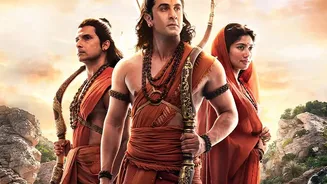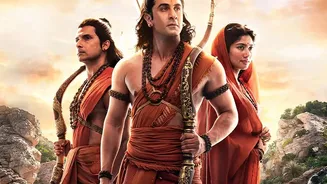








Nitesh Tiwari’s upcoming epic 'Ramayana' is one of the most anticipated films in Indian cinema history. But its ultimate success won't just depend on spectacle. It hinges on a powerful, proven strategy: reaching every corner of India and beyond.
The Pan-Indian Blueprint
The path
to national box office dominance was rewritten over the last decade. Films like S.S. Rajamouli’s 'Baahubali' series didn't just break records; they broke barriers. By investing in high-quality dubbing in Hindi, Tamil, and Malayalam, the Telugu epic became an Indian epic. This created a blueprint that was later perfected by blockbusters such as 'KGF', 'Pushpa', and 'RRR'. These films proved that a compelling story with high production values could transcend its regional origins if it spoke to the audience in their own language. The term 'pan-Indian' film was born, signifying not just a movie released nationwide, but a cultural event embraced by all. This strategy turned regional stars into national icons and demonstrated that the box office potential of a single film could be multiplied several times over.
Beyond Metro Multiplexes
The true power of regional dubbing lies in its ability to penetrate markets far beyond the major metropolitan centres. While audiences in big cities might be comfortable with subtitles or multiple languages, viewers in Tier-2, Tier-3, and rural areas overwhelmingly prefer content in their mother tongue. By releasing versions in Tamil, Telugu, Kannada, and Malayalam alongside Hindi, filmmakers are not just adding languages; they are adding entire states to their opening weekend. This linguistic inclusivity is a powerful economic driver, unlocking revenue from regions that would otherwise be inaccessible. For a film with the universal appeal of an epic like 'Ramayana', tapping into these markets is not just an option but a commercial necessity for achieving record-breaking figures.
It's an Art, Not an Afterthought
The success of the pan-Indian model has elevated dubbing from a technical necessity to an art form. The days of mismatched lip-syncing and flat vocal performances are over. Audiences now expect a seamless experience where the dubbed dialogue captures the same emotion and cultural nuance as the original. The iconic line from 'Pushpa'—'Flower samjhe kya? Fire hai main!'—resonated just as powerfully in Hindi as it did in Telugu because the translation and vocal performance by Shreyas Talpade were crafted with care. For 'Ramayana', a story steeped in deep cultural and religious significance, the quality of its dubbed versions will be paramount. A poor dub could not only alienate audiences but also be seen as a sign of disrespect to the source material. Investing in top-tier writers and voice actors for each language is as crucial as the visual effects or score.
The Ultimate Test for Indian Cinema
Nitesh Tiwari's 'Ramayana' is poised to be the ultimate test case for the pan-Indian strategy. With a story known and revered by billions, its narrative foundation is arguably the strongest of any Indian film ever produced. The film is reportedly being made on a monumental budget, featuring a star cast drawn from multiple industries and music from global icons like Hans Zimmer and A.R. Rahman. By embracing a truly multilingual release, 'Ramayana' isn't just aiming to be a blockbuster; it's aiming to be a unifying cultural moment. Its box office run will be watched closely, not just as a measure of a single film's success, but as a definitive statement on the future of Indian cinema—one where linguistic diversity is not a challenge to overcome, but its greatest strength.