



A Crowded Cosmic Neighbourhood
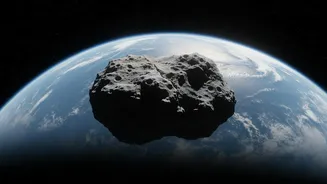
Our solar system is far from empty. It's filled with millions of asteroids, remnants from the formation of the planets 4.6 billion years ago. Most keep a safe distance in the asteroid belt between Mars and Jupiter, but gravitational nudges can send them
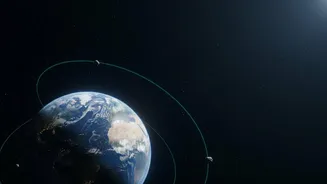
on paths that cross Earth's orbit. These are called Near-Earth Objects, or NEOs. While the vast majority are small and harmless, a fraction are large enough to survive atmospheric entry and cause significant damage. The 2013 Chelyabinsk event in Russia serves as a stark reminder. An asteroid only about 20 metres wide, previously undetected, exploded in the atmosphere with the force of a nuclear weapon, injuring over 1,200 people and damaging thousands of buildings from its shockwave alone. This demonstrates that even relatively small objects pose a tangible threat.
The Global Sentry Network
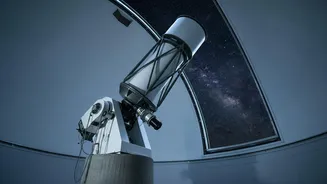
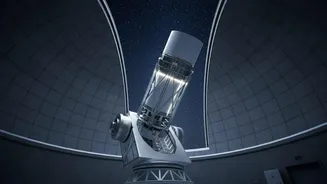
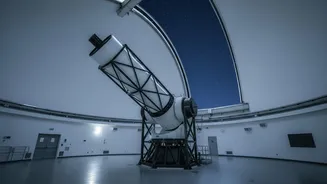
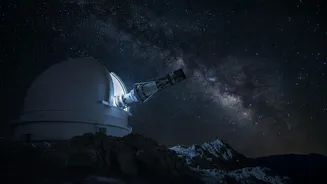
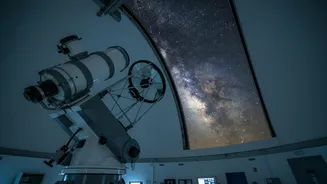
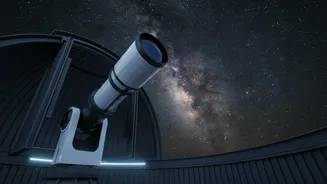
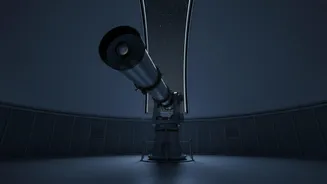
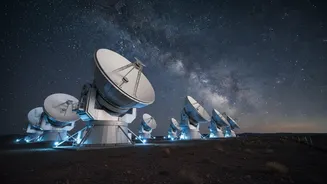
Finding these potentially hazardous objects is a monumental task, akin to spotting a piece of coal in the dead of night. The primary method involves survey telescopes that repeatedly scan large sections of the sky. By comparing images taken minutes apart, astronomers can identify faint points of light that move against the fixed background of stars. This is the work of a global network of observatories, including NASA-supported projects like the Catalina Sky Survey and Pan-STARRS. Once a new NEO is detected, its position is sent to the Minor Planet Center. From there, organisations like NASA's Center for Near-Earth Object Studies (CNEOS) calculate its precise orbit, continually refining the path as more data comes in to determine if it poses any future threat.
From Detection to Active Defence
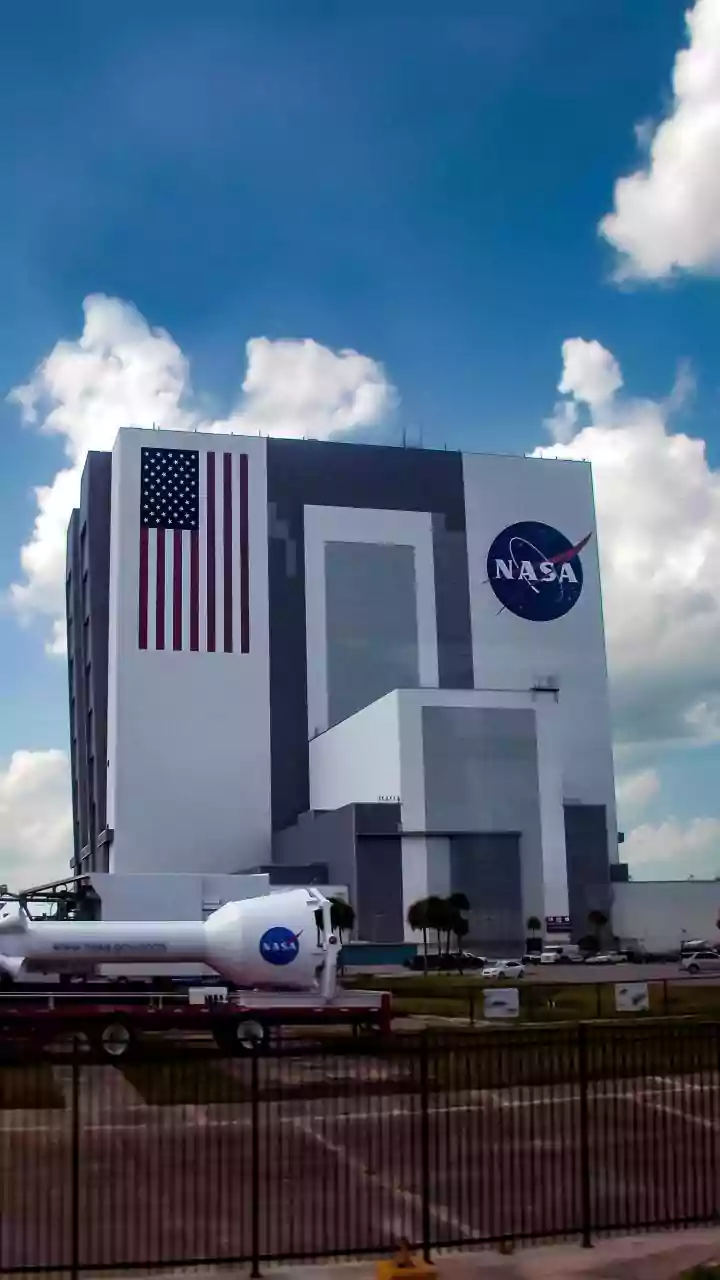
Tracking is just the first step. The ultimate goal is planetary defense. In 2016, NASA formalized this effort by creating the Planetary Defense Coordination Office (PDCO). This office is responsible for cataloguing threats, coordinating response plans, and researching ways to mitigate an impact. The most famous example of this proactive defence is the Double Asteroid Redirection Test (DART) mission. In 2022, NASA deliberately crashed the DART spacecraft into a small asteroid moonlet named Dimorphos. The mission was a resounding success, proving for the first time that humanity can purposefully alter the motion of a celestial object. The impact changed Dimorphos's orbit by a much larger margin than expected, confirming that a 'kinetic impactor' is a viable technique for deflecting an asteroid on a collision course with Earth.
Why Early Warning Is Everything
The success of any deflection mission hinges on one critical factor: time. Nudging an asteroid off its collision course doesn't require a massive explosion, but it does require a very small push applied many years or even decades in advance. The DART mission showed that even a small change in an asteroid's velocity, when compounded over a long period, can result in it missing Earth by a wide margin. Finding a potentially hazardous asteroid when it is still millions of kilometres away and years from a potential impact gives us a range of options. Finding one just months or weeks away leaves us with virtually none. This is why continuous, comprehensive sky surveys are so essential. The goal of the NEO Observations Program is to find at least 90 percent of NEOs that are 140 meters or larger—big enough to cause regional devastation—to ensure we have the lead time necessary to act.
Unexpected Scientific Windfalls
While protecting the planet is the primary driver, tracking asteroids yields immense scientific benefits. These objects are pristine relics from the early solar system, effectively time capsules that have remained largely unchanged for billions of years. Studying their composition, size, and spin helps scientists understand how our solar system, including Earth, was formed. Some theories suggest that asteroids and comets may have delivered water and the organic materials necessary for life to a young Earth. Furthermore, understanding an asteroid's physical properties—whether it's a solid rock or a loose rubble pile—is crucial not only for science but also for planning a successful deflection mission. Each new discovery adds another piece to the puzzle of our cosmic origins and strengthens our ability to protect our future.