


Mawsynram, Meghalaya: The Land of Constant Rain
Forget carrying an umbrella; in Mawsynram, you wear a 'knup'—a turtle-shell-like shield of woven bamboo and leaves. Officially the wettest inhabited place on Earth, this village in India’s northeast doesn't just bloom with rain, it’s defined by it. During
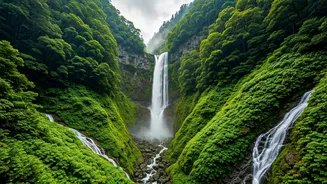
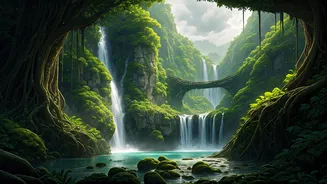
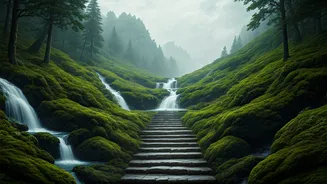
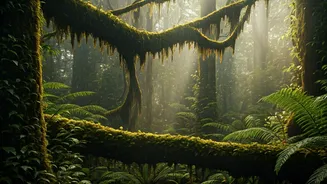
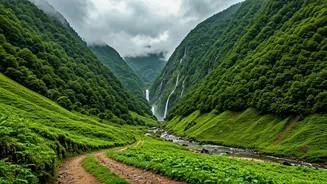
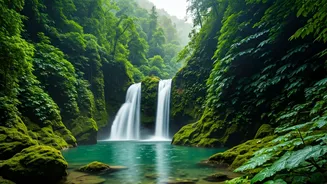
the monsoon, the landscape becomes a spectacle of hyper-reality. Waterfalls cascade from every cliff face, rivers swell with life, and the famous living root bridges—marvels of bio-engineering created by the Khasi people—glisten with moss. The air is thick with mist and the constant, percussive sound of rainfall. This isn't a place you visit to escape the rain; it's where you go to witness its awesome, life-giving power.
Valley of Flowers, Uttarakhand: A Himalayan Carpet of Color
For most of the year, this high-altitude Himalayan valley lies dormant under a blanket of snow. But as the monsoon rolls in, it undergoes a breathtaking metamorphosis. The Valley of Flowers National Park, a UNESCO World Heritage Site, erupts into a vibrant carpet of over 300 species of alpine flowers. Accessible only by a trek, the journey itself is part of the magic. You walk through misty trails with the Pushpawati River rushing below. The 'bloom' here is literal and spectacular: a meadow of blues, purples, pinks, and yellows set against the dramatic backdrop of snow-capped peaks. It’s a fleeting spectacle, open only from June to October, making it one of nature’s most exclusive seasonal shows.
Amboli, Maharashtra: The Waterfall Capital
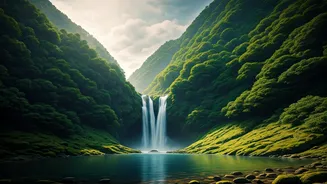
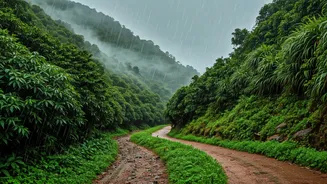
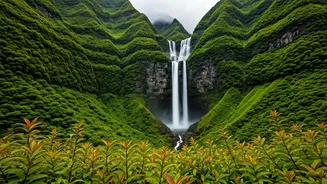
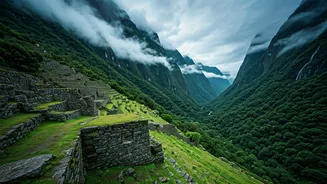
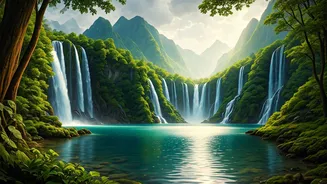
Tucked away in the Western Ghats mountain range, the sleepy hill station of Amboli is a local secret that comes alive for just a few months. As the monsoon clouds gather, this tranquil spot transforms into a playground of waterfalls. Water seems to spring from every possible crevice in the Sahyadri hills, creating hundreds of temporary cascades that line the winding roads. The main Amboli Ghat waterfall becomes a roaring spectacle, drawing crowds who come to get drenched. The entire region is draped in a thick, moving fog, giving it a mystical, ethereal quality. For a few months, Amboli isn't just a village; it’s a living, breathing water park designed by nature.
Bhandardara, Maharashtra: The Dam and the Deluge
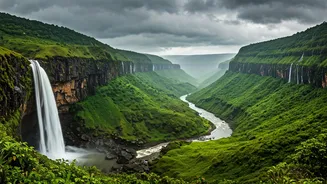
Another jewel of the Western Ghats, Bhandardara's monsoon transformation is all about scale and power. The area is home to the historic Wilson Dam, which, when it overflows, creates a stunning spectacle known as the 'Umbrella Falls' as water cascades over a semi-circular rock face. The nearby Randha Falls, fed by the dam's release, turns into a thunderous, powerful torrent that plunges into a deep gorge. The entire landscape shifts from a dry, dusty brown to an impossible, saturated green. Ancient temples peek through the mist, and the massive Lake Arthur reflects the moody, cloud-filled sky. It’s a place to feel humbled by the sheer volume of water and the lushness it leaves in its wake.
Ziro Valley, Arunachal Pradesh: The Emerald Rice Paddies
While not a traditional 'village,' the Ziro Valley is a cultural landscape that finds its peak beauty during the rainy season. Home to the Apatani tribe, known for their unique sustainable agriculture, the valley becomes a perfect patchwork of emerald-green rice paddies. The monsoon nourishes this intricate system, where rice and fish are cultivated together in the flooded fields. The view from the surrounding hills is hypnotic: a vast expanse of green terraces shrouded in low-hanging clouds and gentle mist. The 'bloom' here is the quiet, organized beauty of a community living in perfect harmony with the seasonal rains, a lush and serene vista unlike anywhere else.