


Seeing the Invisible
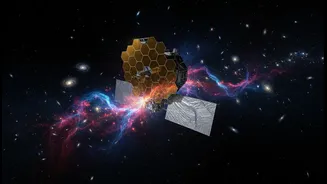
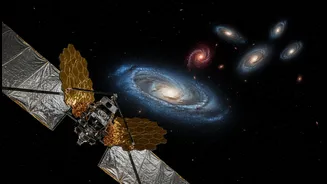
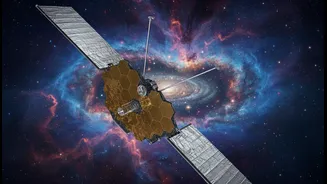
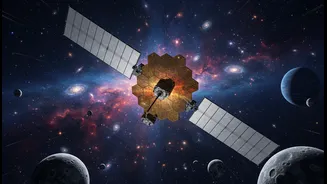
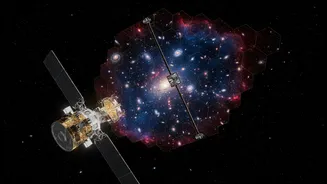
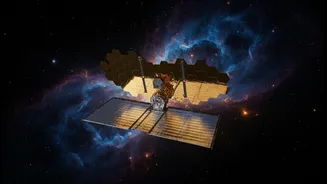
What makes the Webb telescope so revolutionary is its ability to see the universe in infrared light. Unlike the Hubble Space Telescope, which primarily observes in visible light, Webb’s giant, golden mirror is designed to capture light that has traveled
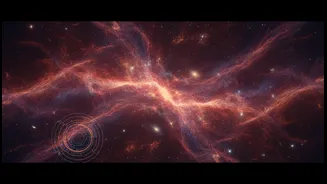
for billions of years across the expanding universe. As light from the earliest stars and galaxies travels, its wavelength gets stretched into the infrared spectrum, a phenomenon known as redshift. Webb's instruments can detect this faint, ancient light, allowing it to peer through cosmic dust clouds that obscure the view for other telescopes. This gives us a front-row seat to cosmic events that were previously invisible, from the birth of stars to the formation of the very first galaxies.
Peering into the Cosmic Dawn
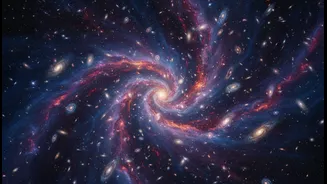
One of Webb's primary missions is to look back to the “cosmic dawn,” the period just a few hundred million years after the Big Bang when the first galaxies began to form. And it has already delivered spectacular results. Astronomers have used Webb to identify galaxies that existed when the universe was shockingly young, in some cases less than 300 million years old. These early galaxies are not the grand spirals we see today. Surprisingly, many appear to have been flat and elongated, like surfboards or noodles. Even more intriguing is that these early galaxies seem to be more massive and brighter than our models predicted, forcing scientists to rethink how quickly galactic structures could form after the universe began.
A New Era for Exoplanets
Beyond looking at the farthest reaches of space, Webb is also providing an unprecedented look at planets orbiting other stars, known as exoplanets. By analyzing the light that passes through an exoplanet's atmosphere, Webb can detect the chemical fingerprints of various molecules. This has led to a string of remarkable discoveries. Webb has confirmed the presence of water, carbon dioxide, and methane in the atmospheres of distant worlds. It has even detected sulfur dioxide on a 'hot Saturn' planet, which points to active chemical reactions in its atmosphere. More recently, it uncovered bizarre salt clouds on a cold, distant world and studied the atmosphere of a planet that survived the death of its star. This capability is a crucial step towards one of day identifying rocky planets, like Earth, that may have the conditions to support life.
Fresh Look at Familiar Neighbors
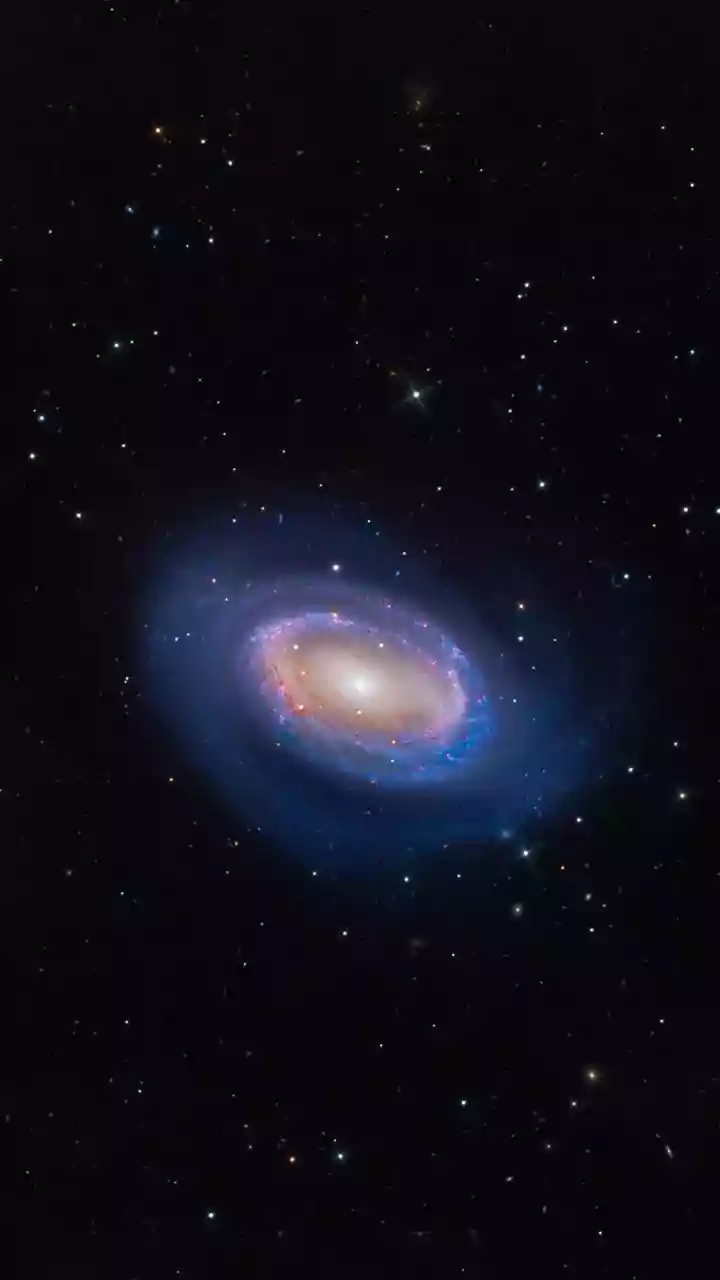
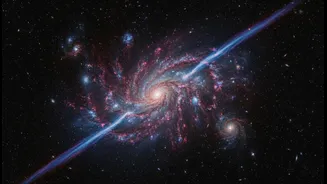
The telescope isn't just focused on distant galaxies and exoplanets; it's also turning its powerful gaze on our own cosmic backyard. Webb has produced stunning images and data from planets in our solar system, from the giant storms on Jupiter to the faint rings and moons of Neptune. Its infrared instruments can see our neighbors in a new light, revealing details about their atmospheric composition, temperature, and weather patterns that are impossible to see from the ground. Recently, as part of its fourth-anniversary observations, Webb captured a breathtakingly detailed image of the Centaurus A galaxy, a relatively close neighbor. By cutting through the dust, it revealed a tapestry of millions of individual stars and the dynamic activity around its central supermassive black hole.