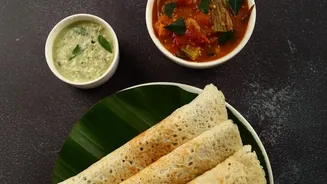


There’s nothing like a hot, crispy dosa, but adding toppings often leads to a soggy mess. The good news? A simple change in your technique can guarantee a crackling, golden-brown base every time, even when loaded with your favourite fillings.
The Soggy Dosa Dilemma
Every home
cook knows the frustration: you pour the perfect, fermented batter onto a hot tawa, dreaming of a restaurant-style crispy dosa. But the moment you add a generous sprinkle of chopped onions, tomatoes, or a hearty potato masala, the game changes. Instead of a crisp, golden-brown delight, you end up with a dosa that is disappointingly soft and floppy in the middle. The culprit is moisture. Toppings, especially fresh vegetables like onions and tomatoes, release water when they hit the hot surface. When added too early to the wet batter, this moisture gets trapped, effectively steaming the dosa from the inside instead of allowing it to crisp up. This excess water prevents the base from drying out and forming that essential, crackly texture we all crave.
The Science of a Perfect Crisp
Achieving a crispy dosa is a matter of physics and chemistry. The crispiness comes from the rapid evaporation of water from the batter on a very hot surface. This process, combined with the Maillard reaction (the browning of proteins and sugars), creates the dosa's signature flavour and texture. A well-fermented batter is filled with tiny air pockets from carbon dioxide, which help create a light, airy structure. When this batter is spread thinly on a properly heated tawa, the heat quickly drives out moisture, allowing the starches to gelatinize and set into a rigid, brittle film. However, if you introduce external moisture from toppings before this film has had a chance to form, you interrupt the entire process. The water from the toppings turns into steam that gets trapped under the batter, making the underside damp and preventing it from ever getting truly crisp.
The Golden Rule: Wait for It
The solution is beautifully simple: patience. Instead of scattering your toppings onto the wet, freshly poured batter, wait. Pour your batter and spread it as thinly as you desire. Let it cook on medium-high heat for a minute or two. You will see the surface change from glossy and wet to matte and cooked. The edges will begin to dry and may even start to lift slightly from the pan. This is your signal. The base of the dosa has now set and formed a preliminary crisp layer. At this point, the dosa is structurally ready to handle toppings. By adding your fillings now, their moisture will sit on top of the cooked surface rather than seeping into the raw batter. This allows the underside to continue browning and crisping up, completely unaffected by the steam from the toppings.
Step-by-Step to a Flawless Topped Dosa
Ready to put it into practice? Follow these steps for a perfectly crisp topped dosa: 1. Heat your tawa properly. A common mistake is using a pan that isn't hot enough. Sprinkle a few drops of water; if they sizzle and evaporate almost instantly, you're ready. 2. Pour and spread. Ladle your batter into the centre and quickly spread it outwards in a thin, even circle. Don't press too hard. 3. Cook the base. Let the dosa cook undisturbed on medium-high heat. Wait until the top surface appears dry and you see the edges starting to turn golden brown and crisp. 4. Add toppings now. Once the batter is set, sprinkle your onions, chillies, podi, or gently spread your potato masala over one half of the dosa. 5. Fold and serve. Give the toppings a moment to heat through, then fold the dosa and slide it off the tawa. Serve immediately while it's at its crispiest.
Pro-Tips for Even More Crunch
For those truly dedicated to the art of the crisp, a few extra preparations can make all the difference. If using moist vegetables like onions or capsicum, consider giving them a quick sauté in a separate pan beforehand to cook off some of their water content. For fillings like paneer, make sure it is crumbled and relatively dry. Even the batter itself plays a role; a batter with the right rice-to-dal ratio (often 3:1 or 4:1) and proper fermentation is crucial for a good texture. Some cooks also add a small amount of chana dal, poha (flattened rice), or rice flour to the batter, all of which are known to enhance crispiness.