


The Sun's Turbulent Temper
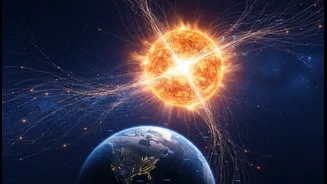
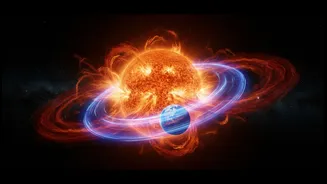
Our Sun might look like a calm, steady source of light, but it's a volatile star. Its surface is a churning mass of hot, electrically charged gas, governed by powerful and complex magnetic fields. Sometimes, this magnetic energy builds up and snaps, releasing
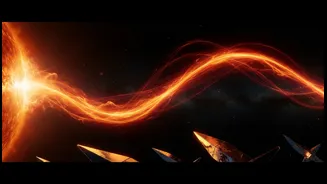
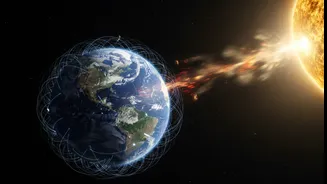
immense bursts of radiation called solar flares. Often accompanying these flares are even more powerful events: Coronal Mass Ejections, or CMEs. Think of a CME as a colossal cannonball of plasma and magnetic fields, weighing billions of tons, shot into space at millions of kilometres per hour. While a solar flare's radiation reaches Earth in minutes, a CME can take one to three days to travel the distance, creating a crucial window for preparation.
Our Eyes in the Sky
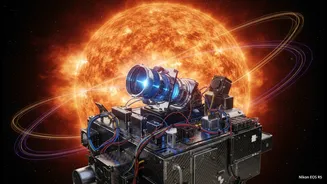
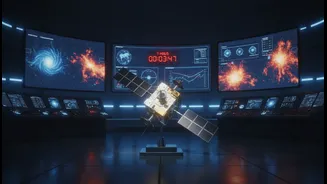
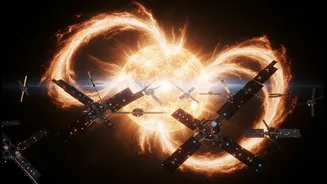
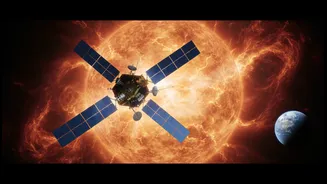
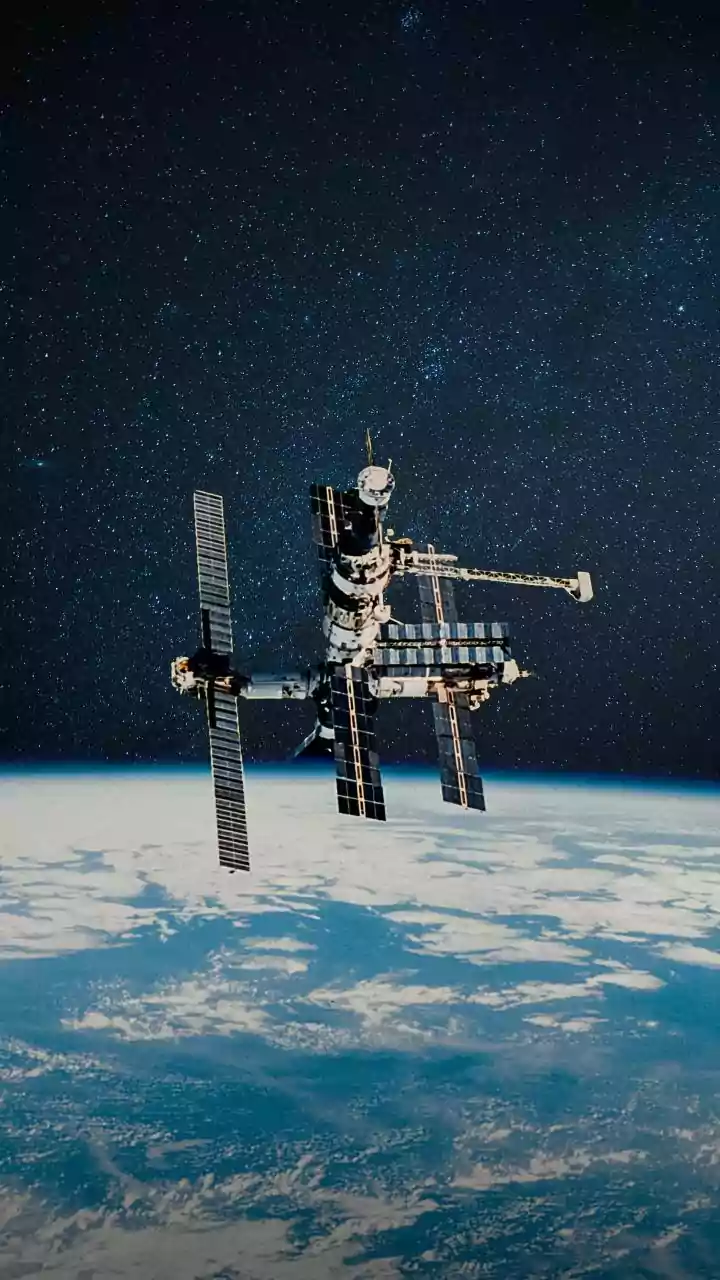
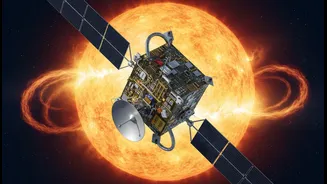
To watch for these solar outbursts, humanity has placed dedicated sentinels in space. For years, observatories like NASA's Solar Dynamics Observatory (SDO) and the joint NASA/ESA Solar and Heliospheric Observatory (SOHO) have provided constant surveillance. These missions capture high-resolution images of the Sun in different wavelengths of light, allowing scientists to monitor its magnetic activity. Joining this international effort is India's own pioneering mission, Aditya-L1. Positioned at a unique vantage point 1.5 million kilometres from Earth, called Lagrange Point 1, Aditya-L1 can watch the Sun continuously without any interruption from eclipses. This uninterrupted view is vital for tracking the development and eruption of solar storms.
From Detection to a Warning
Detecting a solar storm is a multi-step process. It begins with instruments like magnetographs studying the Sun's surface for complex magnetic field patterns, particularly around sunspots, which are often the breeding grounds for flares. When a flare erupts, observatories detect the sudden burst of X-rays and ultraviolet radiation. Simultaneously, instruments called coronagraphs, which block the Sun's bright face, can spot a CME cloud billowing out from the solar atmosphere. But simply seeing an eruption isn't enough; forecasters need to determine its path. They analyze the speed, size, and direction of the CME to predict if it is Earth-directed. This analysis forms the basis of space weather alerts issued by agencies like NOAA's Space Weather Prediction Center (SWPC).
The Importance of a Heads-Up
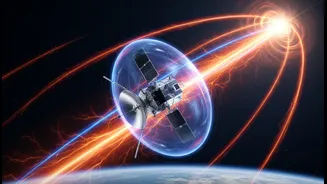
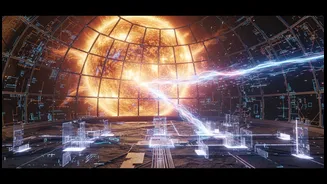
An early warning of a few hours to days can make a world of difference. When an Earth-bound CME is detected, a series of 'Watches' and 'Warnings' are issued. These alerts allow critical infrastructure operators to take protective measures. Power grid companies can reroute power and brace for induced electrical currents that could otherwise overload transformers and cause widespread blackouts. Satellite operators can place their spacecraft into a protective 'safe mode' to prevent sensitive electronics from being fried by energetic particles. Airlines can redirect flights away from polar routes where radio communication could be lost and radiation exposure is higher. In essence, these warnings don't stop the storm, but they allow us to put up the shutters and minimise the damage to our technologically dependent society.
India's Role in Solar Security
India's Aditya-L1 is a game-changer in this global effort. Its suite of seven instruments provides a more complete picture of solar eruptions. Payloads like the Solar Ultraviolet Imaging Telescope (SUIT) and X-ray spectrometers (SoLEXS and HEL1OS) allow scientists to observe the flare's origins and energy release across different layers of the sun's atmosphere simultaneously. By observing flares in wavelengths that other observatories couldn't, Aditya-L1 has already provided groundbreaking insights into how these massive explosions evolve. These unique observations are crucial for refining the models that predict the path and intensity of CMEs, ultimately leading to more accurate and timely warnings for everyone on Earth.