





What Exactly is PJ.2.1?
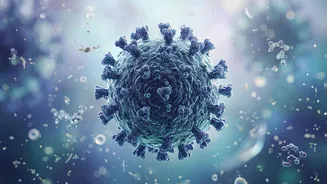
PJ.2.1 is a new lineage of the SARS-CoV-2 virus, the virus that causes COVID-19. It was first detected in Ontario, Canada, in May 2026 and has since been identified in several other countries, including the United States, Singapore, Australia, and parts
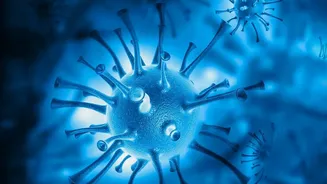
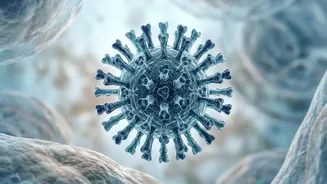
of Europe. Scientists are paying close attention to it because it is what's known as a 'saltation variant'. In simple terms, this means it has emerged with a large number of genetic changes all at once, rather than evolving slowly. These mutations are concentrated in the spike protein, which is the part of the virus that latches onto our cells to cause an infection. As of mid-November 2026, PJ.2.1 has not been officially confirmed in India, but health authorities are emphasizing the need for strong genomic surveillance to monitor its potential entry and spread.
The JN.1 Family Connection
To understand PJ.2.1, it helps to remember its family tree. It is a direct descendant of the JN.1 lineage, which itself came from the highly mutated BA.2.86 (Omicron) variant. The JN.1 family became globally dominant in late 2023 and early 2024, and since then, nearly all circulating variants have been its offspring. The emergence of PJ.2.1 continues this evolutionary pattern, where the virus keeps adapting and producing new sub-lineages. Each new dominant variant doesn't necessarily mean a return to square one, but rather shows how the virus is continuously changing to survive and spread in a population with existing immunity.
Is It More Severe or Transmissible?
This is the most critical question on everyone's mind. Currently, there is no evidence to suggest that PJ.2.1 causes more severe illness, hospitalisations, or deaths than previous variants. Health experts in India and organizations like the WHO have stated that the available clinical data does not show a significant difference in disease severity. Laboratory studies have found that PJ.2.1's mutations might help it bind more efficiently to our ACE2 receptors—the 'doorway' into human cells. While this could potentially give it a transmission advantage, it's important to note that faster spread in a lab doesn't automatically translate to more dangerous disease in people.
Symptoms and Immune Evasion
The symptoms associated with PJ.2.1 are largely the same as those seen with other recent COVID-19 variants and overlap significantly with the common cold and flu. These include fever, cough, sore throat, body aches, fatigue, and a runny or blocked nose. Because of this overlap, the WHO has cautioned that you cannot identify the variant based on symptoms alone; a diagnostic test is necessary. Regarding immunity, early findings are cautiously optimistic. A key study found that PJ.2.1 does not appear to be substantially better at evading antibodies from updated vaccines compared to other variants. The reduction in neutralisation by vaccine-induced antibodies was described as modest, which is an encouraging sign.
What Should We Do in India?
The emergence of a new variant is a call for awareness, not alarm. As India enters a season of festivals and increased travel, the opportunities for respiratory viruses to spread naturally increase. Public health advice remains consistent. Standard COVID-19 tests can detect an infection, though they won't specify the variant without genomic sequencing. If you develop symptoms like a persistent cough, fever, or sore throat, it is wise to get tested and take precautions, especially around vulnerable family members, such as the elderly or those with underlying health conditions. Basic hygiene—like hand washing and staying home when sick—continues to be a sensible line of defence. Health authorities stress that continued surveillance is key, but as of now, there is no indication that widespread restrictions are needed in India.