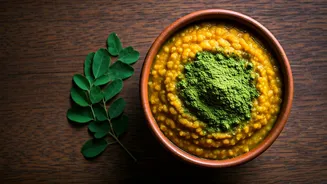



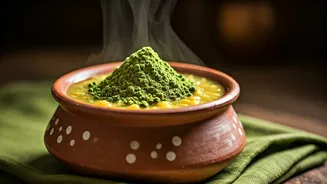
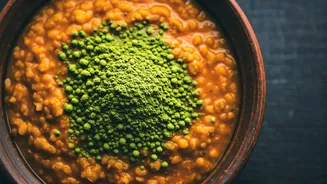


The Superfood in Your Backyard
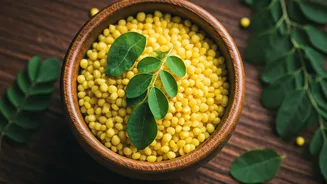
Moringa oleifera, known to most of us as the drumstick tree, is more than just the source of the beloved vegetable for our sambar. Its leaves, often overlooked, are one of the most nutrient-dense greens on the planet. Packed with vitamins A, C, and E,
they are also a rich source of calcium, potassium, and protein. In fact, gram for gram, moringa leaves contain more Vitamin C than oranges, more potassium than bananas, and a significant amount of iron. These tiny leaves are also loaded with antioxidants like quercetin and chlorogenic acid, which help combat oxidative stress and inflammation in the body. While it has been a staple in traditional medicine and regional cuisines for centuries, moringa is now gaining global recognition as a 'superfood' for its incredible health-promoting properties.
Why Dal Is the Perfect Partner
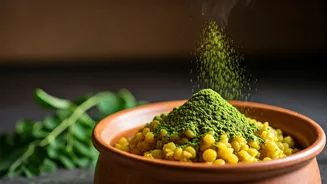
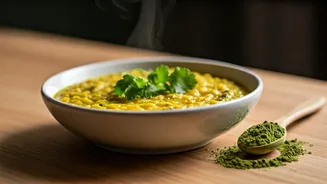
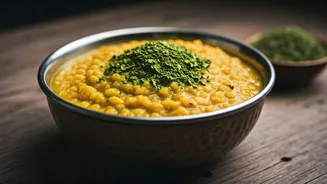
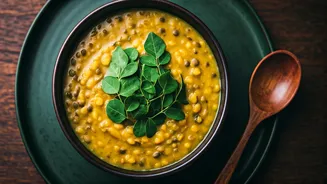
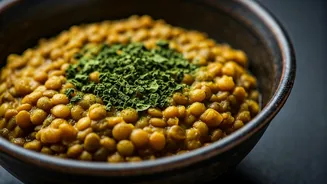
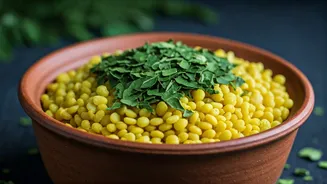
So, why add moringa to dal? The answer lies in perfect synergy. Dal, in its many forms—be it toor, masoor, or moong—provides a creamy, flavourful, and universally loved base. The earthy, slightly tangy taste of dal is robust enough to beautifully complement the mildly bitter, spinach-like flavour of moringa leaves. For those new to moringa, dal acts as the perfect introductory vehicle. The texture of the cooked lentils helps mellow the leaves, integrating them seamlessly into the dish. Unlike a salad or a standalone stir-fry, where the taste of moringa might be too pronounced for some, dal embraces the leaves, making them a natural part of every spoonful. It’s a simple, effective, and delicious way to incorporate this green giant into your daily diet without any fuss.
A Quick Guide to Prepping Moringa
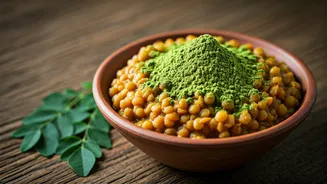
Preparing moringa leaves is the most crucial step, but it’s quite simple. If you have a tree nearby, you're in luck! If not, they are increasingly available at local vegetable markets. Start by plucking the small leaves from the thicker stems. This is the most time-consuming part, but it’s a perfect activity to do while watching TV or listening to music. Discard the tough stalks, as they can be fibrous. Once you have a pile of leaves, wash them thoroughly in a large bowl of water a couple of times to remove any dirt or grit. Drain them well using a colander. For most recipes, you don't need to chop the leaves, but if you prefer, you can give them a rough chop. Fresh leaves are best, but you can also store cleaned and dried leaves in an airtight container in the refrigerator for a few days.
How to Add Moringa to Your Dal
There are two popular methods for adding moringa to your dal, and both are incredibly easy. Method 1: Stir-In at the End. Cook your dal as you normally would. Once the dal is cooked and you're about to temper it, add a large handful of cleaned moringa leaves directly into the hot dal. Stir well and let it simmer for about 5-7 minutes, or until the leaves are tender and have turned a deep green. The residual heat is often enough to cook them perfectly without turning them mushy. Then, prepare your tadka (tempering) of ghee or oil, mustard seeds, cumin, asafoetida (hing), and dried red chillies, and pour it over the dal. Method 2: Sauté with the Tadka. This method infuses the dal with a deeper flavour. When preparing your tadka, after the spices have crackled, add chopped onions or garlic and sauté them. Then, add the moringa leaves to the pan and sauté for just a minute or two until they wilt. Pour this entire tempering mixture into your cooked dal and stir. This way, the leaves get coated in the aromatic spices, adding another layer of taste.
What to Keep in Mind
While moringa is a fantastic addition to your diet, moderation is key. The leaves are potent, and consuming them in very large quantities might cause digestive discomfort for some individuals. A good handful per serving of dal is a great starting point. Also, ensure your leaves are fresh and sourced from a clean, pesticide-free environment. If you are pregnant, breastfeeding, or on medication for thyroid issues or diabetes, it’s always a good practice to consult with a doctor or a qualified nutritionist before making any significant changes to your diet, including adding potent superfoods like moringa. While generally safe for most people, its powerful nutritional profile means it's wise to be mindful.