




A Messenger to an Ocean Moon
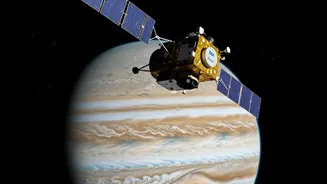
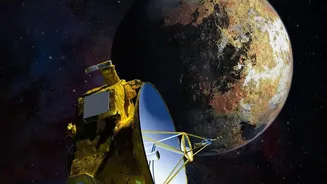
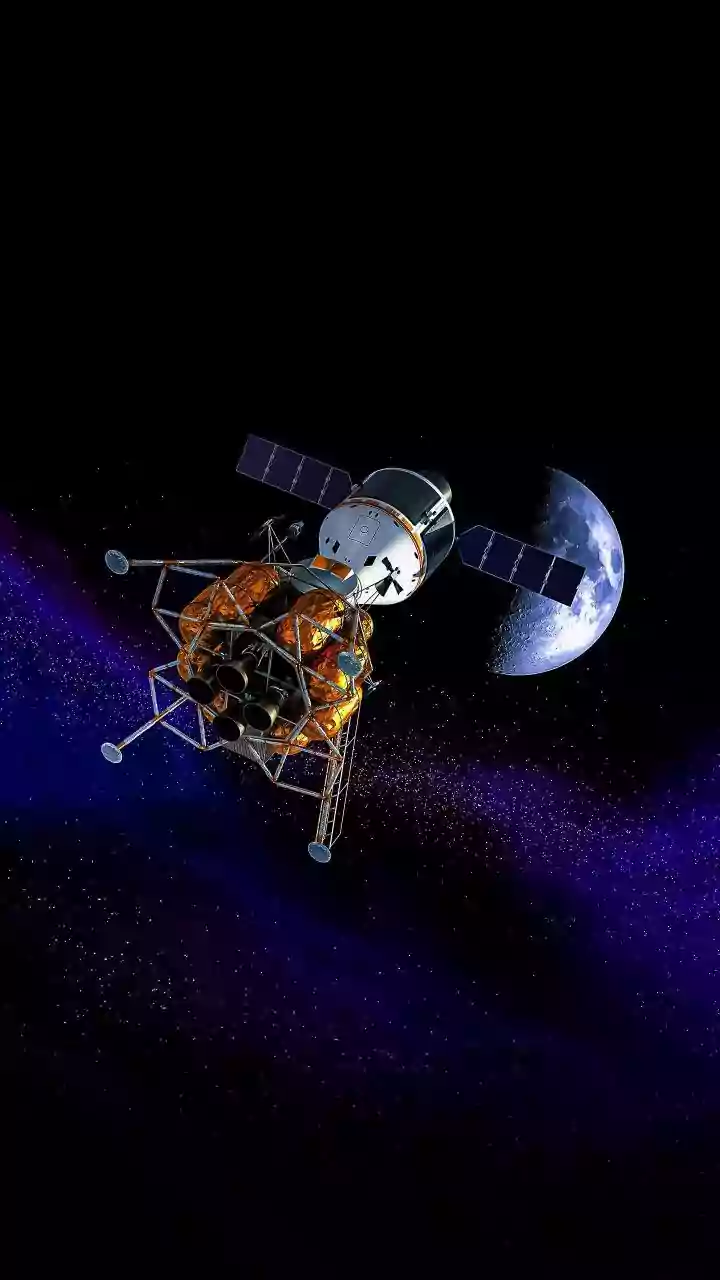
Launched in October 2024, the Europa Clipper is currently on a long and winding path to the outer solar system. As of August 2026, it is deep in its interplanetary cruise, having already completed a gravity-assist flyby of Mars in early 2025 and now heading
for a final speed boost from Earth in December 2026. This complex trajectory, called a Mars-Earth Gravity Assist, is necessary to give the basketball-court-sized spacecraft enough velocity to reach Jupiter's orbit by April 2030. Its target, Europa, is one of the most compelling destinations in our solar system, a world believed to hide a vast liquid water ocean beneath a thick, icy shell. The mission's primary goal isn't just to study another moon, but to investigate whether this alien ocean could have the right conditions to support life.
Why Europa Is So Special
For decades, scientists have gathered tantalizing evidence pointing to a global ocean on Europa. Though slightly smaller than Earth's moon, Europa's ocean may contain more than twice the amount of water as all of Earth's oceans combined. The key ingredients for life as we know it are liquid water, chemistry, and energy. Scientists believe Europa may have all three. Data from previous missions like Galileo hinted at the ocean's existence by measuring disruptions in Jupiter's magnetic field around the moon. The presence of a salty, conductive liquid ocean is the best explanation for these readings. Furthermore, the icy surface is streaked with reddish-brown material, which could be salts and organic compounds churned up from the ocean below, providing the necessary chemical building blocks for life. The final ingredient, energy, could come from the immense gravitational tug-of-war between Jupiter and Europa, creating tidal forces that warm the moon's interior and could drive hydrothermal vents on the seafloor, similar to those on Earth where vibrant ecosystems thrive.
Not a Lander, but a Master Surveyor
The headline's mention of finding microbes might conjure images of a rover drilling into the ice, but Clipper's approach is different. It is not designed to find life itself, but to be the first mission to perform a detailed study of this ocean world. Landing on Europa is incredibly difficult, so instead of touching down, Clipper will enter a long, looping orbit around Jupiter and perform nearly 50 close flybys of Europa. Some of these passes will bring the spacecraft as close as 25 kilometres to the surface. This strategy allows the probe to gather data from different regions while minimizing its exposure to Jupiter's brutal radiation field, which can damage sensitive electronics. To protect its instruments, the spacecraft's electronic heart is housed in a heavily shielded vault with thick aluminum-titanium walls.
A Toolkit for Habitability
To peer beneath the ice and taste the air, Europa Clipper carries a suite of nine advanced science instruments. Its ice-penetrating radar, called REASON, will be used to measure the thickness of the ice shell and search for pockets of liquid water, or even the ocean itself. Spectrometers will analyze the chemical composition of the surface and any potential water vapor plumes that might erupt into space, effectively 'tasting' the moon's material without needing to land. A magnetometer will confirm the ocean's existence and measure its depth and salinity, while high-resolution cameras will map about 90% of Europa's surface in stunning detail, far surpassing images from the Galileo mission decades ago. Together, these instruments will paint the most complete picture yet of Europa's potential for life.
A Long and Patient Journey
While the spacecraft is currently well on its way, the answers we seek will not come quickly. After its final gravity assist from Earth in late 2026, Europa Clipper faces another three and a half years of travel before it can finally slow down and enter orbit around Jupiter in April 2030. The first of its many science flybys of Europa is scheduled to begin in the spring of 2031. For the next four years, the spacecraft will methodically scan, map, and measure the icy moon, sending torrents of data back to scientists on Earth. The mission is currently planned to conclude in 2034 with a controlled impact into another of Jupiter's moons, Ganymede, ensuring Europa's pristine environment remains untouched.